

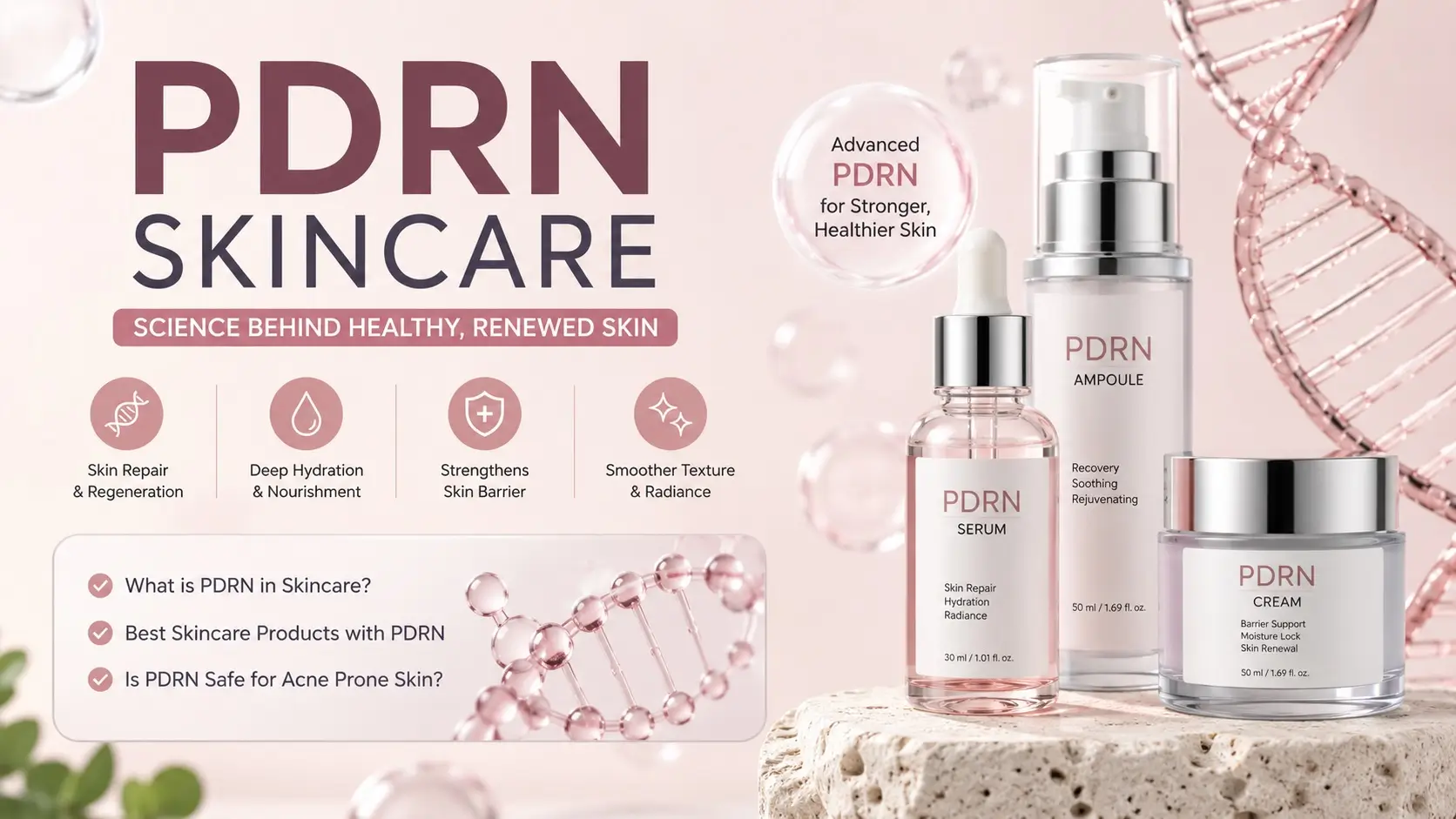
PDRN skincare has become increasingly popular in beauty routines focused on skin recovery, hydration, texture, and a healthier-looking complexion. You may have seen PDRN listed in Korean skincare products such as serums, creams, ampoules, masks, and other treatment-focused formulas.
PDRN stands for polydeoxyribonucleotide, a DNA-derived material that has been studied for tissue repair and skin regeneration. Research suggests that PDRN may support biological processes involved in tissue repair and inflammation, although much of the stronger clinical evidence has historically focused on medical or aesthetic applications rather than everyday cosmetic skincare.
Topical PDRN is now receiving more attention. Recent research has investigated whether certain PDRN formulations can reach viable skin layers and support skin repair and extracellular-matrix-related processes. However, the evidence for cosmetic topical products is still developing, so PDRN should not be treated as a miracle ingredient.
If you are considering adding PDRN to your routine, understanding what it is, what it may do, and how it fits into acne-prone or sensitive skin care can help you make a more informed choice.
What Is PDRN Skincare?
PDRN skincare refers to cosmetic products formulated with polydeoxyribonucleotide, a mixture of DNA fragments that has been studied for its potential regenerative and anti-inflammatory properties.
PDRN has traditionally been researched in wound-healing and regenerative medicine. Its proposed biological activity includes interaction with the adenosine A2A receptor and support of nucleotide salvage pathways involved in cellular processes.
In skincare, PDRN is increasingly included in products designed around:
- Skin recovery
- Hydration
- Skin texture
- Barrier support
- A smoother-looking complexion
- Post-procedure skincare
- Mature-looking skin
It is important to distinguish PDRN skincare products from injectable PDRN or polynucleotide treatments performed in aesthetic clinics. These are different applications, with different formulations, delivery methods, and evidence.
Recent reviews have also emphasized that PDRN and polynucleotides are related but not identical materials, and the terms are sometimes used interchangeably in beauty marketing even though their molecular characteristics can differ.
Is PDRN the Same as Polynucleotides?
Not exactly.
PDRN and PN are both DNA-derived materials, but they can differ in molecular size and structure.
PDRN generally refers to shorter DNA fragments, while polynucleotides can contain longer DNA chains. Their biological behavior and proposed dermatological applications can therefore differ.
This distinction matters when comparing skincare products because a product marketed as containing “PDRN” may not be directly comparable with an injectable PN treatment offered by an aesthetic clinic.
What Is PDRN in Skincare?
PDRN in skincare is generally used as a cosmetic ingredient in formulas intended to support the appearance and condition of the skin.
The ingredient has attracted attention because laboratory, animal, and clinical research has suggested potential roles in tissue repair, cell migration, inflammation control, and regeneration.
However, the results from medical PDRN treatments should not automatically be applied to every PDRN serum or cream.
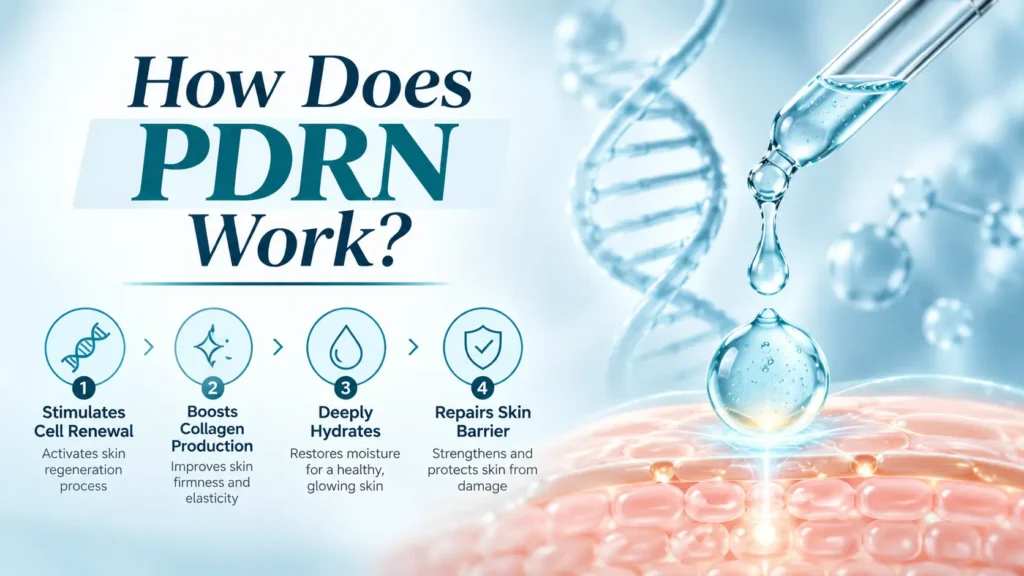
How Does PDRN Work?
PDRN’s proposed biological effects involve several pathways.
One important mechanism involves adenosine A2A receptor activation. Research has associated this pathway with processes involved in tissue repair and inflammation regulation. PDRN can also contribute nucleotides through salvage pathways used by cells.
In simple skincare terms, this is why PDRN is often positioned as a skin-repair and recovery ingredient rather than simply another exfoliating or moisturizing ingredient.
Does PDRN Hydrate the Skin?
PDRN itself should not necessarily be considered a replacement for traditional hydrating ingredients.
A PDRN serum may contain other ingredients such as:
- Hyaluronic acid
- Glycerin
- Panthenol
- Beta-glucan
- Ceramides
- Peptides
These supporting ingredients may be responsible for much of the immediate hydration or moisturizing feel of the product.
So when choosing a PDRN product, look at the complete ingredient list, not just the PDRN claim on the front of the package.
What Are the Potential Benefits of PDRN Skincare?
PDRN is becoming popular because of its potential connection with skin repair and regeneration.
Current research suggests several areas of interest.
Supports Skin Recovery
PDRN has been extensively investigated for wound healing and tissue repair.
Reviews have reported evidence suggesting that PDRN can support processes involved in tissue regeneration and wound healing.
For cosmetic skincare, this is one reason PDRN is marketed toward people who want a recovery-focused routine.
May Support the Skin Barrier
Some emerging research suggests that particular PDRN formulations may support barrier recovery and reduce transepidermal water loss.
For example, a recent study involving a low-molecular-weight plant-derived PDRN preparation reported improvements in barrier-related measures in a small clinical model.
This is promising, but larger independent studies are still needed.
May Improve the Look of Skin Texture
PDRN and related polynucleotide treatments have been investigated for skin rejuvenation and texture.
A 2026 systematic review of randomized clinical trials found improvements in several skin-rejuvenation outcomes, although the researchers noted that the evidence base remains limited by small sample sizes and differences between treatment protocols.
May Help Support Post-Procedure Recovery
PDRN has attracted particular interest in aesthetic medicine following procedures such as laser treatments, chemical peels, microneedling, and other skin procedures.
Recent reviews report encouraging findings for recovery-related outcomes, while also emphasizing that more high-quality research and longer follow-up are needed.
PDRN skincare used at home should not, however, be treated as a substitute for professional post-procedure care.
Skincare Products With PDRN
PDRN is now found in a variety of cosmetic products.
You may see it in:
- PDRN serums
- PDRN ampoules
- PDRN creams
- PDRN masks
- PDRN eye products
- Hydrating essences
- Recovery-focused moisturizers
PDRN Serum
A serum is one of the most common ways to add PDRN to a routine.
PDRN serums are often lightweight and may contain additional hydrating or soothing ingredients.
If your skin is sensitive, a simple formula may be easier to introduce than a product containing many active ingredients.

PDRN Cream
PDRN creams can be useful for people who prefer richer skincare.
These products may combine PDRN with ingredients such as ceramides, squalane, peptides, or humectants.
The texture should match your skin type. A rich cream may be comfortable for dry skin but feel unnecessarily heavy on oily skin.
PDRN Ampoule
Ampoules are often concentrated treatment-style products.
However, “ampoule” does not have one universal concentration or formulation standard, so compare the complete ingredient list instead of assuming an ampoule is automatically stronger or better than a serum.
PDRN Face Mask
PDRN masks are commonly marketed as recovery or hydration products.
They can be a convenient occasional step, but they do not necessarily provide the same type of evidence as clinical PDRN treatments.
Is PDRN Skincare Safe for Acne Prone Skin?
For most people, a well-formulated topical PDRN product may be considered a potentially gentle addition to an acne-prone skincare routine, but PDRN itself is not an acne treatment.
The bigger question is the complete formulation.
A PDRN product containing fragrance, heavy emollients, multiple exfoliating acids, or other ingredients that your skin does not tolerate may cause problems even if the product contains PDRN.
There is currently limited direct evidence specifically studying topical PDRN skincare in acne-prone populations. The available PDRN literature focuses more heavily on wound healing, regeneration, aesthetic procedures, and skin rejuvenation.
What Should Acne-Prone Skin Look For?
If you have acne-prone skin, consider a PDRN product that is:
- Lightweight
- Non-comedogenic when possible
- Fragrance-free if you are sensitive
- Free from unnecessary heavy ingredients
- Focused on hydration and soothing rather than multiple strong actives
Also consider the rest of your routine.
If you are already using salicylic acid, benzoyl peroxide, retinoids, or exfoliating acids, adding several new active products at once may increase irritation.
Can PDRN Cause Breakouts?
PDRN is not known simply as a pore-clogging acne ingredient.
However, any cosmetic product can potentially cause irritation or breakouts depending on its overall formulation and your individual skin.
If a new PDRN product appears to coincide with increased bumps, stop using it temporarily and simplify your routine.
PDRN for Sensitive Skin
PDRN products are often marketed toward skin that needs soothing and recovery, but sensitive skin still requires careful product selection.
Start with a simple formula and avoid introducing several new products simultaneously.
Look for supporting ingredients such as:
- Panthenol
- Centella asiatica
- Ceramides
- Glycerin
- Beta-glucan
If your skin is already irritated, burning, or peeling, focus on a basic routine before adding new treatment products.
For more guidance on keeping a sensitive routine simple, a gentle skincare routine for dry sensitive skin can be a useful related resource.
PDRN vs Retinol
PDRN and retinol are very different skincare ingredients.
Retinol is a vitamin A derivative commonly used in routines targeting acne, uneven texture, and signs of skin aging.
PDRN is generally positioned around skin recovery and regenerative processes.
Neither ingredient is automatically “better.”
They address different skincare goals.
If your primary concern is acne, retinoids have a much more established role in acne treatment than topical PDRN. If your goal is supporting hydration and skin recovery, a PDRN product may be an optional addition.
PDRN vs Hyaluronic Acid
Hyaluronic acid and PDRN also serve different purposes.
Hyaluronic acid: primarily associated with hydration and water retention.
PDRN: associated with regenerative and repair-related biological activity.
A skincare product can contain both.
In fact, combining a PDRN ingredient with a hydrating formula may make more sense than expecting PDRN alone to provide all the moisture your skin needs.
How to Use PDRN in a Skincare Routine
PDRN is generally easy to fit into a basic routine.
Morning Routine
A simple morning routine can be:
Cleanser → PDRN serum → Moisturizer → Sunscreen
If the PDRN product is already moisturizing enough, you may not need a separate heavy cream.
Night Routine
At night:
Cleanser → Treatment product → PDRN serum → Moisturizer
If you use a retinoid or exfoliating acid, follow the directions for that product and introduce actives gradually.
How Often Should You Use PDRN?
Follow the instructions provided with your particular product.
Many cosmetic PDRN products are designed for regular use, but frequency depends on the complete formulation.
If you have sensitive skin, start slowly and observe how your skin responds.
Can You Use PDRN With Other Skincare Ingredients?
PDRN products are often combined with other skincare ingredients.
Depending on the formulation, you may be able to use them alongside:
- Hyaluronic acid
- Niacinamide
- Ceramides
- Panthenol
- Peptides
- Centella asiatica
- Gentle vitamin C products
The main consideration is not necessarily PDRN itself but the other active ingredients in your routine.
PDRN and Niacinamide
These can complement each other in a routine focused on hydration, barrier support, and overall skin appearance.
PDRN and Hyaluronic Acid
This combination can provide a hydration-focused routine when the PDRN product also contains humectants.
PDRN and Retinoids
There is no simple rule that PDRN must be separated from retinoids.
However, retinoids can cause irritation, especially when you first start using them. If your skin is sensitive, introduce products gradually rather than adding everything at once.
PDRN and Exfoliating Acids
If your PDRN product also contains acids, check the complete ingredient list.
Using multiple exfoliating products can increase dryness and irritation.
How to Choose the Best PDRN Skincare Product
With PDRN becoming a popular marketing term, it is worth looking beyond the product name.
Check the Full Ingredient List
Look at what else is included.
A PDRN product may also contain moisturizing, soothing, exfoliating, or fragranced ingredients.
Consider Your Skin Type
Choose the texture according to your skin.
Oily skin: lightweight serum or gel
Combination skin: lightweight serum or lotion
Dry skin: serum followed by a richer moisturizer
Sensitive skin: simple fragrance-free formulation
Acne-prone skin: lightweight formula with ingredients your skin already tolerates
Do Not Focus Only on the PDRN Percentage
Cosmetic products can differ in how PDRN is described and formulated.
A higher advertised number does not automatically mean a better product.
Look at the entire formulation, product quality, intended use, and your skin’s response.
Common Mistakes When Using PDRN Skincare
Expecting PDRN to Cure Acne
PDRN is not a proven replacement for established acne treatments.
If you have persistent acne, focus on ingredients and treatments with stronger evidence for acne management.
Using Too Many Products
Adding PDRN on top of five new serums is unlikely to make your routine better.
Start with one new product.
Ignoring the Rest of the Formula
A product may contain PDRN but also include ingredients that do not suit your skin.
Always check the full ingredient list.
Skipping Sunscreen
PDRN does not replace sunscreen.
Daily sun protection remains important for maintaining healthy-looking skin and reducing the appearance of sun-related skin changes.
Confusing Cosmetic PDRN With Injectable Treatments
A topical serum and an injectable treatment are not equivalent.
Clinical PDRN or polynucleotide procedures should be performed by qualified professionals and should not be compared directly with an over-the-counter cosmetic serum.
PDRN Skincare for a Damaged Skin Barrier
If your skin feels tight, rough, flaky, or easily irritated, your priority should be restoring a comfortable routine rather than adding multiple treatments.
A PDRN product may be an optional addition, particularly if its overall formula is hydrating and soothing.
However, basic barrier care remains important:
- Use a gentle cleanser
- Avoid excessive exfoliation
- Apply moisturizer regularly
- Avoid unnecessary fragrance if sensitive
- Use sunscreen during the day
If your skin barrier is struggling, learning more about skin barrier repair can help you understand which basic skincare steps should come first.
How Long Does PDRN Take to Work?
There is no single timeline for topical PDRN skincare.
Your experience depends on the product formulation, concentration, other ingredients, frequency of use, and your skin’s condition.
Some people may notice improved hydration or softness relatively quickly if the formula contains effective moisturizing ingredients.
Claims about long-term regeneration, collagen support, or dramatic skin rejuvenation should be viewed more cautiously because topical PDRN research is still developing.
Recent clinical evidence is encouraging, but systematic reviews continue to highlight small sample sizes, different formulations, and limited long-term data.
Who May Want to Try PDRN Skincare?
PDRN may be interesting for people who want to add a recovery-focused product to a routine aimed at:
- Hydration
- Skin comfort
- Supporting the skin barrier
- Improving the appearance of texture
- Mature-looking skin
- Post-procedure skincare when recommended by a professional
It may not be necessary if your routine already keeps your skin healthy and comfortable.
Who Should Be More Careful?
Consider getting professional advice before using new treatment products if you have:
- A persistent skin condition
- Severe acne
- Significant skin irritation
- Open or infected skin
- A history of strong cosmetic reactions
- Recently undergone an aesthetic procedure
For post-procedure skin, always follow the specific aftercare instructions provided by your healthcare professional rather than replacing them with an over-the-counter PDRN product.
Frequently Asked Questions
What is PDRN skincare?
PDRN skincare refers to cosmetic products containing polydeoxyribonucleotide, a DNA-derived ingredient studied for tissue repair and regenerative processes. It is commonly used in serums, creams, ampoules, and masks.
Is PDRN good for skin?
PDRN has promising research surrounding tissue repair, wound healing, inflammation, and skin rejuvenation. However, evidence for everyday topical cosmetic PDRN products is still developing.
Is PDRN skincare safe?
Available clinical research has generally reported good tolerability, but safety depends on the formulation and method of use. Evidence is stronger for certain clinical applications than for every cosmetic PDRN product.
Is PDRN safe for acne-prone skin?
There is limited direct research specifically on topical PDRN for acne-prone skin. A lightweight, well-tolerated formula may fit into an acne-prone routine, but PDRN should not be considered an acne treatment.
Can I use PDRN every day?
Many cosmetic PDRN products are designed for regular use, but follow the individual product’s directions. If your skin is sensitive, introduce it gradually.
Can PDRN replace moisturizer?
Not necessarily. PDRN does not replace all of the functions of a moisturizer. A PDRN product can be used alongside a moisturizer, especially when your skin needs additional hydration or barrier support.
Is PDRN better than retinol?
Neither is universally better. Retinoids have stronger established uses for acne and several photoaging concerns, while PDRN is primarily associated with skin-repair and regenerative applications.
Final Thoughts
PDRN skincare has become an exciting trend because PDRN has a growing body of research behind its potential role in skin repair and regeneration. Studies have reported promising findings in wound healing, post-procedure recovery, skin rejuvenation, and barrier-related outcomes, but the evidence is not yet strong enough to support every cosmetic claim made about PDRN products.
If you want to try PDRN, start with a well-formulated product that matches your skin type. For acne-prone or sensitive skin, keep the rest of your routine simple and pay attention to the complete ingredient list.
Most importantly, think of PDRN as an optional supporting ingredient, not a replacement for proven skincare basics such as gentle cleansing, appropriate acne treatment, moisturizing, and daily sunscreen.