

Skin Barrier Repair
Your skin has a natural protective system that helps keep moisture inside while protecting the deeper layers from environmental irritants. When this protective layer becomes weakened, the skin may feel dry, tight, sensitive, or uncomfortable. This is commonly described as a damaged skin barrier or compromised moisture barrier.
Skin barrier repair is mainly about reducing irritation, restoring hydration, and giving the skin time to recover. A simple routine with gentle cleansing, regular moisturizing, and daily sun protection can help support the skin while it recovers. Dermatology guidance also recommends fragrance-free products and moisturizing regularly, especially when the skin is dry or sensitive.
What Is the Skin Barrier?
The skin barrier is the outermost protective layer of the skin, primarily associated with the stratum corneum. It contains skin cells along with lipids such as ceramides, cholesterol, and fatty acids that help maintain the structure of this protective layer.
One of its important jobs is helping prevent excessive water loss while protecting the skin from environmental substances. A healthy barrier therefore contributes to skin that feels comfortable, hydrated, and resilient.
When the barrier becomes compromised, moisture can escape more easily and everyday skincare products may suddenly feel uncomfortable. This can create a cycle of dryness and irritation that makes the skin appear rough, flaky, or red.
Why Is Skin Barrier Repair Important?
A healthy skin barrier helps maintain adequate hydration and provides protection against external irritants. When the barrier is weakened, the skin may become more reactive to products and environmental conditions.
Supporting skin barrier function is therefore not just about making the skin look smoother. It is also about maintaining comfortable, hydrated skin and reducing unnecessary irritation.
A barrier-focused routine is usually simpler than an aggressive skincare routine. Instead of constantly adding new treatments, the goal is to remove potential irritants and focus on basic skincare until the skin becomes more comfortable.
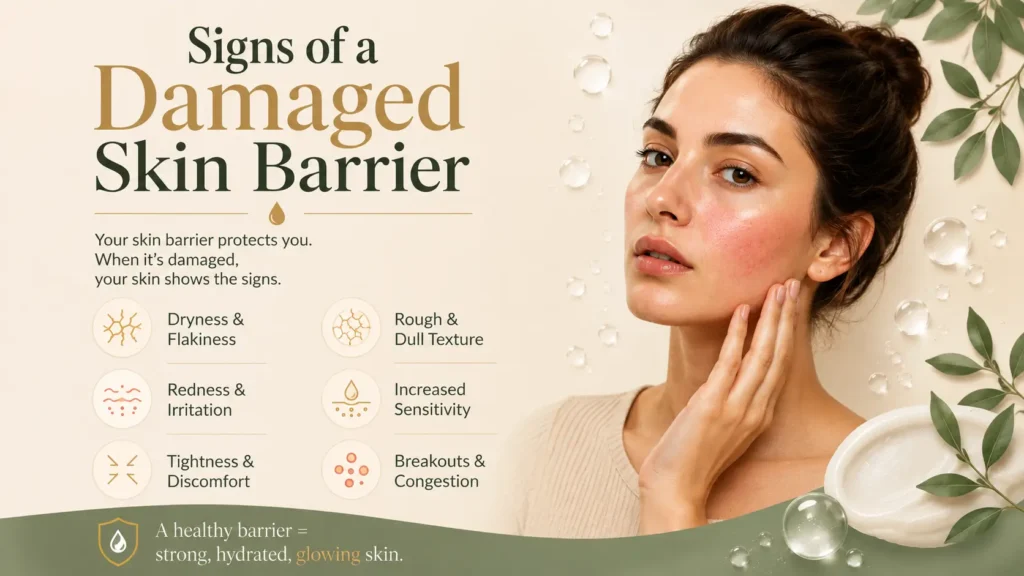
Signs of a Damaged Skin Barrier
Recognizing skin barrier damage early can help you avoid making the problem worse.
Dryness and Flaking
Persistent dryness, rough patches, and visible flaking can occur when the skin struggles to retain enough moisture.
Your usual moisturizer may also seem less effective than before, particularly if you have recently introduced several new skincare products.
Tight or Uncomfortable Skin
A weakened moisture barrier can leave the skin feeling tight, especially after cleansing.
This sensation may occur even when your skin produces oil because barrier damage and skin oiliness are not the same thing.
Increased Sensitivity
One of the common signs of a compromised skin barrier is that products that previously felt comfortable suddenly begin to sting or burn.
A cleanser, moisturizer, or serum that never caused a reaction before may feel uncomfortable when the skin is irritated.
Redness and Irritation
Skin barrier damage can be accompanied by redness or increased sensitivity. The skin may also react more strongly to environmental factors such as cold, dry air, wind, or skincare products.
Rough Skin Texture
When the skin is dehydrated and irritated, its texture can become rough, uneven, or patchy.
Rather than immediately reaching for an exfoliating scrub, it is usually better to focus on hydration and gentle skincare while the skin is uncomfortable.
What Causes Skin Barrier Damage?
A damaged skin barrier can develop for several reasons. Often, it is not one single product but a combination of excessive cleansing, exfoliation, environmental stress, and unsuitable skincare.
Over-Exfoliation
Using chemical exfoliants or physical scrubs too frequently can irritate the skin.
Ingredients such as alpha hydroxy acids, beta hydroxy acids, and other exfoliating treatments can be useful when appropriately formulated and used, but more exfoliation does not necessarily mean healthier skin.
If your skin becomes tight, flaky, or unusually sensitive after increasing exfoliation, reducing the frequency may be helpful.
Using Too Many Active Ingredients
Layering multiple strong skincare ingredients can make a routine unnecessarily irritating.
For example, frequently combining exfoliating acids, retinoids, acne treatments, and other active products may be too much for some skin types.
A minimalist skincare routine can be particularly useful when your skin is already irritated.
Harsh Cleansers
Cleansing is important, but aggressive cleansing can contribute to dryness and irritation.
The Cleveland Clinic recommends avoiding over-cleansing and notes that prolonged cleansing can potentially disrupt the fatty components of the skin barrier.
A gentle cleanser that removes dirt, sunscreen, and makeup without leaving the skin feeling stripped is generally a better choice for a barrier-focused routine.
Hot Water
Very hot showers and frequent exposure to hot water can worsen dry skin.
The American Academy of Dermatology recommends using warm rather than hot water and moisturizing after bathing while the skin is still damp.
Fragrance and Irritating Ingredients
Fragrance can be irritating for people with dry or sensitive skin. Dermatologists commonly recommend fragrance-free skincare products when dealing with dry or reactive skin.
“Unscented” and “fragrance-free” are not necessarily identical. If your skin is particularly sensitive, checking the ingredient label and choosing products specifically labeled fragrance-free can be a better approach.
Environmental Stress
Cold weather, dry air, wind, and excessive sun exposure can all make already-dry skin more uncomfortable.
During periods of environmental stress, maintaining regular moisturization and protecting the skin from the sun becomes particularly important.
How to Repair Your Skin Barrier
The best approach to how to fix a damaged skin barrier is usually simple: reduce irritation and consistently support hydration.
Simplify Your Skincare Routine
When your skin is irritated, temporarily reduce unnecessary products.
A basic routine may include:
- Gentle cleanser
- Barrier-supporting moisturizer
- Broad-spectrum sunscreen during the day
You may also need to pause products that commonly cause irritation, such as exfoliating acids, physical scrubs, or strong active treatments, until your skin feels comfortable again.
Cleanse Gently
Use lukewarm water and a gentle cleanser rather than aggressively scrubbing the face.
Massage the cleanser onto the skin briefly and rinse thoroughly. There is generally no benefit to prolonged cleansing, particularly when your skin is already irritated.
Moisturize Consistently
Moisturizer plays a central role in skin barrier recovery because it helps reduce dryness and supports the skin’s moisture balance.
The American Academy of Dermatology recommends applying moisturizer while the skin is still damp and choosing fragrance-free creams or ointments for very dry or sensitive skin.
For barrier-focused skincare, creams and ointments may be more suitable than very lightweight lotions when the skin is extremely dry.

Look for Barrier-Supporting Ingredients
Certain ingredients are particularly relevant when choosing a skin barrier moisturizer.
Ceramides
Ceramides are naturally occurring lipids found in the skin barrier. They are commonly included in moisturizers designed to support hydration and barrier function.
Fatty Acids
Fatty acids are another component of the skin’s natural lipid barrier and can be found in various moisturizing formulations.
Cholesterol
Cholesterol is also naturally present in the skin barrier and is used alongside other lipids in some barrier-supporting skincare formulations.
Hyaluronic Acid
Hyaluronic acid is a humectant commonly used to attract and retain moisture. The American Academy of Dermatology lists hyaluronic acid among ingredients worth considering when selecting a moisturizer.
Glycerin
Glycerin is another widely used humectant that helps attract water to the skin and is commonly found in hydrating skincare products.
Petrolatum
Petrolatum is an occlusive ingredient that helps reduce water loss from the skin. It is frequently used in ointments and products intended for very dry skin.
Use Sunscreen During Skin Barrier Recovery
Sun protection should remain part of a barrier-friendly skincare routine.
The American Academy of Dermatology recommends using a broad-spectrum sunscreen with SPF 30 or higher, along with other sun-protective measures such as shade and protective clothing.
If sunscreen stings your skin, look for a formula that feels comfortable and does not trigger irritation. The best sunscreen is one you can consistently use.

What to Avoid During Skin Barrier Repair
When your skin is irritated, adding more products may make the situation worse.
Consider temporarily avoiding or reducing:
- Physical face scrubs
- Frequent exfoliation
- Strong exfoliating acids
- Multiple active serums
- Products with irritating fragrance
- Very hot water
- Aggressive cleansing
- Picking or scratching irritated skin
- Introducing several new products at once
The objective is to give the skin a simpler environment in which it can recover.
Morning Skin Barrier Repair Routine
A barrier-focused morning routine does not need to contain many products. The priority is to cleanse gently when needed, maintain hydration, moisturize, and protect the skin from UV exposure.
Step 1: Cleanse Gently
If your skin is dry or sensitive, you may not need an aggressive morning cleanse. When cleansing, use lukewarm water and a mild, fragrance-free cleanser.
Avoid scrubbing or using very hot water, as both can contribute to irritation.
Step 2: Apply a Hydrating Product
A hydrating serum or lightweight product containing ingredients such as glycerin or hyaluronic acid can help add moisture.
If your skin is currently very sensitive, keep the formula simple and avoid introducing several new products at once.
Step 3: Apply a Barrier Repair Moisturizer
Choose a moisturizer that suits your skin type. Ingredients such as ceramides and hyaluronic acid are commonly found in moisturizers designed to hydrate and support the skin barrier.
For very dry skin, a cream or ointment may provide more lasting moisture than a lightweight lotion.
Step 4: Finish With Sunscreen
Apply a broad-spectrum sunscreen with SPF 30 or higher during the day. Sun protection is an important part of maintaining healthy skin and should remain in your routine even while your focus is on barrier recovery.
Nighttime Skin Barrier Repair Routine
Your evening routine is an opportunity to remove sunscreen, makeup, and daily buildup without over-cleansing the skin.
Step 1: Remove Makeup and Sunscreen
If you wear makeup or water-resistant sunscreen, use a gentle cleansing method that effectively removes it without excessive rubbing.
Avoid repeatedly washing the same area in an attempt to make the skin feel “extra clean.”
Step 2: Use a Gentle Cleanser
Massage a mild cleanser over the skin and rinse with lukewarm water.
There is generally no need to spend a long time massaging cleanser into the face. Excessive cleansing can contribute to barrier disruption.
Step 3: Apply Moisturizer While Skin Is Slightly Damp
After cleansing, gently pat your face rather than rubbing it completely dry. Applying moisturizer while the skin is still slightly damp can help retain moisture.
Step 4: Add an Occlusive if Needed
Very dry skin may benefit from a thin layer of an occlusive product over moisturizer.
Petrolatum is one example of an occlusive ingredient that can help reduce water loss. Use only as much as your skin needs, especially if you are prone to clogged pores.
Best Ingredients for Skin Barrier Repair
A good skin barrier repair routine does not depend on one miracle ingredient. Different ingredients can provide different types of support.
Ceramides
Ceramides are lipids naturally found in the outer skin layer. They help form part of the barrier structure and are widely used in barrier-supporting moisturizers.
Hyaluronic Acid
Hyaluronic acid is a humectant used in many hydrating products. It can help attract moisture to the skin and is commonly combined with other moisturizing ingredients.
Glycerin
Glycerin is another humectant frequently used in moisturizers. It helps support hydration and can be suitable for many skin types.
Fatty Acids
Fatty acids are naturally present in the skin barrier and are included in some moisturizing formulations designed to support dry or compromised skin.
Cholesterol
Cholesterol is another naturally occurring skin lipid and may be included with ceramides and fatty acids in barrier-focused formulations.
Petrolatum
Petrolatum forms a protective layer over the skin that can help reduce moisture loss. It is particularly useful in products designed for very dry or irritated skin.
Dimethicone
Dimethicone is a silicone-based ingredient used in many moisturizers and barrier creams. It can help form a protective layer over the skin and is included in some products designed to reduce irritation and dryness.
Colloidal Oatmeal
Colloidal oatmeal is commonly used in products designed for dry, sensitive, or itchy skin. It can provide a soothing and moisturizing effect and is often included in products for compromised skin.
How Long Does Skin Barrier Repair Take?
There is no single skin barrier recovery time that applies to everyone.
The recovery period depends on what caused the damage, how irritated the skin is, whether an underlying skin condition is involved, and whether the triggers are removed.
Minor irritation may improve after simplifying your routine and moisturizing consistently. More persistent problems may take longer and can require professional treatment.
Avoid judging your recovery based on a few days alone. Consistency is generally more useful than repeatedly changing products.
Skin Barrier Repair for Sensitive Skin
Sensitive skin often benefits from a particularly simple routine.
Choose:
- Fragrance-free products
- Mild cleansers
- Gentle moisturizers
- Barrier-supporting ingredients
- Broad-spectrum sunscreen
- Lukewarm water
Introduce one new product at a time. This makes it easier to identify a product that causes irritation.
The American Academy of Dermatology notes that fragrance-free products are preferable for dry skin and that “natural” or “organic” does not automatically mean hypoallergenic.
Skin Barrier Repair for Acne-Prone Skin
Repairing the barrier does not mean completely abandoning acne care. However, irritated or peeling skin may not tolerate aggressive acne treatments as well as healthy skin.
If your skin becomes very dry or irritated after using acne products, simplify your routine and focus on gentle cleansing and moisturizing.
Avoid picking or squeezing pimples because physical trauma can increase inflammation and potentially contribute to scarring.
Once your skin becomes comfortable again, acne treatments can be reintroduced according to product directions or a dermatologist’s recommendations.
Skin Barrier Repair After Over-Exfoliation
If your skin becomes tight, flaky, burning, or unusually sensitive after frequent exfoliation, temporarily reducing exfoliating products may help.
Instead, focus on:
- Gentle cleansing.
- Regular moisturizing.
- Avoiding physical scrubs.
- Limiting unnecessary active ingredients.
- Wearing sunscreen.
- Giving your skin time to recover.
Over-exfoliation is a recognized cause of skin barrier disruption.
Common Skin Barrier Repair Mistakes
Even with good intentions, some habits can delay recovery.
Exfoliating Flaky Skin
Flaky skin can be tempting to scrub away, but additional exfoliation may increase irritation.
Instead, moisturize consistently and allow the skin to recover.
Changing Products Too Often
Switching between several moisturizers, serums, cleansers, and treatments makes it difficult to determine what your skin actually tolerates.
Give a simple routine time before deciding that it is not working.
Using Too Many Active Ingredients
More active ingredients do not necessarily produce better results.
Combining several potentially irritating products can make sensitive skin even more uncomfortable.
Ignoring Sunscreen
UV exposure can contribute to skin damage, so daily sun protection should remain part of a healthy skincare routine. The AAD recommends broad-spectrum SPF 30 or higher.
Assuming Natural Means Gentle
Plant-based and natural products can still cause irritation or allergic reactions.
Even products marketed as natural should be evaluated according to your skin’s individual tolerance.
When to See a Dermatologist
Sometimes what looks like a damaged skin barrier is actually an underlying skin condition.
Conditions such as eczema, rosacea, psoriasis, and other dermatological problems can cause dryness, redness, irritation, and sensitivity.
Consider professional evaluation if:
- Your skin remains severely irritated.
- You develop painful cracks or bleeding.
- Redness continues or worsens.
- Your skin develops a persistent rash.
- You experience significant swelling.
- Products consistently cause burning or stinging.
- Your symptoms interfere with daily life.
- Your skin does not improve after simplifying your routine.
The American Academy of Dermatology also recommends seeking dermatological care when excessive dryness becomes painful, cracked, bleeding, or very irritating.
How to Maintain a Healthy Skin Barrier
Once your skin feels comfortable again, maintaining a consistent routine can help prevent repeated irritation.
Keep Cleansing Gentle
Use a mild cleanser and avoid unnecessarily long cleansing sessions.
Moisturize Regularly
Apply moisturizer whenever your skin feels dry and consider applying it while the skin is slightly damp.
Avoid Unnecessary Exfoliation
Exfoliation can be useful for some people, but it should not be treated as a daily requirement. If your skin becomes irritated, reduce or pause it.
Protect Your Skin From the Sun
Use broad-spectrum SPF 30 or higher and combine sunscreen with shade and protective clothing when appropriate.
Introduce Products Gradually
When adding a new skincare product, introduce it individually rather than changing your entire routine at once.
This makes it easier to identify potential irritants and build a routine your skin can tolerate.
Simple Skin Barrier Repair Routine
For many people, a basic routine can be enough to support recovery:
Morning
- Gentle cleanse if needed.
- Hydrating product if tolerated.
- Barrier-supporting moisturizer.
- Broad-spectrum SPF 30+ sunscreen.
Evening
- Remove makeup and sunscreen.
- Gentle cleanser.
- Hydrating product if tolerated.
- Moisturizer.
- Optional occlusive for very dry areas.
The exact routine should be adjusted according to your skin type and any underlying skin conditions.
Final Thoughts
Skin barrier repair is less about finding a single miracle product and more about creating the right conditions for your skin to recover.
Gentle cleansing, consistent moisturizing, suitable barrier-supporting ingredients, and daily sun protection can provide a strong foundation. Ceramides, fatty acids, cholesterol, glycerin, hyaluronic acid, petrolatum, and dimethicone are examples of ingredients commonly used in products designed to hydrate or protect the skin.
If your skin is irritated, resist the temptation to exfoliate more or add several new treatments. A simpler routine is often a better starting point.
And if persistent redness, itching, cracking, burning, or sensitivity continues despite gentle skincare, a dermatologist can help determine whether an underlying condition is responsible and recommend appropriate treatment.