


Feeling thirsty, tired, dizzy, or unusually dry can sometimes be a sign that your body needs more fluids. Dehydration can happen after sweating, spending time in hot weather, exercising, having a fever, or losing fluids through vomiting or diarrhea.
If you are wondering how to hydrate fast, the best approach depends on why you are dehydrated and how much fluid your body has lost. For mild dehydration, gradually drinking fluids is often enough. When you have lost significant amounts of fluid and electrolytes through vomiting, diarrhea, or heavy sweating, replacing water alone may not always be the most appropriate approach.
The goal is not to drink an extreme amount of water as quickly as possible. Instead, focus on replacing fluids steadily and choosing the right type of drink for your situation.
This guide explains how to get hydrated fast, what to drink, when electrolytes may help, and when dehydration may require medical attention.
How to Hydrate Fast
For mild dehydration, one of the simplest ways to start rehydrating is to drink fluids gradually and consistently.
If you feel thirsty or notice that your mouth feels dry, begin with water and continue drinking throughout the next few hours instead of waiting until you feel extremely thirsty again.
A simple approach is:
- Drink a glass of water.
- Continue taking regular sips rather than drinking excessively all at once.
- Eat a normal meal or snack if appropriate.
- Include foods with a high water content.
- Replace electrolytes when you have lost significant amounts through illness or prolonged sweating.
Small, regular amounts may also be easier to tolerate if you feel nauseated.
Drink Water First
For many people with mild dehydration from not drinking enough during the day, water is a practical first choice.
Keep a glass or bottle nearby and take regular sips. You may find it easier to drink enough when water is easily available rather than waiting until you become very thirsty.
There is no single amount of water that is right for everyone. Fluid needs can change based on factors such as:
- Weather
- Physical activity
- Body size
- Diet
- Pregnancy
- Illness
- Certain medications
Instead of forcing yourself to drink a fixed amount in a short period, pay attention to thirst and other signs that you may need more fluids.

How to Get Hydrated Fast After Exercise
Sweating causes your body to lose fluid. After a normal workout, drinking water and returning to your usual meals may be enough for many people.
However, if you have exercised intensely for a long period, especially in hot weather, you may lose both fluids and electrolytes through sweat.
In this situation, a drink containing electrolytes may sometimes be useful.
A simple post-workout hydration routine can include:
- Drinking water gradually
- Eating a balanced meal
- Replacing fluids lost through sweating
- Using an appropriate electrolyte drink when fluid and mineral losses are substantial
You do not necessarily need a sports drink after every short or light workout.
Use Electrolytes When You Have Lost More Than Water
Water is important, but your body also depends on electrolytes such as sodium and potassium.
Electrolyte replacement may be particularly important when dehydration is caused by:
- Vomiting
- Diarrhea
- Heavy sweating
- Extended physical activity in hot conditions
Oral rehydration solutions are specifically designed to replace fluids and electrolytes lost during illness. If vomiting or diarrhea is causing significant fluid loss, a pharmacist or healthcare professional can help you choose an appropriate oral rehydration product.
Do not assume that adding large amounts of salt to ordinary water is a safe replacement for a properly formulated rehydration solution.
Take Small Sips if You Feel Sick
Drinking a large amount of fluid at once can feel difficult when you are nauseated.
If you feel sick or have recently vomited, try taking small sips of fluid and gradually increase the amount as your stomach tolerates it.
You can also try:
- Small sips of water
- Ice chips
- An appropriate oral rehydration solution
- Small amounts of fluid more frequently
If you cannot keep fluids down for an extended period, you may need medical advice.
Eat Foods With a High Water Content
Drinking is not the only way to increase your fluid intake.
Many foods naturally contain a high amount of water and can contribute to your overall hydration.
Some examples include:
- Watermelon
- Cucumber
- Oranges
- Strawberries
- Melon
- Tomatoes
- Lettuce
- Soups
These foods should not replace drinking fluids when you are significantly dehydrated, but they can support your daily hydration.

How to Hydrate Fast in Hot Weather
Hot weather can increase fluid loss, especially when you are outdoors or physically active.
To stay hydrated more effectively:
Drink Before You Feel Extremely Thirsty
Do not wait until you feel severely thirsty before drinking.
Taking regular drinks throughout the day can make it easier to maintain hydration.
Carry Water With You
A reusable water bottle can make hydration more convenient when you are outside.
Increase Fluids When You Sweat More
Hot weather and exercise can increase fluid loss, so your usual intake may not be enough.
Take Breaks From the Heat
If possible, spend time in a cooler environment and avoid prolonged exposure during the hottest parts of the day.
If you experience signs of heat illness or severe dehydration, do not rely only on home hydration methods.
Signs That You May Be Dehydrated
Common signs of dehydration can include:
- Feeling thirsty
- Dry mouth, lips, or tongue
- Dark yellow urine
- Urinating less often
- Feeling tired
- Dizziness or light-headedness
- Headache
One useful general sign is urine colour. Pale-coloured urine can suggest that you are adequately hydrated, while dark and concentrated urine may indicate that you need more fluids.
However, urine colour can also be affected by supplements, medications, and certain foods, so it should not be used as the only measure of hydration.
How to Get Hydrated Fast When You Wake Up
It is normal to feel thirsty after sleeping because you have gone several hours without drinking.
A simple morning hydration routine can include:
- Drink a glass of water after waking up.
- Eat breakfast when you are ready.
- Continue drinking fluids regularly throughout the morning.
You do not need to drink an excessive amount of water immediately after waking.
Slow and consistent hydration is usually easier to maintain throughout the day.
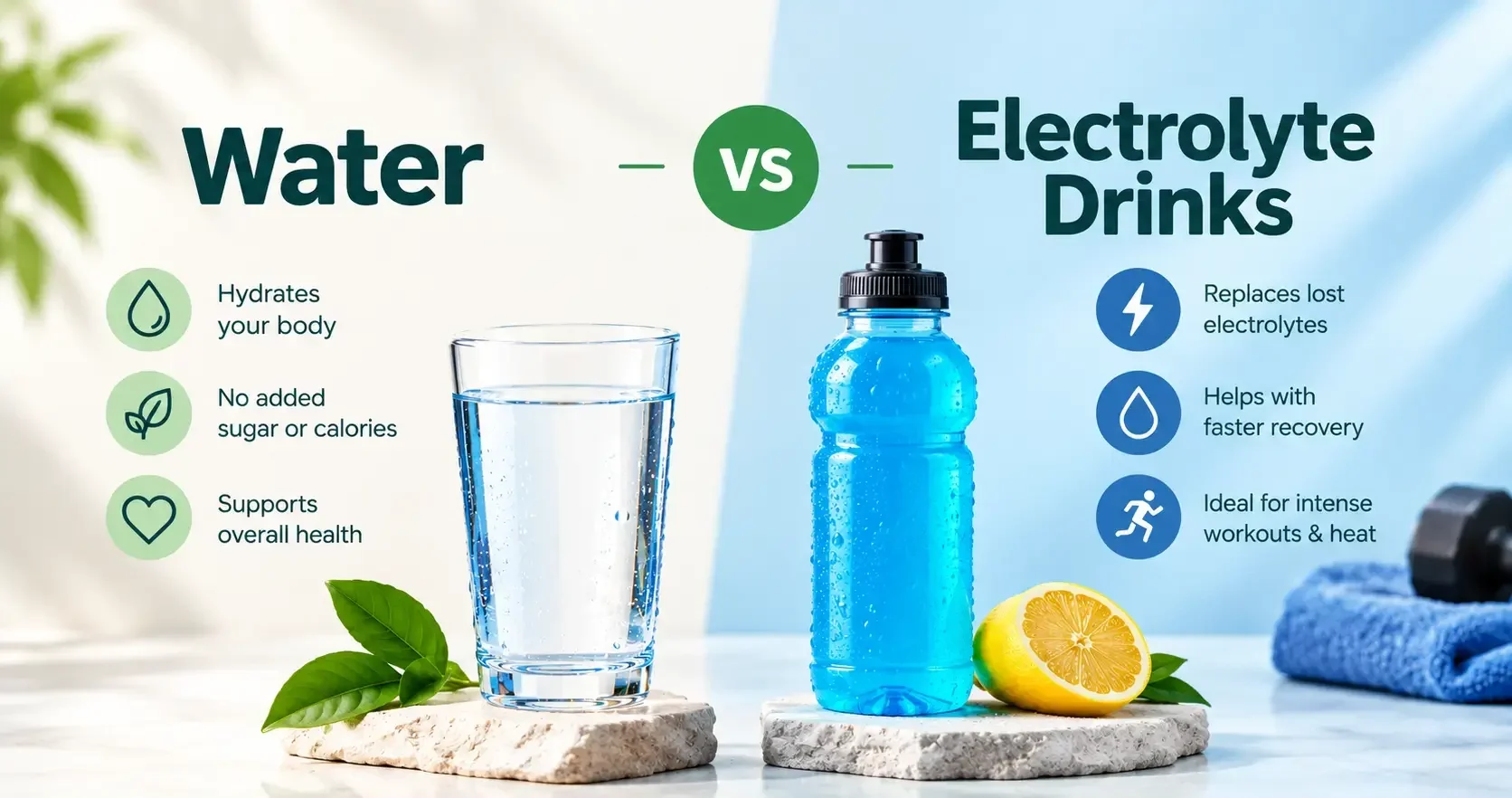
Water vs. Electrolyte Drinks: Which Is Better?
The best choice depends on why you need to rehydrate.
Water May Be Enough When:
- You simply have not drunk enough during the day.
- You feel mildly thirsty.
- You are rehydrating after normal daily activities.
- You have completed a short or moderate workout.
Electrolytes May Be More Useful When:
- You have had significant diarrhea or vomiting.
- You have experienced prolonged heavy sweating.
- You have completed extended or intense exercise.
- A healthcare professional recommends electrolyte replacement.
More electrolytes are not automatically better. Choose a drink based on your actual situation rather than assuming that every hydration problem requires a sports drink.
Does Coffee Dehydrate You?
Many people assume that drinking coffee automatically causes dehydration.
However, hydration is more complex than simply labeling one drink as hydrating or dehydrating. Caffeinated drinks can still contribute fluid, but large amounts of caffeine may not be ideal when you are already feeling dehydrated.
If you are trying to recover from dehydration, prioritize water and other appropriate fluids instead of relying on highly caffeinated drinks.
If caffeine makes you urinate frequently or leaves you feeling uncomfortable, reduce your intake and focus on regular fluid consumption.
Should You Avoid Alcohol When Dehydrated?
Alcohol is not a good choice when you are already dehydrated.
It can contribute to fluid loss and may make symptoms such as thirst, headache, and dizziness worse.
If you are trying to rehydrate, choose water or an appropriate rehydration drink instead.
Can You Drink Too Much Water Too Fast?
Yes. Trying to drink an extreme amount of water in a very short period is not a good hydration strategy.
Your body needs a balance of fluids and electrolytes. Drinking excessive amounts of plain water can disturb that balance in some circumstances.
The goal is steady hydration rather than forcing down large quantities quickly.
Listen to your body and spread your fluid intake throughout the day.
How Long Does It Take to Rehydrate?
The answer depends on:
- How dehydrated you are
- What caused the fluid loss
- Whether you are replacing electrolytes as well as water
- Your activity level
- Your overall health
Mild dehydration may begin to improve after you start drinking fluids consistently, while more significant dehydration can take longer and may require medical treatment.
Rather than focusing only on a specific number of minutes, monitor how you feel and whether signs such as thirst, dizziness, and dark urine begin to improve.
Hydration and Your Skin
Hydration can also influence how comfortable and healthy-looking your skin appears.
However, drinking extra water will not automatically solve every skin concern. Dry skin can also be caused by a weakened skin barrier, harsh cleansers, weather, and certain skincare products.
If your skin often feels dry or tight, your routine should focus on both internal hydration and external moisture support.
You can explore our gentle skincare routine for dry sensitive skin guide for ideas on keeping dry skin comfortable with a simple and barrier-friendly routine.
How to Support Hydrated-Looking Skin
In addition to drinking enough fluids, skincare ingredients can help support moisture at the surface of the skin.
Ingredients commonly used in hydrating skincare include:
- Glycerin
- Hyaluronic acid
- Ceramides
- Panthenol
- Squalane
For people interested in advanced hydrating skincare, products containing ingredients such as PDRN may also be part of a moisture-focused routine.
You can learn more in our PDRN serum guide and explore how this type of serum may fit into a skincare routine.

Common Mistakes When Trying to Hydrate Fast
Drinking Everything at Once
Drinking an excessive amount of water quickly is not the best way to rehydrate.
Regular intake is generally more practical.
Ignoring Electrolyte Loss
If dehydration is caused by significant vomiting, diarrhea, or heavy sweating, replacing water alone may not always address lost electrolytes.
Waiting Until You Feel Extremely Dehydrated
Regular fluid intake is easier than trying to correct severe dehydration later.
Drinking Alcohol When You Are Already Dehydrated
Alcohol is not an effective rehydration drink and may make dehydration worse.
Forgetting About Your Diet
Foods with a high water content can contribute to your overall daily fluid intake.
Ignoring Persistent Symptoms
Constant thirst, frequent urination, or ongoing dehydration symptoms may sometimes be related to an underlying issue rather than simply not drinking enough water.
When Should You Seek Medical Help for Dehydration?
Mild dehydration can often improve with fluids, but severe dehydration can become a medical emergency.
Seek urgent medical care if dehydration is associated with symptoms such as:
- Confusion
- Fainting
- Very little or no urination
- Rapid heartbeat
- Rapid breathing
- Severe dizziness
- Unusual drowsiness
You should also seek medical advice if you cannot keep fluids down or if dehydration symptoms are not improving.
Persistent excessive thirst may also deserve medical evaluation, especially if drinking more fluids does not help or if it occurs with frequent urination.
Final Thoughts
If you are wondering how to hydrate fast, the simplest answer is to start replacing fluids steadily and choose the right type of hydration for the situation.
For mild dehydration, water and regular fluid intake may be enough. After significant fluid loss from vomiting, diarrhea, or heavy sweating, replacing electrolytes may also be important.
Avoid trying to drink an extreme amount of water at once. Instead, take regular sips, eat water-rich foods, and give your body time to recover.
For everyday wellness, consistency matters more than trying to fix dehydration only when you feel extremely thirsty.
And if your goal also includes keeping your skin comfortable and moisturized, remember that hydration works best alongside a suitable skincare routine. For additional skincare support, you can also explore our best skincare products for dry skin guide.