

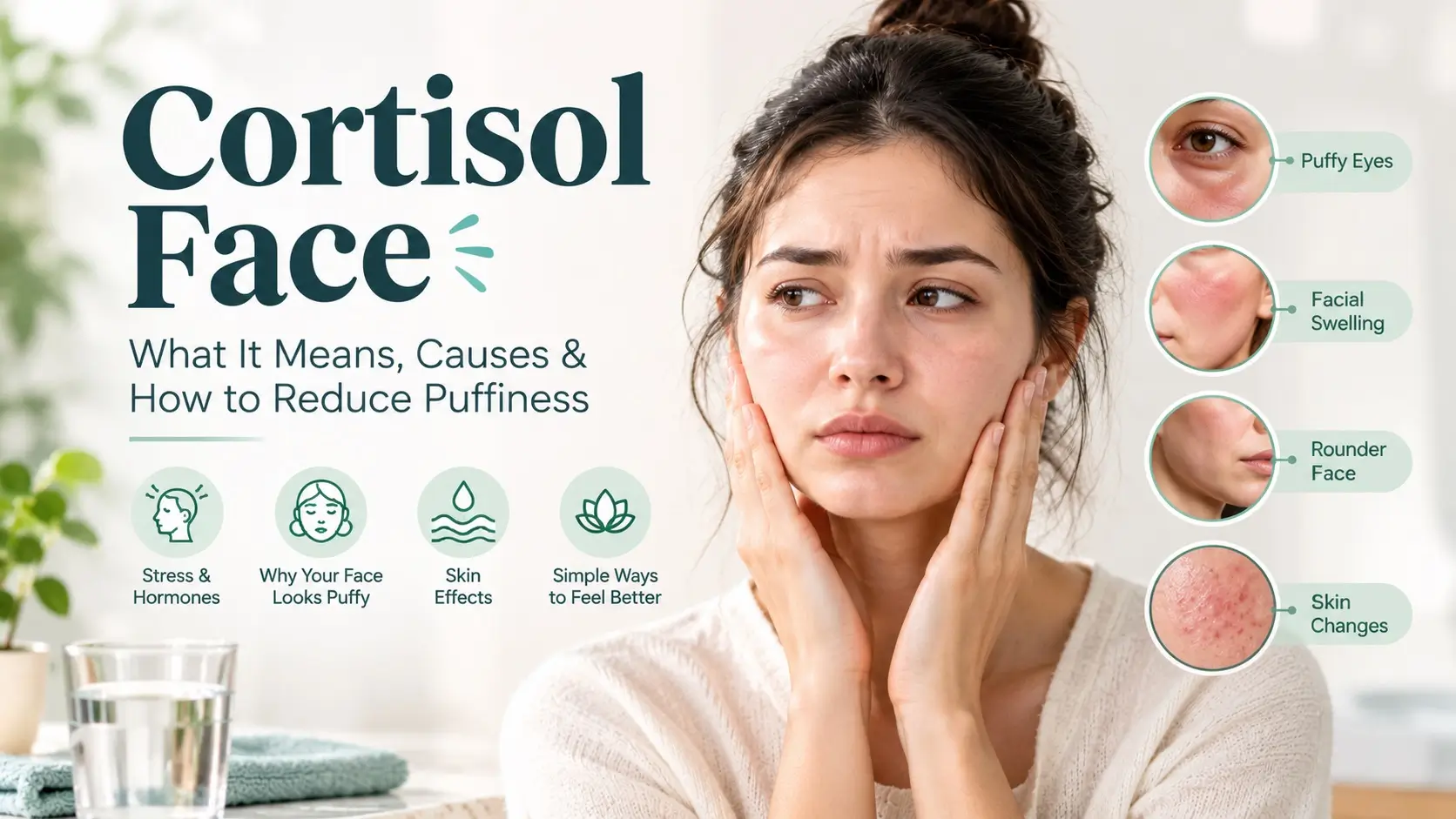
You may have seen the term “cortisol face” all over social media. It is often used to describe a face that looks puffy, swollen, rounder than usual, or tired because of stress and supposedly high cortisol levels.
The idea sounds simple: stress increases cortisol, cortisol changes your face, and reducing stress will immediately make your face look slimmer again.
In reality, the situation is more complicated.
Cortisol face is not an official medical diagnosis. Facial puffiness and changes in facial appearance can happen for many reasons, including sleep, fluid retention, diet, allergies, medications, hormonal changes, and certain medical conditions.
Stress can affect the body and skin in different ways, and long-term stress may influence sleep, inflammation, and lifestyle habits. However, it is important not to assume that every change in facial shape or puffiness is caused by cortisol.
This guide explains what people mean by cortisol face, what may cause facial puffiness, how stress can affect your skin, and when it may be worth speaking with a healthcare professional.
What Is Cortisol Face?
Cortisol face is an informal term commonly used online to describe facial puffiness or a rounder-looking face that people associate with high stress levels and cortisol.
Cortisol itself is a hormone produced naturally by your body. It plays important roles in responding to stress, regulating metabolism, supporting blood pressure, and helping the body manage different daily functions.
Cortisol is not automatically harmful.
Your body needs cortisol to function normally. The problem is that social media discussions sometimes present cortisol as a “bad hormone” that must always be lowered.
The reality is more balanced. Cortisol levels naturally change throughout the day and can increase in response to different physical and emotional situations.
If your face suddenly looks puffy or different, cortisol may not necessarily be the reason.
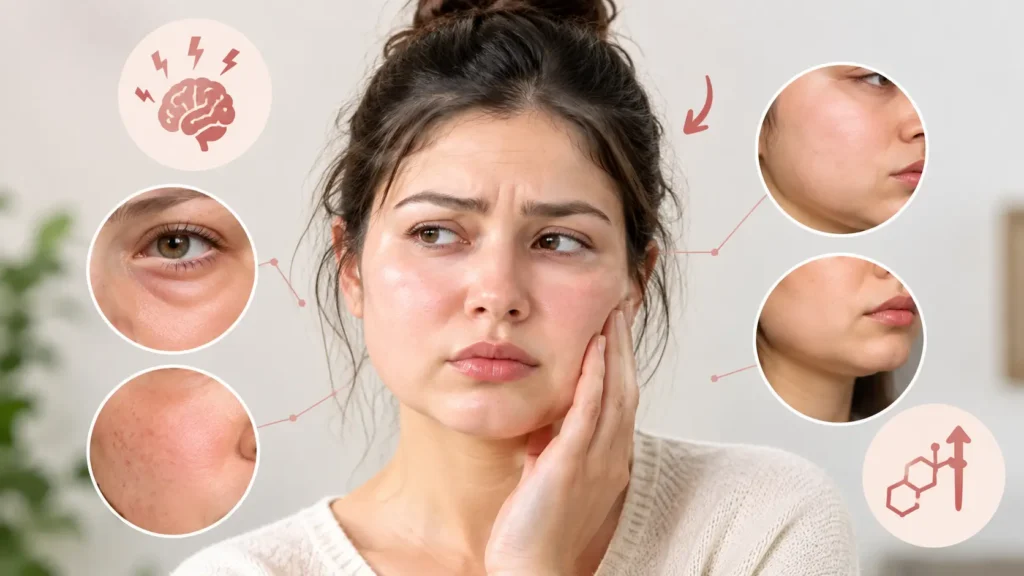
Can Stress Change the Appearance of Your Face?
Stress can affect the body in several ways that may indirectly influence how your face looks.
For example, stress may affect:
- Sleep quality
- Eating habits
- Water retention
- Skin inflammation
- Acne flare-ups
- Facial tension
- Energy levels
- Overall lifestyle routines
When you are stressed and sleeping poorly, your face may appear tired or puffy. You may also notice changes around the eyes or experience more breakouts.
However, these changes do not automatically mean that you have “cortisol face.”
It is better to look at your overall lifestyle and symptoms instead of trying to diagnose a hormone problem based only on facial appearance.
Why Does Your Face Look Puffy?
Facial puffiness can have many possible causes.
Sometimes the reason is temporary and harmless. For example, you may wake up with a puffier-looking face after poor sleep or eating a particularly salty meal.
Other possible causes can include:
- Fluid retention
- Lack of sleep
- Allergies
- Sinus congestion
- Crying
- Alcohol consumption
- High sodium intake
- Hormonal changes
- Certain medications
- Skin inflammation
Some medical conditions can also cause persistent facial swelling.
This is why it is important to avoid assuming that cortisol is the cause simply because your face looks swollen.
If facial swelling is sudden, severe, persistent, or accompanied by other symptoms, medical advice is important.
Does High Cortisol Cause a Puffy Face?
Abnormally high cortisol levels caused by certain medical conditions can sometimes contribute to changes in body fat distribution and facial appearance.
However, this is very different from ordinary daily stress.
Having a stressful week, working late, or feeling anxious does not necessarily mean that your cortisol level is high enough to cause major changes in your facial structure.
Social media can sometimes oversimplify this connection.
A person may notice facial puffiness during a stressful period because stress has affected their sleep, food choices, exercise routine, or overall health. These factors may contribute to temporary changes without cortisol being the only explanation.
Cortisol Face vs Normal Facial Puffiness
Normal facial puffiness is often temporary.
For example, you may notice that your face looks puffier:
- After waking up
- After a poor night’s sleep
- After eating a high-sodium meal
- During certain hormonal changes
- When you are sick
- During allergy season
This type of puffiness may improve as you return to your normal routine.
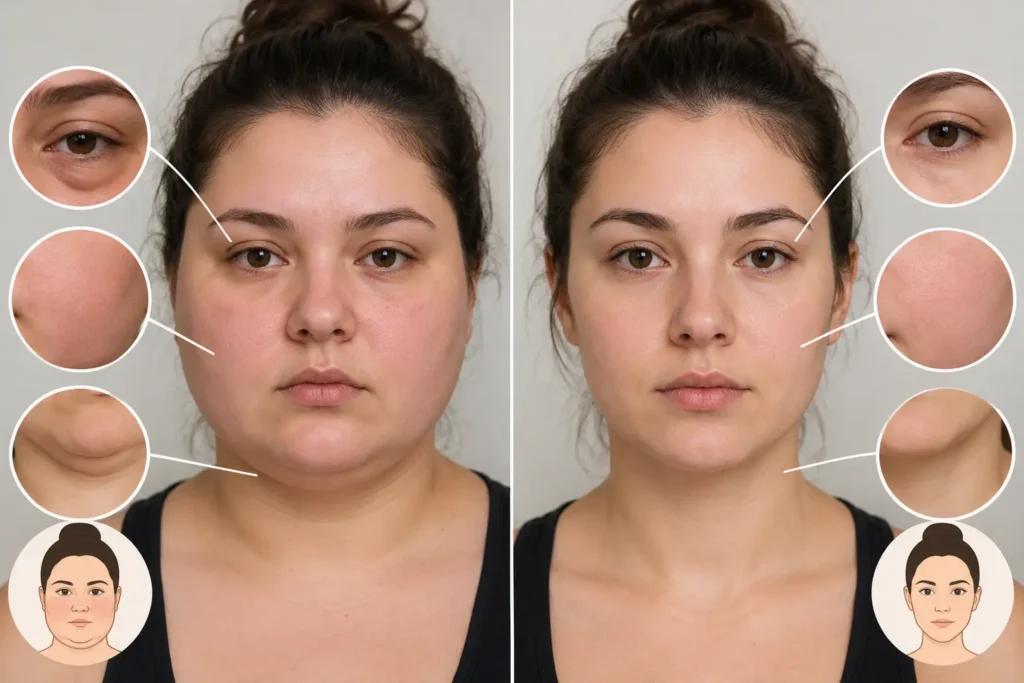
The term cortisol face, on the other hand, is often used online as if facial puffiness alone proves a cortisol imbalance.
That is not a reliable way to determine hormone levels.
A healthcare professional may use your symptoms, medical history, and appropriate testing when investigating a possible hormonal condition.
How Stress Can Affect Your Skin
Even though you cannot diagnose cortisol levels by looking at your face, stress can still affect your skin.
Stressful periods may coincide with changes such as:
- Acne flare-ups
- Increased skin sensitivity
- Dull-looking skin
- Changes in sleep-related skin appearance
- Picking or touching the face more frequently
- Changes in skincare consistency
Stress may also make it harder to maintain healthy habits.
For example, when you are overwhelmed, you may sleep less, drink less water, skip meals, eat differently, or stop following your usual skincare routine.
These lifestyle changes can influence how your skin looks and feels.
Instead of focusing only on lowering cortisol, it can be more useful to focus on supporting your overall wellbeing and maintaining a simple skincare routine.
Can Cortisol Cause Acne?
Stress does not directly explain every acne breakout, but stressful periods can coincide with acne becoming more noticeable.
Acne is influenced by multiple factors, including:
- Oil production
- Clogged pores
- Inflammation
- Hormones
- Genetics
- Skincare products
If you notice more breakouts during stressful periods, look at your overall routine.
Avoid reacting by suddenly adding many strong acne treatments at once. Overusing active ingredients can irritate the skin and sometimes make your complexion feel worse.
For a simple approach to supporting dry and sensitive skin while keeping irritation low, you can read our gentle skincare routine for dry sensitive skin guide.
Can Poor Sleep Make Your Face Look Puffy?
Yes, poor sleep can affect how refreshed your face looks.
After an inadequate night’s sleep, some people notice:
- Puffy-looking eyes
- A tired appearance
- Darker-looking under-eye areas
- Less refreshed-looking skin
Sleep is also important for your overall physical and mental wellbeing.
If you regularly wake up looking puffy, consider looking at your sleep schedule before assuming you have a cortisol problem.
Try to maintain a consistent bedtime and give your body enough time to rest.
How to Reduce a Puffy-Looking Face Naturally
If your facial puffiness is mild and temporary, simple lifestyle adjustments may help.
Prioritize Consistent Sleep
Sleep affects how rested you look and feel.
Try to create a regular sleep routine that works with your schedule.
You do not need a perfect nighttime routine. Small changes can be easier to maintain, such as going to bed at a similar time each night and reducing unnecessary screen time before sleep.
Stay Hydrated
Not drinking enough fluids can affect your overall wellbeing.
Drink fluids consistently throughout the day rather than waiting until you feel extremely thirsty.
If you want to learn more about supporting hydration, see our how to hydrate fast guide.
Remember that excessive water consumption is not a solution for facial puffiness. The goal is regular and appropriate hydration.
Pay Attention to Sodium Intake
Eating a very salty meal may contribute to temporary water retention in some people.
You do not need to eliminate salt completely, but maintaining a balanced diet can help support your overall health.
Move Your Body Regularly
Regular physical activity can support overall wellbeing and stress management.
Choose movement that you genuinely enjoy and can maintain consistently.
This could include:
- Walking
- Stretching
- Cycling
- Strength training
- Yoga
- Swimming
You do not need an extreme workout routine to support your health.
Manage Stress in Realistic Ways
Stress management does not have to mean completely removing stress from your life.
Instead, try to create small periods of recovery during your day.
You might try:
- Taking a walk
- Deep breathing
- Journaling
- Spending time outdoors
- Talking with friends or family
- Taking breaks from work
- Limiting excessive social media scrolling
The best stress-management strategy is usually one that you can actually continue.
Does Drinking More Water Get Rid of Cortisol Face?
Drinking water is important for hydration, but drinking excessive amounts of water will not “flush cortisol” out of your face.
This is another example of an oversimplified social media claim.
If your face looks temporarily puffy because of mild dehydration, poor sleep, or other lifestyle factors, returning to normal hydration habits may help you feel better overall.
But persistent facial swelling should not be treated simply by drinking increasingly large amounts of water.
Does a Cortisol Detox Work?
The idea of a “cortisol detox” is often used in wellness marketing.
Your body naturally regulates hormones through complex biological systems. There is no standard facial detox that specifically removes cortisol from your face.
Be cautious about products or supplements that promise to:
- Eliminate cortisol overnight
- Slim your face in a few days
- Permanently remove facial puffiness
- Balance all hormones without medical evaluation
A balanced approach involving sleep, nutrition, physical activity, and stress management is generally more realistic than searching for a quick cortisol detox.
Foods for Stress and Overall Wellbeing
No single food can instantly remove cortisol face.
Instead of searching for one “cortisol-lowering food,” focus on building balanced eating habits.
A supportive diet may include a variety of:
- Fruits
- Vegetables
- Whole grains
- Protein-rich foods
- Healthy fats
Regular meals can also help some people avoid the cycle of skipping food and then overeating later in the day.
If you are experiencing significant stress or changes in appetite, focusing on simple and regular meals may be more practical than following restrictive detox diets.
Can Skincare Fix Cortisol Face?
Skincare cannot change cortisol levels or treat an underlying medical condition.
However, skincare can support concerns that may occur alongside stress, such as dryness, irritation, or breakouts.
A simple routine may include:
- Gentle cleanser
- Hydrating or treatment serum when appropriate
- Moisturizer
- Sunscreen during the day
Avoid changing your entire skincare routine every time your face looks different.
If your skin barrier feels dry, tight, or irritated, supporting moisture may be more helpful than adding several active ingredients.
You can explore our best skincare products for dry skin guide for ideas on choosing products that support dry and dehydrated-feeling skin.
Can Facial Massage Reduce Puffiness?
Gentle facial massage may temporarily help some people feel more relaxed and may improve the appearance of temporary puffiness.
However, it should not be viewed as a treatment for a hormone imbalance.
Avoid aggressive massage, excessive pressure, or techniques that irritate your skin.
If facial swelling is persistent, painful, or unexplained, cosmetic massage is not a substitute for medical evaluation.
When Should You See a Doctor About Facial Swelling?
Occasional mild puffiness may not be concerning.
However, you should seek medical advice if facial swelling is:
- Sudden
- Severe
- Persistent
- Getting worse
- Painful
- Associated with difficulty breathing
- Accompanied by swelling elsewhere in the body
It is also worth discussing your symptoms with a healthcare professional if you are concerned about possible hormonal changes and experience additional symptoms.
A facial appearance alone cannot reliably diagnose a cortisol disorder.
Common Myths About Cortisol Face
Myth: A Puffy Face Always Means High Cortisol
Facial puffiness can have many causes.
Stress may be one part of your overall lifestyle picture, but it is not the only explanation.
Myth: Cortisol Is Always Bad
Cortisol is an important hormone that your body needs.
The goal is not to remove cortisol completely.
Myth: You Can Diagnose Hormones From Your Face
A selfie or mirror cannot accurately measure cortisol levels.
Medical testing and professional evaluation are needed when a hormone disorder is suspected.
Myth: A Detox Can Remove Cortisol From Your Face
There is no standard facial detox that instantly removes cortisol.
Be cautious of products making dramatic hormone-related promises.
Myth: One Product Can Fix Facial Puffiness
The right approach depends on why the puffiness is happening.
Sleep, allergies, diet, illness, medications, and medical conditions can all play a role.
How to Support Healthier-Looking Skin During Stressful Periods
Stressful periods happen to everyone, so the goal should be to create a routine that remains manageable even when life becomes busy.
Try focusing on:
- Consistent sleep
- Regular meals
- Appropriate hydration
- Gentle skincare
- Daily sun protection
- Regular movement
- Realistic stress-management habits
You do not need to create a 10-step routine or buy every trending wellness product.
A simple routine that you follow consistently is usually more useful than an expensive routine you only follow occasionally.
Final Thoughts
Cortisol face is a popular social media term, but it is not a medical diagnosis.
A puffy or rounder-looking face can happen for many reasons, and it is important not to assume that stress or cortisol is always responsible.
Stress can influence your sleep, skin, lifestyle habits, and overall wellbeing, which may indirectly affect how your face looks. However, facial appearance alone cannot tell you whether your cortisol levels are abnormal.
If your goal is to look and feel healthier, focus on realistic habits such as getting enough sleep, staying appropriately hydrated, eating balanced meals, managing stress, and following a gentle skincare routine.
And if facial swelling is sudden, persistent, severe, or accompanied by other symptoms, seek medical advice rather than relying on social media trends or cortisol detox products.