

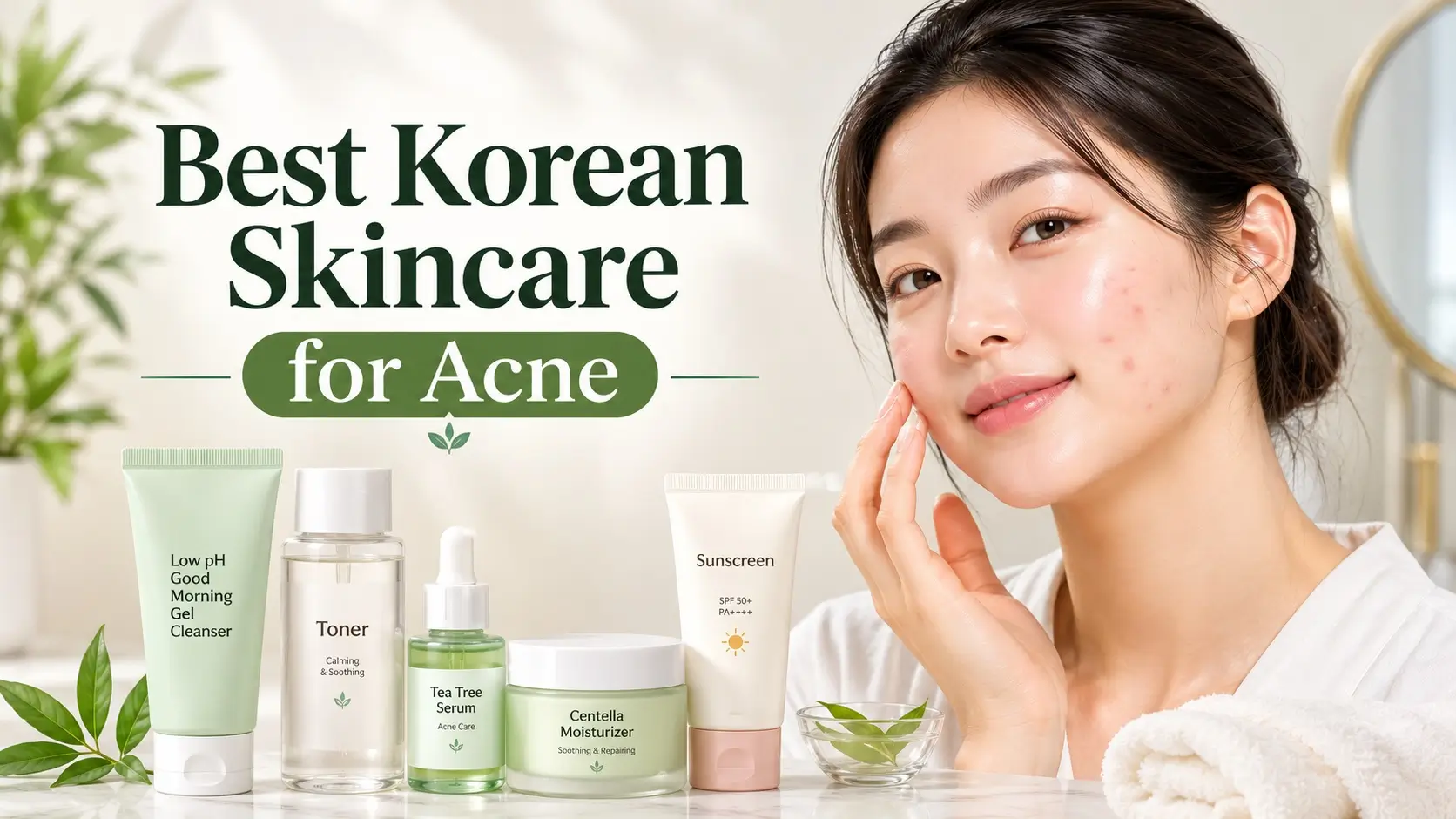
Finding the best Korean skincare for acne can be confusing because Korean beauty, often called K-beauty, includes everything from lightweight essences and soothing serums to exfoliants, cleansing oils, and barrier-supporting moisturizers.
The goal is not to use a long Korean skincare routine simply because it has many steps. Acne-prone skin often does better with a simple routine that cleanses gently, provides appropriate hydration, supports the skin barrier, and uses proven acne-fighting ingredients without unnecessary irritation.
Korean skincare can be especially appealing because many products focus on lightweight hydration and soothing ingredients. However, a beautiful formulation does not automatically make a product effective for acne. The ingredients and your skin’s individual needs matter more than where a product comes from.
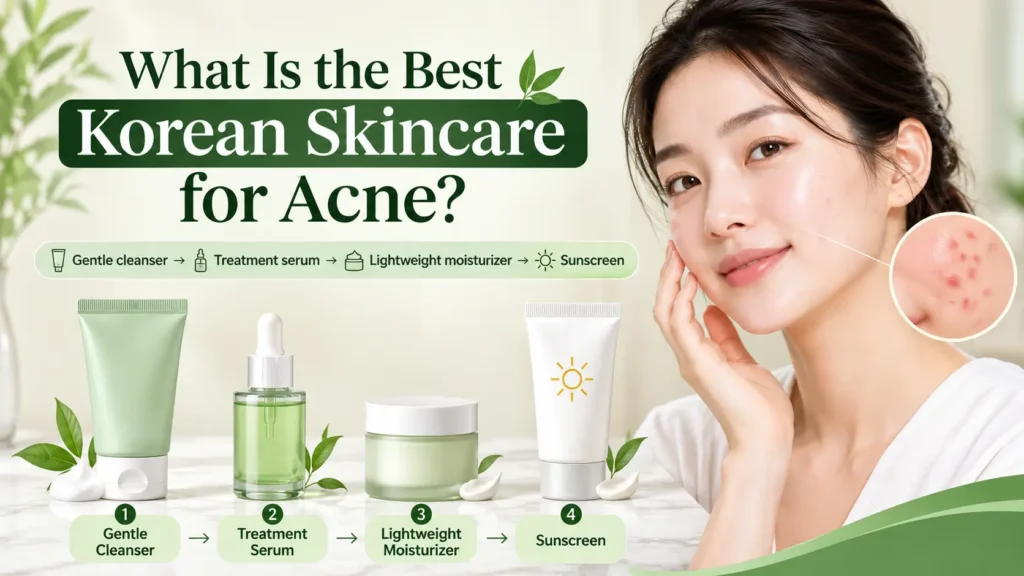
What Is the Best Korean Skincare for Acne?
The best Korean skincare for acne is skincare that fits your skin type while helping address clogged pores, excess oil, breakouts, and irritation.
A simple routine can include:
Gentle cleanser → Treatment serum → Lightweight moisturizer → Sunscreen
At night, you can use the same basic routine and add a targeted acne treatment when appropriate.
When choosing K-beauty products for acne-prone skin, useful ingredients to look for include:
- Salicylic acid
- Niacinamide
- Centella asiatica
- Green tea
- Panthenol
- Ceramides
- Hyaluronic acid
- Tea tree
- Azelaic acid
Not every product needs to contain an active ingredient. A gentle cleanser and barrier-supporting moisturizer can be just as important as an acne treatment.
Korean Skincare Routine for Acne-Prone Skin
A Korean skincare routine does not have to include ten steps.
For acne-prone skin, a shorter routine can reduce the chance of irritation caused by layering too many active products.
Morning Routine
A simple morning routine can be:
- Gentle cleanser or water rinse
- Hydrating or acne-supporting serum
- Lightweight moisturizer
- Broad-spectrum sunscreen
If your skin is oily in the morning, you may prefer a lightweight gel-cream moisturizer.
Night Routine
Your nighttime routine can be:
- Remove makeup and sunscreen
- Gentle cleanser
- Acne treatment or serum
- Moisturizer
If you use a cleansing oil or balm, follow it with a gentle water-based cleanser.
Best Korean Cleanser for Acne
Cleansing is important for removing excess oil, sunscreen, makeup, sweat, and daily buildup.
However, acne-prone skin does not need an aggressive cleanser.
A good cleanser should leave your skin clean without making it feel stripped or painfully tight.
Low-pH Cleansers
Low-pH cleansers are popular in Korean skincare.
They are often formulated to provide a gentle cleansing experience, which can be useful when you want to avoid excessive dryness.
Salicylic Acid Cleansers
Salicylic acid is a beta hydroxy acid that can help exfoliate inside pores and is commonly used in acne-focused skincare.
A salicylic acid cleanser may be useful for oily or clogged skin, but using too many exfoliating products at once can cause irritation.
If you are already using another acne treatment, you may prefer a gentle non-active cleanser.
Best Korean Ingredients for Acne
The popularity of K-beauty comes partly from its wide range of ingredients.
Some can be especially useful when building a routine for blemish-prone skin.
Salicylic Acid
Salicylic acid helps exfoliate dead skin cells and can help unclog pores.
It is particularly relevant for blackheads, whiteheads, and congested skin.
The American Academy of Dermatology includes salicylic acid among topical ingredients used to treat acne.
Niacinamide
Niacinamide, a form of vitamin B3, is frequently used in Korean skincare.
It can help support the skin barrier and is also used in products formulated for oily and blemish-prone skin.
A moderate-strength niacinamide serum may be easier to incorporate into an acne routine than a highly concentrated formula.
Centella Asiatica
Centella asiatica, often called cica, is a popular Korean skincare ingredient.
It is commonly found in soothing products designed for skin that feels irritated or stressed.
Cica can be a useful supporting ingredient, particularly when acne treatments leave the skin feeling dry or uncomfortable.
Green Tea
Green tea contains antioxidant compounds and is frequently used in skincare designed for oily or blemish-prone skin.
A green tea toner or serum can add a lightweight skincare step without necessarily making the routine heavy.
Panthenol
Panthenol is commonly used in moisturizing and soothing skincare formulations.
It can be useful when acne treatments cause dryness and your routine needs additional hydration.
Ceramides
Ceramides help support the skin barrier.
They are especially useful in moisturizers because acne-prone skin can still become dry and irritated.
Hyaluronic Acid
Hyaluronic acid is a humectant that helps attract moisture.
It can provide hydration without requiring a heavy, oily texture.
This makes it a popular choice for people who want hydration while keeping their routine lightweight.
Best Korean Serum for Acne
A serum should be selected according to your primary concern.
If clogged pores and frequent breakouts are your biggest concern, look for an appropriate acne treatment.
If your skin is irritated or dehydrated, a soothing or hydrating serum may be more useful.
Niacinamide Serum
A niacinamide serum can fit well into a routine focused on oil control, barrier support, and overall skin appearance.
Start with a moderate concentration rather than assuming a higher percentage will produce better results.
Cica Serum
A centella-based serum can be useful when your skin feels irritated or uncomfortable.
It does not replace an acne medication, but it can complement a routine that includes acne treatments.
Hydrating Serum
Acne-prone skin still needs hydration.
A lightweight serum containing humectants such as glycerin or hyaluronic acid can help prevent your routine from becoming unnecessarily drying.
Best Korean Moisturizer for Acne-Prone Skin
Moisturizer is important even if your face becomes oily.
When acne treatments dry the skin, skipping moisturizer may make the routine harder to tolerate.
Look for a moisturizer that is:
- Lightweight
- Non-comedogenic when possible
- Fragrance-free if your skin is sensitive
- Comfortable under sunscreen
- Appropriate for your skin type
Gel Moisturizers
Gel creams are often popular among oily and combination skin types because they feel lightweight.
Barrier-Supporting Creams
If your skin is acne-prone but also dry or irritated, a slightly richer moisturizer containing ceramides and other barrier-supporting ingredients may be more appropriate.
The best texture depends on your skin rather than the product’s popularity.
Acne-prone skin can also become dry and irritated when too many active products are used. In that situation, focusing on skin barrier repair can help you simplify your routine and give your skin more support. Gentle cleansing, a suitable moisturizer, and avoiding excessive exfoliation can make your skincare routine easier to tolerate.
Best Korean Sunscreen for Acne-Prone Skin
Daily sunscreen should be part of an acne skincare routine.
Choose a broad-spectrum sunscreen with SPF 30 or higher that feels comfortable on your skin.
A lightweight Korean sunscreen can be convenient if you dislike thick or greasy formulas.
Why Sunscreen Matters for Acne-Prone Skin
Breakouts can leave temporary dark marks or uneven-looking pigmentation.
Sun exposure can make some types of discoloration more noticeable.
Sunscreen does not treat acne itself, but consistent sun protection helps protect the skin while you work on your acne routine.
Korean Double Cleansing for Acne
Double cleansing is a popular part of Korean skincare.
It usually involves:
Oil cleanser or cleansing balm → Water-based cleanser
The first cleanser helps remove sunscreen, makeup, and oil-based products.
The second cleanser removes remaining residue and daily impurities.
Is Double Cleansing Necessary for Acne?
Not necessarily.
If you do not wear makeup or water-resistant sunscreen, a single gentle cleanser may be enough.
Double cleansing should make your routine more effective, not leave your skin feeling stripped.
If your skin becomes dry or irritated after double cleansing, simplify the routine.
Korean Exfoliation for Acne-Prone Skin
Exfoliation can help remove dead skin cells and improve the appearance of clogged pores.
But acne-prone skin does not need aggressive exfoliation.
Chemical Exfoliation
Products containing salicylic acid can be useful for clogged pores.
Other acids may also be used for different skin concerns, but combining several exfoliating products can increase irritation.
Avoid Harsh Face Scrubs
Scrubbing active acne with rough particles can irritate the skin.
Instead of trying to physically scrub away breakouts, use a suitable acne treatment and gentle cleanser.
Korean Skincare for Acne Scars and Dark Spots
After acne improves, leftover marks can become another concern.
It is important to distinguish between dark marks and true acne scars.
Flat brown or red marks can gradually fade, while indented or raised scars may require professional treatments.
Niacinamide for Post-Acne Marks
Niacinamide is commonly used in skincare aimed at improving uneven-looking skin tone.
It can be a useful supporting ingredient, especially when combined with daily sunscreen.
Vitamin C
Vitamin C is another popular ingredient for brightening skincare.
If your skin is sensitive or actively breaking out, introduce it slowly rather than combining it immediately with several other active products.
Sunscreen for Post-Acne Discoloration
Daily sunscreen is one of the most important steps when dealing with lingering discoloration.
Without consistent sun protection, dark marks can remain more noticeable.
Best Korean Skincare for Oily Acne-Prone Skin
If your skin produces a lot of oil, lightweight products may feel more comfortable.
Consider:
- Gentle low-pH cleanser
- Lightweight hydrating toner or essence
- Niacinamide serum
- Gel moisturizer
- Lightweight sunscreen
Avoid trying to remove every trace of oil from your skin.
Some oil is normal, and excessive cleansing can leave the skin irritated.
Best Korean Skincare for Dry Acne-Prone Skin
Acne and dryness can occur together.
In this situation, focusing only on oil control can make your routine unnecessarily harsh.
Choose:
- Gentle cleanser
- Hydrating serum
- Barrier-supporting moisturizer
- Targeted acne treatment
- Sunscreen
Don’t Skip Moisturizer
Acne treatments can cause dryness, peeling, or irritation.
Using an appropriate moisturizer can make your routine more comfortable and easier to maintain.
Best Korean Skincare for Sensitive Acne-Prone Skin
Sensitive acne-prone skin requires extra care.
Instead of adding several new products, start with a small routine.
Keep the Routine Simple
Use:
Gentle cleanser → Moisturizer → Sunscreen
Then add one acne treatment or serum when your skin is comfortable with the basics.
Avoid Excessive Fragrance
Fragrance does not automatically make a product bad, but it can irritate some sensitive skin types.
If your skin reacts easily, fragrance-free options may be easier to tolerate.
Common Mistakes With Korean Skincare for Acne
Korean skincare can involve many layers, but more steps are not automatically better.
Using Too Many Actives
Combining salicylic acid, exfoliating acids, retinoids, vitamin C, and other treatments without a plan can irritate your skin.
Introduce active products gradually.
Layering Several Exfoliants
Using an exfoliating toner, acid serum, acne cleanser, and peeling product together can be excessive.
Choose one primary exfoliating treatment at a time.
Skipping Moisturizer
Oily skin can still be dehydrated.
Use a lightweight moisturizer rather than skipping hydration completely.
Picking at Breakouts
Touching or squeezing acne can increase inflammation and may contribute to lingering marks or scarring.
Changing Products Every Few Days
Give your routine time to work.
Constantly switching products makes it difficult to determine what is helping or causing irritation.
How to Introduce New Korean Skincare Products
Adding new products slowly is especially useful when your skin is acne-prone.
Start with one product.
Use it according to its directions and monitor how your skin responds.
If everything remains comfortable, you can consider adding another product later.
Patch Testing
Before applying a new product across your entire face, test it on a small area according to the product’s instructions.
If you develop significant burning, swelling, itching, or persistent irritation, discontinue use.
A Simple Korean Skincare Routine for Beginners
You do not need a 10-step routine to experience the benefits of K-beauty.
Morning
1. Gentle cleanser or water rinse
2. Hydrating or niacinamide serum
3. Lightweight moisturizer
4. Broad-spectrum sunscreen
Night
1. Cleansing balm or oil if needed
2. Gentle cleanser
3. Acne treatment
4. Moisturizer
This routine provides a foundation without overwhelming your skin.
How Long Does Korean Skincare Take to Improve Acne?
Acne does not usually disappear overnight.
Some products may make your skin feel more comfortable quickly, but acne treatments generally need consistent use over time.
The American Academy of Dermatology notes that acne treatment often requires several weeks to begin showing improvement, with more noticeable improvement taking longer.
If your acne is persistent, painful, severe, or leaving scars, skincare alone may not be enough.
When to See a Dermatologist
Consider professional advice if you have:
- Painful deep breakouts
- Frequent cystic acne
- Acne that is leaving scars
- Persistent acne despite consistent skincare
- Significant redness or irritation
- Breakouts that are affecting your confidence or daily life
A dermatologist can recommend evidence-based treatments based on the type and severity of your acne.
Final Thoughts
The best Korean skincare for acne is not necessarily a 10-step collection of trendy products.
A better approach is to build a simple routine around your skin’s needs. Start with a gentle cleanser, appropriate acne treatment, lightweight moisturizer, and daily sunscreen.
Ingredients such as salicylic acid, niacinamide, centella asiatica, green tea, panthenol, ceramides, and hyaluronic acid can all have a place in an acne-friendly routine, depending on the product and your skin.
Most importantly, introduce new products gradually and avoid combining too many active ingredients. Korean skincare can provide excellent options for acne-prone skin, but consistency, gentle care, and appropriate acne treatment matter more than the number of products in your routine.