

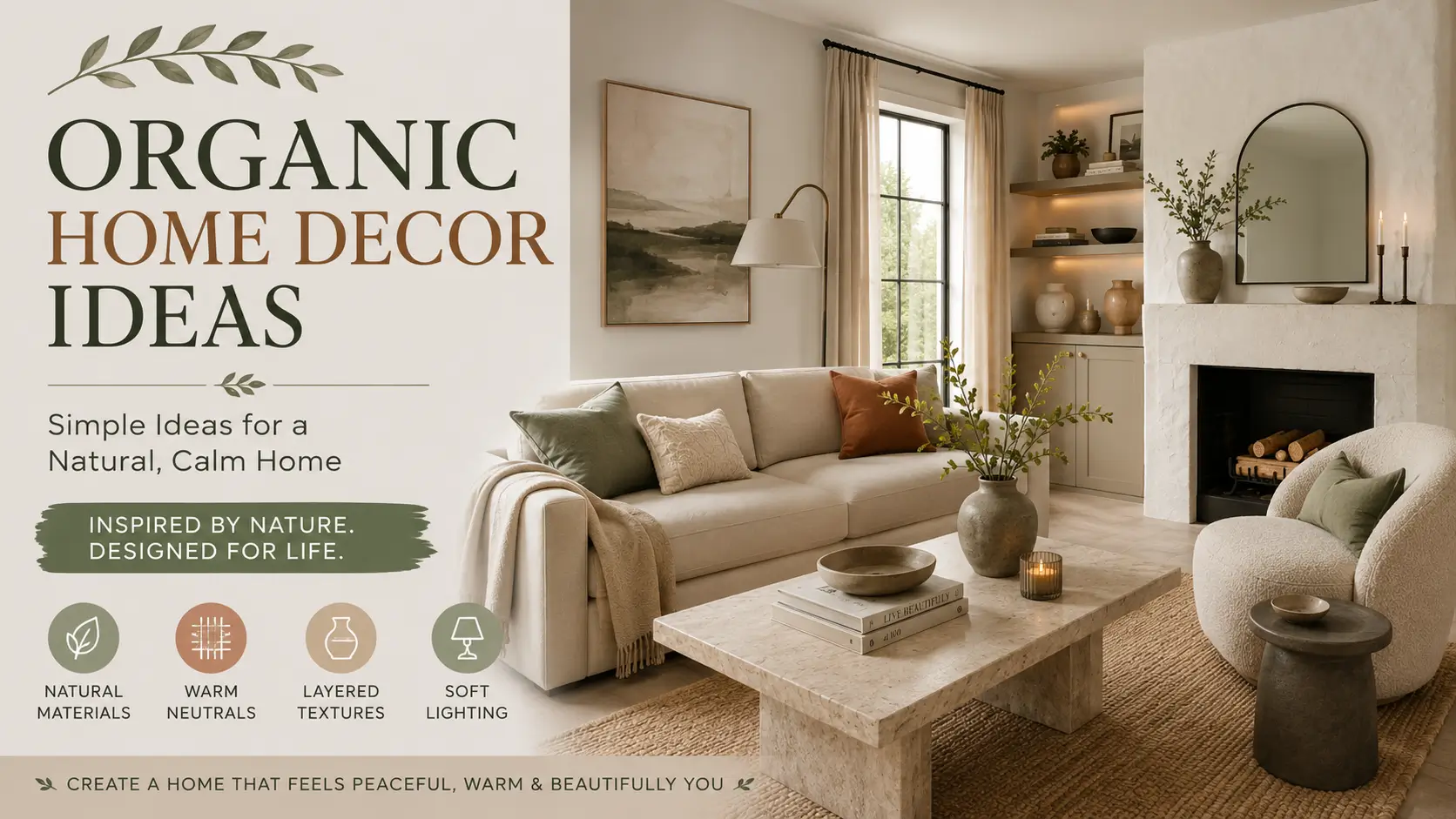
Organic home decor ideas are about creating a home that feels warm, comfortable, natural, and genuinely lived in. Instead of filling a room with matching furniture or excessive accessories, this style focuses on the beauty of natural materials, soft textures, warm colors, thoughtful lighting, and simple shapes.
The look works especially well when you want your home to feel calm without becoming plain. A combination of oak furniture, linen curtains, textured rugs, handmade ceramics, warm lighting, and earthy neutrals can make even a modern room feel more welcoming.
For more inspiration, take a look at our organic bedroom decor ideas to create a peaceful and comfortable sleeping space using natural textures and warm tones. If you prefer a touch of color, our guide offers beautiful ways to add a soft, nature-inspired shade to your home.
The goal is not to make everything perfectly coordinated. In fact, a little variation often makes an interior feel more authentic. A smooth stone surface can sit beside rough wood, while a structured sofa can be softened with a linen throw or boucle chair.
What Makes Organic Home Decor Feel So Natural?
Organic decor combines modern simplicity with materials and forms inspired by nature. Think warm white walls instead of icy white, natural wood instead of glossy furniture, linen instead of synthetic fabrics, and handmade ceramics instead of mass-produced accessories.
The easiest way to achieve the look is to focus on five things:
- Warm neutral colors
- Natural materials
- Layered textures
- Soft or curved furniture shapes
- Comfortable, practical styling
You also don’t need to fill your home with plants to create an organic atmosphere. The feeling of nature can come through wood grain, stone, woven fibers, clay, natural fabrics, muted earth tones, and daylight.
16 Organic Home Decor Ideas for a Warm, Relaxed Interior
1. Build the Room Around Warm Natural Wood
Natural wood can instantly make a room feel warmer and more grounded.
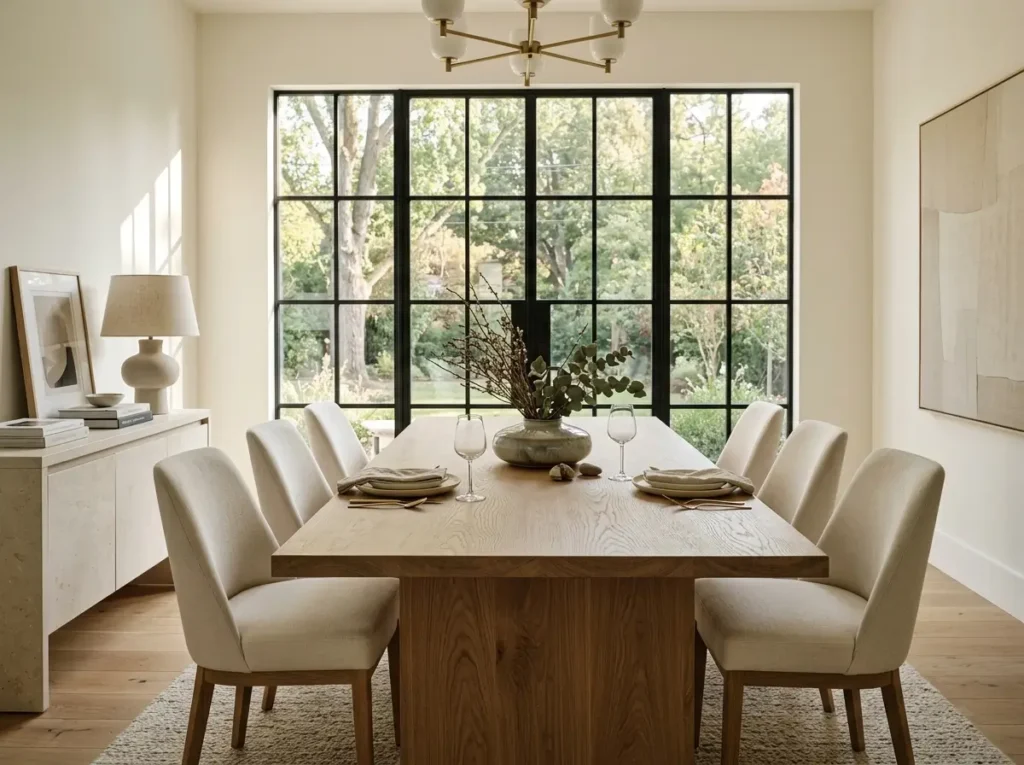
Instead of choosing furniture with a highly polished finish, look for oak, walnut, ash, or reclaimed wood with visible grain. A wooden dining table, console, coffee table, or bed frame can become the visual foundation of the room.
For a contemporary interior, a large oak dining table paired with upholstered chairs creates a relaxed but sophisticated look. In a home, natural wood can also work beautifully with original flooring, exposed architectural details, or traditional windows.
The key is to let the grain remain visible rather than covering the material with heavy finishes.
2. Make Natural Wood a Main Feature
Wood is one of the most important elements in organic design because it adds warmth and texture. It can be used in furniture, flooring, or decorative accents depending on your space and style.
You can introduce wood through coffee tables, dining tables, sideboards, shelves, or bed frames. The key is to keep the finish natural or matte so the grain remains visible and authentic.
Instead of mixing too many wood tones, it is better to choose one dominant shade. Repeating it in a few areas creates a more cohesive and intentional design.

3. Layer Textures Instead of Adding More Accessories
In organic interiors, texture is more important than decoration. Instead of filling a room with many objects, focus on combining different materials that feel interesting together.
You can mix linen cushions, wool rugs, ceramic vases, woven baskets, and stone accessories. Each material adds its own character, creating depth without clutter.
This approach is especially useful in smaller homes where too many items can make the space feel crowded. Texture keeps the design visually rich but still simple.
4. Introduce Soft, Curved Shapes
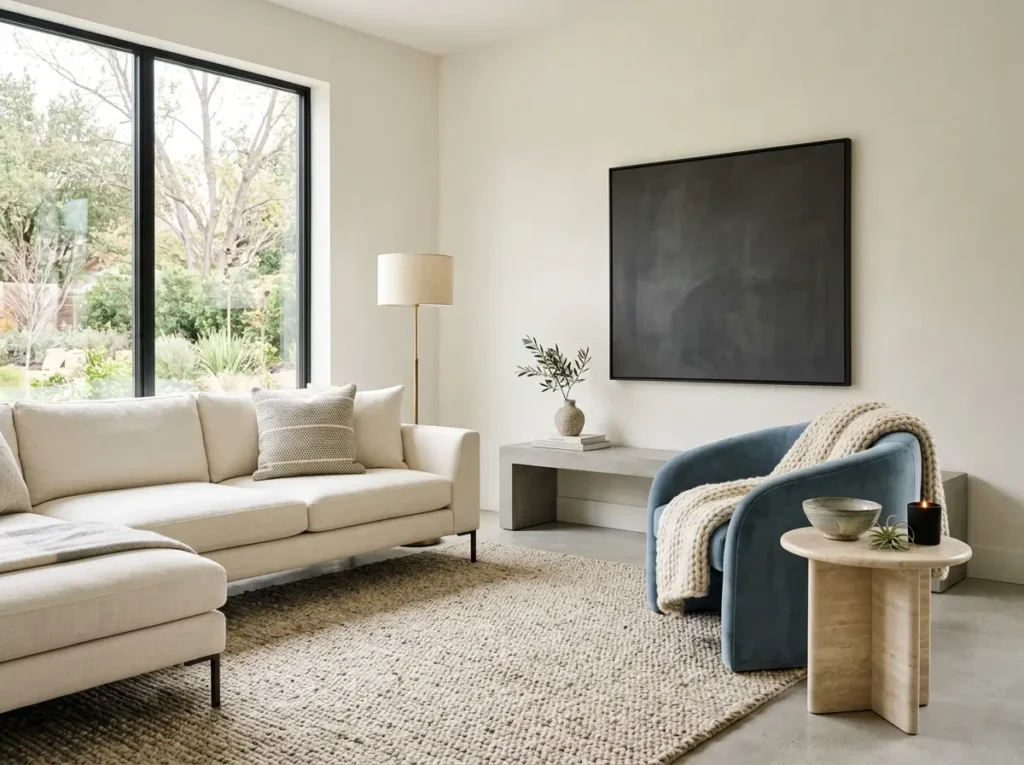
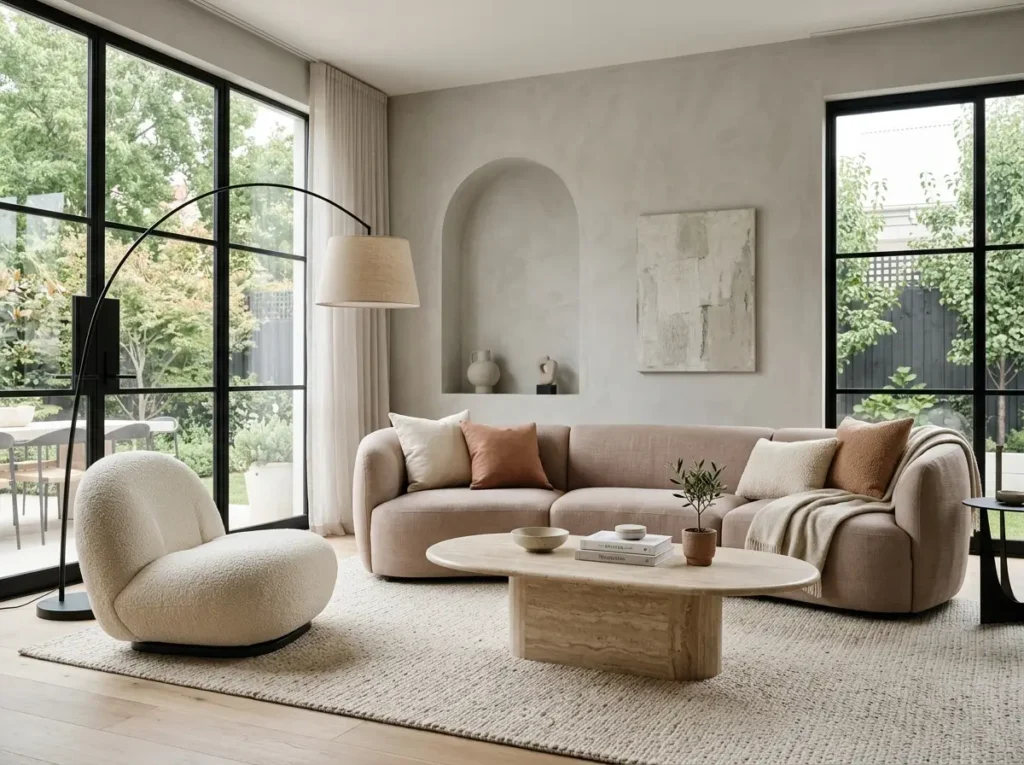
Curved shapes help soften the look of a room and make it feel more comfortable. Organic interiors often avoid sharp lines in favor of gentle, flowing forms.
You can add curves through round coffee tables, oval dining tables, arched mirrors, or curved sofas. Even a single rounded piece can change the feel of a space.
These shapes balance out the straight lines found in walls, windows, and architecture, creating a more relaxed visual flow.
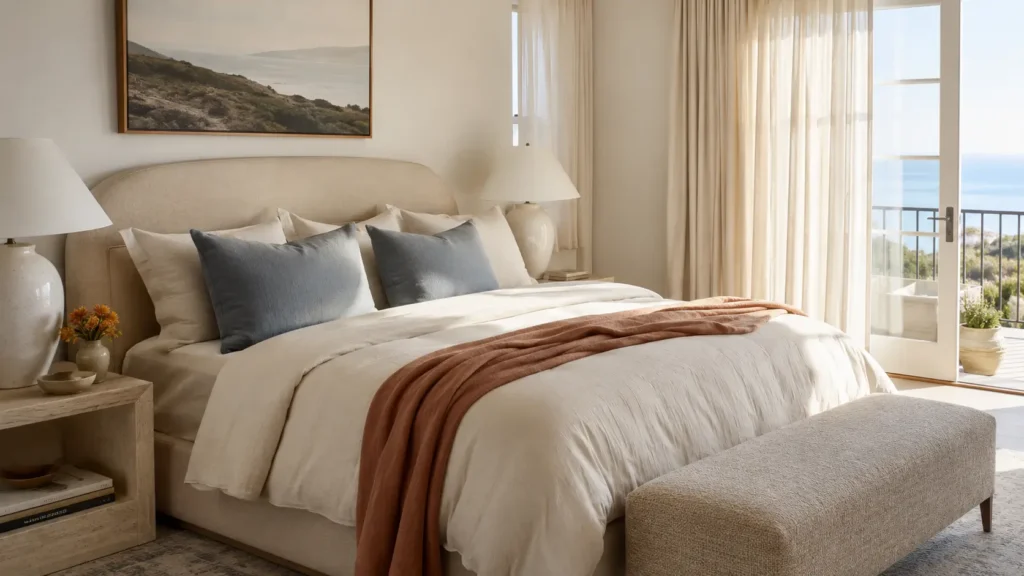
5. Bring in Linen for an Effortlessly Relaxed Look
Linen is a key material in organic home decor because it feels natural and slightly imperfect. Its soft texture adds a relaxed and lived-in quality to any room.
You can use linen for curtains, bedding, cushions, or throws. It works especially well in bedrooms and living rooms where comfort is important.
One of the best things about linen is that it does not need to look perfect. Its natural wrinkles actually enhance the organic feel of the space.
6. Design a Comfortable Organic Living Room
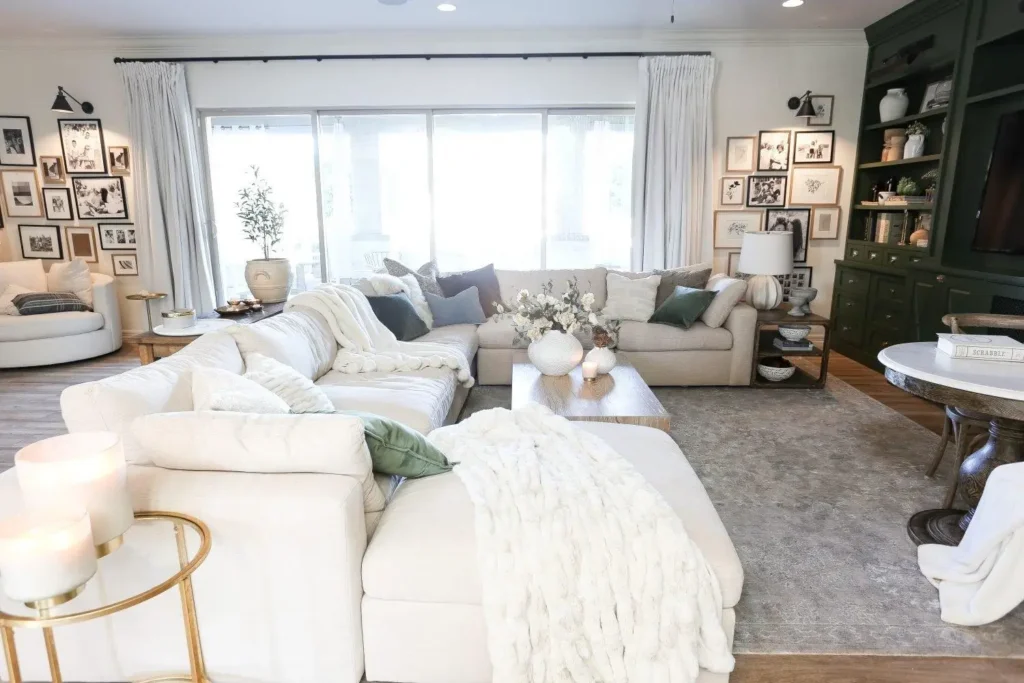
An organic living room should feel welcoming and easy to live in. Start with a comfortable sofa in a neutral tone, then build around it with natural materials and soft textures.
Add a wool rug, a wooden or stone coffee table, and a few carefully chosen accessories. Avoid over-decorating surfaces, as simplicity is key.
A few meaningful items, such as a ceramic bowl or a sculptural lamp, are often enough to complete the space. The goal is comfort, not clutter.
7. Add Stone, Clay, and Ceramic Details
Stone, clay, and ceramic elements bring an earthy and grounded feeling to interiors. These materials work well as small decorative accents rather than large features.
You can use ceramic vases, stone trays, clay bowls, or sculptural pottery. Their natural imperfections make them visually interesting and authentic.
Instead of using many small items, choose a few larger pieces. This keeps the design clean while still adding character.
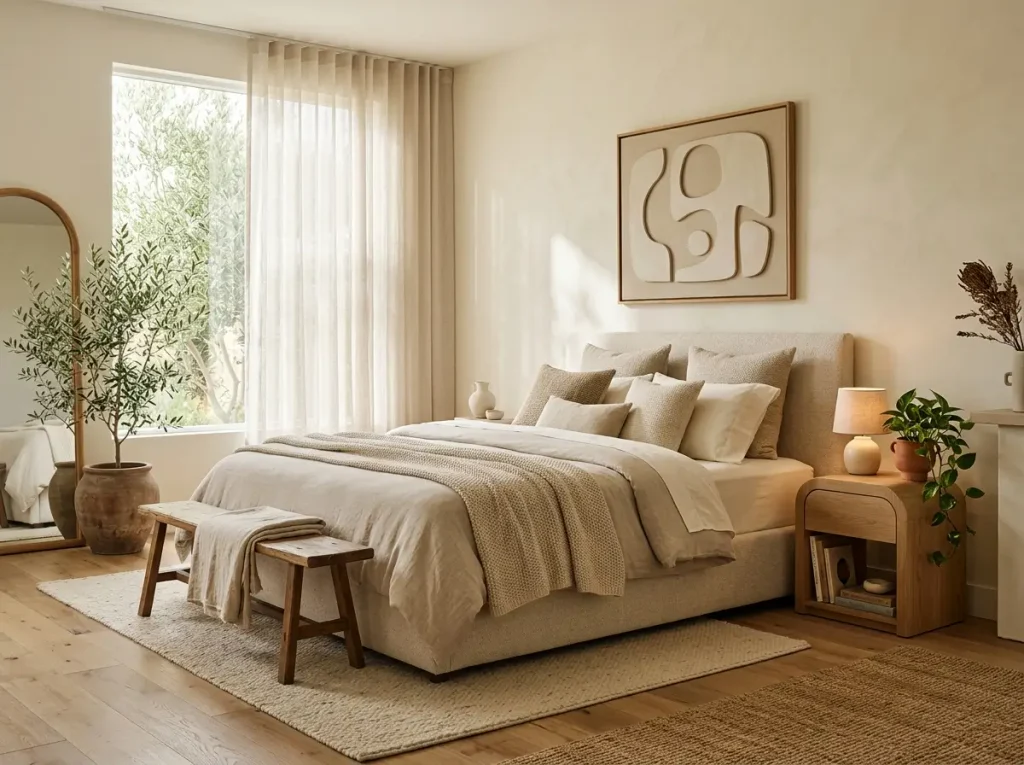
8. Turn the Bedroom Into a Calm Retreat
The bedroom is one of the best places to apply organic design principles. It should feel soft, peaceful, and uncluttered.
Use bedding in warm neutral tones like cream, beige, or soft brown. Add linen sheets, a wool throw, and simple bedside lighting for comfort.
Avoid matching furniture sets and instead mix natural textures. This creates a more personal and relaxed atmosphere.
9. Create a Warm and Welcoming Glow
Lighting plays a major role in organic interiors because it affects how materials and colors appear. Warm lighting enhances natural textures and creates a cozy atmosphere.
Instead of relying on a single overhead light, use multiple light sources such as table lamps, floor lamps, and wall lights. This creates depth and softness.
Natural daylight is also important. Light curtains can help filter sunlight while keeping the space bright and airy.

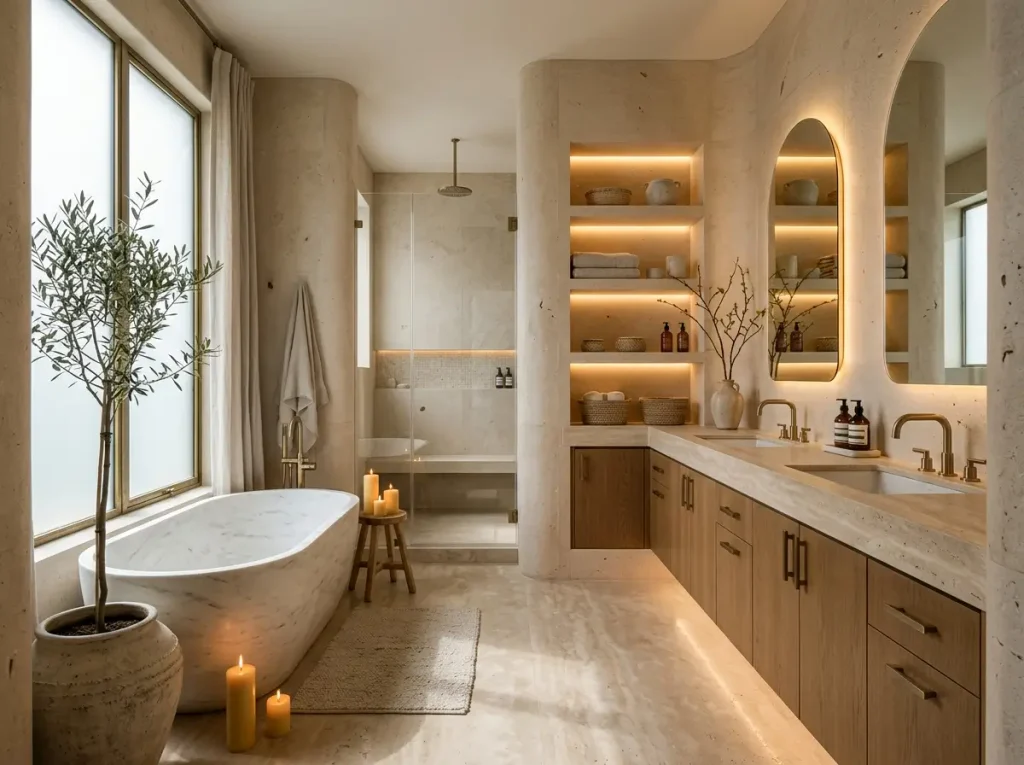
10. Create a Spa-Like Organic Bathroom
An organic bathroom should feel clean, calm, and effortlessly relaxing, almost like a private spa at home. The key is to keep the design simple while allowing natural materials, soft textures, and warm tones to create the atmosphere.
Use stone or stone-look surfaces, warm wood cabinetry, and soft neutral tiles to bring an earthy and natural feel to the space. Materials such as travertine, limestone, natural oak, and textured ceramics can add depth without making the bathroom feel overly decorated. Choose brushed metal fixtures in subtle finishes to complement the warm palette.
Add a few simple ceramic accessories, woven baskets, natural towels, or a small plant to introduce softness and character. Keep the styling intentional and avoid filling every surface with decorative objects.
Most importantly, keep countertops and open shelves clear, organized, and uncluttered. Soft warm lighting, natural daylight, and clean architectural lines can make the entire bathroom feel more spacious and peaceful. A carefully balanced combination of natural materials, minimal decoration, and soothing colors can transform an ordinary bathroom into a relaxing spa-like retreat.
11. Keep the Dining Area Simple and Welcoming
An organic dining space should feel warm, comfortable, and naturally inviting without being overly decorated. The goal is to create a relaxed setting where the furniture, materials, and small decorative details work together without competing for attention.
Start with a solid natural wood dining table that brings warmth and character to the room. Pair it with comfortable chairs in soft, neutral tones or natural woven materials to create a balanced and welcoming look. Choose furniture with simple, clean lines and subtle organic shapes to maintain the calm feeling of the space.
Lighting also plays an important role in creating the right atmosphere. A warm pendant light or a simple sculptural fixture above the table can provide a soft glow while adding visual interest. During the day, allow natural light to fill the room through light, airy window treatments.
Keep the dining table visually clean by choosing just one or two thoughtful decorative pieces, such as a handmade ceramic bowl, a simple vase filled with fresh branches, or a small natural centerpiece. A textured table runner or understated woven accent can add depth without making the dining area feel formal or crowded.
The result should be a dining space that feels effortless, functional, and welcoming a place that looks beautiful while still feeling comfortable enough for everyday meals and relaxed gatherings.

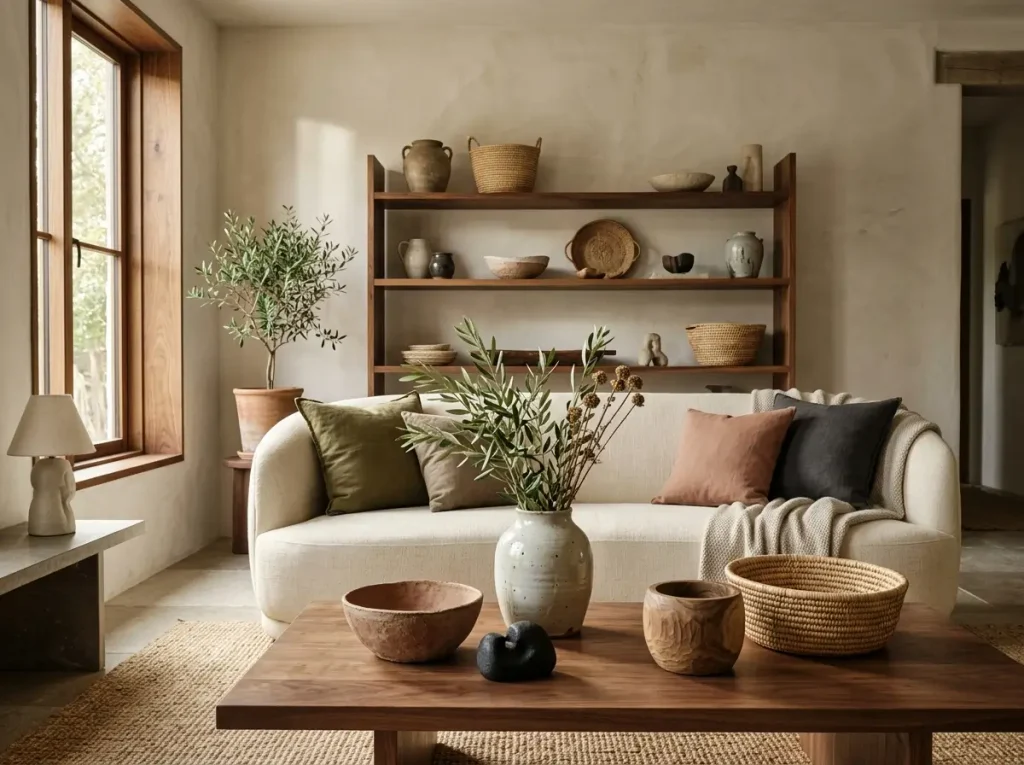
12. Add Character with Artisan Details
Handmade objects can bring warmth, personality, and a sense of authenticity to an organic home. Unlike mass-produced decorations, artisan pieces often have subtle variations, natural textures, and small imperfections that make each item feel unique and meaningful.
Introduce handmade ceramics, woven baskets, carved wooden accents, hand-shaped vases, or artisan-crafted decorative pieces throughout the room. Choose items made from natural materials and earthy tones so they blend naturally with the rest of your interior rather than feeling overly decorative.
You can also display a handcrafted bowl on a coffee table, place a textured ceramic vase on a shelf, or add a woven basket beside a sofa for both beauty and function. These small details can make a space feel more personal without creating visual clutter.
You do not need to fill every corner with handmade pieces. Even one or two carefully selected artisan objects can add depth, character, and a relaxed, lived-in quality to the room.
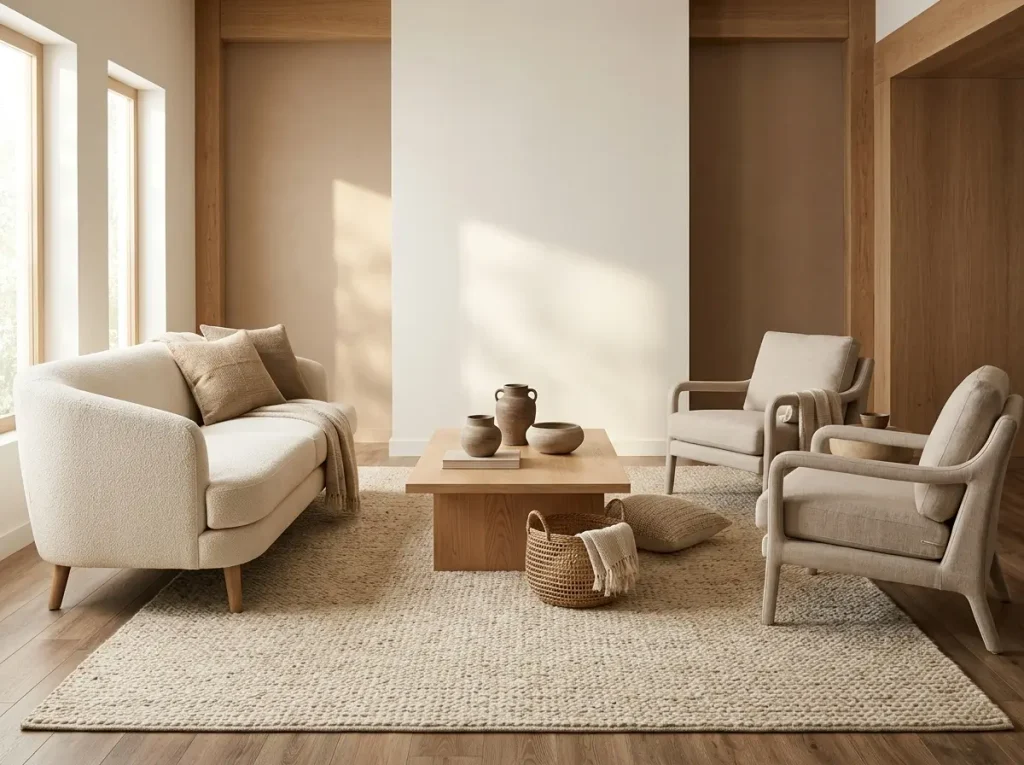
13. Anchor Rooms With Natural-Fiber Rugs
Natural-fiber rugs help ground a space and bring all the elements together. Materials like wool, jute, sisal, and cotton work especially well in organic interiors because they add warmth, softness, and natural texture without making the room feel overly decorated.
The size of the rug is also important. Choose a rug large enough to visually connect the main furniture pieces rather than leaving it floating separately in the center of the room. In a living room, the front legs of the sofa and chairs can sit comfortably on the rug to create a more cohesive arrangement.
A well-chosen rug adds warmth, texture, and structure while making the room feel more comfortable and finished. For a softer look, consider neutral shades such as ivory, beige, oatmeal, or muted earthy tones that complement the rest of your organic decor.
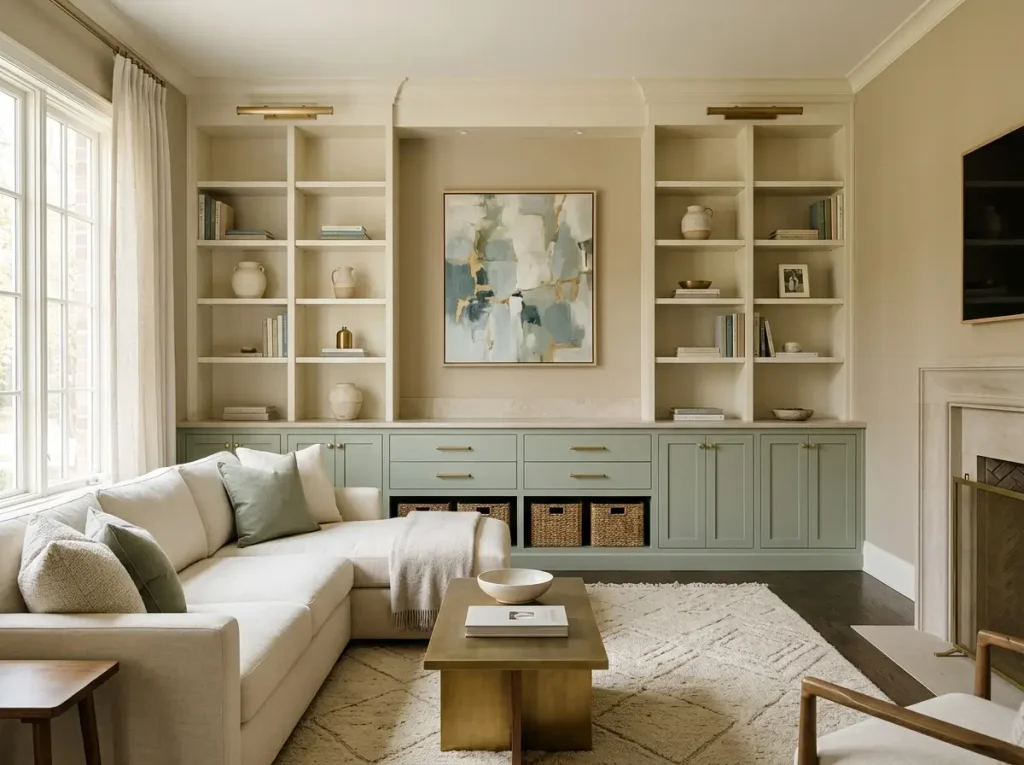
14. Use Attractive Storage to Reduce Clutter
Smart storage helps keep an organic home calm, clean, and visually balanced. When everyday items are neatly stored away, natural textures, earthy colors, and carefully chosen decor can stand out.
Choose woven baskets, wooden cabinets, storage benches, rattan boxes, and built-in shelves that add both function and warmth. Closed storage is ideal for hiding everyday essentials such as blankets, books, toys, and electronics.
Open shelves can also add personality, but keep them minimally styled with a few meaningful pieces, such as handmade ceramics, plants, or natural wood accents. For smaller spaces, choose multifunctional furniture like storage benches or ottomans.
The goal is to create a balance between display and concealment, keeping the room organized without making it feel empty or overly decorated.
15. Bring Meaningful Details Into Your Space
An organic home feels most inviting when it reflects the people who live there. Personal pieces add warmth, character, and an emotional connection that cannot be created through decor alone.
Display family photographs, favorite books, travel keepsakes, handmade treasures, or cherished heirlooms throughout your home. These small details can bring personality to shelves, coffee tables, consoles, and walls while blending naturally with your existing decor.
You do not need to display everything you own. Choose a few meaningful pieces that have a story behind them and complement the room’s natural colors and textures. The goal is to create a space that feels authentic, comfortable, and lived-in rather than perfectly staged.
A home becomes more beautiful when its decor reflects your memories, experiences, and personal style.

Final Thoughts
Organic home decor is not about following strict rules, buying expensive furniture, or filling every room with natural materials. It is about creating a home that feels calm, comfortable, balanced, and connected to nature. By combining warm neutral colors, soft textiles, natural fibers, stone, ceramics, gentle lighting, and a few meaningful accessories, you can create an interior that feels both stylish and easy to live in.
The most successful organic interiors are layered rather than overly decorated. A linen cushion, wool rug, handmade ceramic vase, curved chair, or warm lamp can add more character than a room filled with unnecessary accessories. Focus on quality, texture, and comfort instead of trying to match every item perfectly.
You also do not need to redesign your entire home at once. Begin with one room or one simple change, such as replacing cool lighting, adding a natural-fiber rug, introducing warmer colors, or organizing visible clutter. These small updates can gradually create a more peaceful atmosphere throughout your home.
Whether you live in a modern American house, a British townhouse, a city apartment, or a compact flat, organic decorating can be adapted to your architecture, budget, and lifestyle. The style works beautifully with contemporary, traditional, Scandinavian, minimalist, and transitional interiors.
Most importantly, allow your home to reflect your personality. Include family photographs, favorite books, vintage finds, handmade objects, and pieces that carry personal meaning. These details prevent the space from feeling like a showroom and make it feel genuinely lived in.
The goal of organic home decor is not perfection. It is to create a warm, welcoming environment where natural materials, practical storage, comfortable furniture, and personal details work together. When your home feels good to live in, it will naturally look beautiful too.
Frequently Asked Questions About Organic Home Decor
What is organic home decor?
Organic home decor is an interior design style inspired by nature. It uses warm neutral colors, natural textures, soft shapes, and materials such as linen, cotton, wool, stone, clay, ceramics, and wood.
The style focuses on comfort, simplicity, and balance rather than excessive decoration. Organic interiors usually feel relaxed, warm, and timeless.
What colors are best for organic home decor?
The best colors for organic interiors include warm white, cream, ivory, beige, oatmeal, taupe, greige, soft brown, muted sage, dusty blue, terracotta, and clay.
You can create depth by layering several related shades instead of using one color throughout the room. Small accents in rust, olive, charcoal, or muted blue can add contrast without making the space feel harsh.
Is organic home decor the same as rustic decor?
No, organic and rustic decor are related but not identical. Rustic interiors often include distressed wood, farmhouse details, rough finishes, and traditional country-inspired accessories.
Organic decor focuses more on natural textures, earthy colors, soft shapes, and a calm atmosphere. It can look modern, elegant, minimalist, or contemporary without feeling overly rustic.
Does organic home decor require a lot of plants?
No, plants are optional. Although greenery can complement an organic interior, you can create the same natural feeling with linen, wool, stone, clay, ceramics, woven materials, warm lighting, and earthy colors.
If you prefer a low-maintenance home, use one or two carefully chosen plants, dried branches, or natural decorative objects instead of filling the room with greenery.
How can I make my living room look more organic?
Start with a warm neutral base, such as cream walls or a beige sofa. Then add a textured rug, linen cushions, a wool throw, and a stone, ceramic, or natural-finish coffee table.
Use warm layered lighting instead of relying only on a ceiling fixture. Finish the room with a few meaningful accessories and avoid overcrowding shelves or tables.
What materials work best in organic interiors?
Popular materials include linen, cotton, wool, jute, sisal, stone, clay, ceramic, rattan, and natural or lightly finished wood.
The most attractive organic rooms usually combine several textures. For example, you might pair a linen sofa with a wool rug, a ceramic vase, a stone tray, and a woven basket.
Can organic home decor work in a small apartment?
Yes, organic decor works very well in small spaces. Use a limited color palette, multifunctional furniture, practical storage, and a few carefully selected accessories.
Round tables, furniture with visible legs, wall-mounted lighting, and closed storage can help the room feel more open. Avoid filling every surface, as empty space is an important part of a calm organic design.
How can I create an organic bedroom?
Choose soft bedding in cream, beige, oatmeal, or muted earthy colors. Add linen sheets, a textured throw, a wool rug, and warm bedside lighting.
Use simple furniture and avoid matching bedroom sets. A ceramic lamp, woven basket, upholstered headboard, or small piece of artwork can add character without creating visual clutter.
Are natural-fiber rugs practical for homes with children or pets?
Some natural-fiber rugs are very durable, but the best choice depends on the material and how the room is used. Wool, cotton, and tightly woven rugs can be practical options for busy homes.
Jute and sisal provide attractive texture but may require more careful maintenance. Always check cleaning instructions and choose a rug that suits your household’s daily needs.
How do I choose the right rug size?
Choose a rug large enough to connect the main furniture pieces. In a living room, the front legs of the sofa and chairs should ideally sit on the rug.
A rug that is too small can make the furniture arrangement feel disconnected. In a bedroom, choose a size that extends beyond the sides and foot of the bed for a more grounded appearance.
Can organic decor look luxurious?
Yes, organic decor can look highly sophisticated and luxurious. The key is to choose quality materials, refined shapes, and carefully edited accessories.
Natural stone, high-quality linen, wool, sculptural lighting, handmade ceramics, and elegant hardware can create a polished look while still maintaining warmth and comfort.
How can I add organic style without buying new furniture?
Begin by rearranging the furniture and removing unnecessary clutter. Replace heavy or overly bright accessories with neutral textiles, ceramic pieces, woven baskets, or natural-fiber rugs.
You can also change lampshades, add linen cushion covers, use warm light bulbs, display meaningful objects, or introduce a simple stone or clay accent.
What type of lighting works best with organic decor?
Warm, soft lighting works best. Use table lamps, floor lamps, wall lights, pendant fixtures, and dimmable bulbs to create several layers of light.
Warm-white bulbs help enhance the appearance of wood, linen, stone, and neutral fabrics. Natural daylight is also important, so use light curtains that filter sunlight without blocking it completely.
How can I prevent an organic interior from looking boring?
Use contrast through texture, shape, and small color accents. Combine smooth ceramics with rough stone, soft linen with woven fibers, and rounded furniture with straight architectural lines.
You can also add muted shades such as sage, terracotta, dusty blue, olive, or charcoal. The room does not need bright colors to feel interesting.
How do I keep organic decor from looking too rustic?
Choose clean-lined furniture, matte finishes, contemporary artwork, simple hardware, and refined natural materials. Avoid using too many distressed finishes, farmhouse signs, reclaimed wood accessories, or vintage country-style decorations.
A balance of modern furniture and natural textures will create a contemporary organic look rather than a rustic one.
Is organic home decor expensive?
Organic home decor can suit a wide range of budgets. You do not need to purchase everything at once or invest in designer furniture.
Start with affordable changes such as linen cushion covers, warm lighting, secondhand furniture, handmade-style ceramics, woven baskets, or a small natural-fiber rug. Focus on texture and atmosphere rather than price.
How can I make my home feel organic on a budget?
Declutter first and work with the furniture you already own. Add warm lighting, rearrange accessories, introduce neutral textiles, and choose a few natural-looking materials.
Secondhand shops, vintage markets, and online resale platforms can be excellent sources for wooden furniture, ceramic pieces, woven baskets, and unique decorative objects at lower prices.
What is the easiest way to start decorating organically?
Begin with one room and choose a simple foundation: a warm neutral color, one natural texture, one comfortable textile, and one meaningful accessory.
For example, you could add a cream throw, a linen cushion, a ceramic vase, and a warm table lamp to your living room. Small, intentional changes can gradually create a complete organic look.
Can organic decor work with modern furniture?
Yes, organic materials pair beautifully with modern furniture. Combine clean-lined sofas, contemporary lighting, or minimalist tables with linen, wool, stone, ceramics, and earthy colors.
This combination creates a modern organic interior that feels polished but not cold.
How do I make an organic bathroom feel more relaxing?
Use soft neutral tiles, stone-look surfaces, warm lighting, textured towels, and simple ceramic accessories. Rounded mirrors and curved fixtures can soften the hard lines of the bathroom.
Keep countertops clear and store everyday products in cabinets or attractive containers. A clean, organized space will feel more like a spa.
What should I avoid when decorating an organic home?
Avoid using too many similar beige shades, excessive accessories, mismatched wood tones, harsh lighting, and overly rustic decorations.
It is also important not to sacrifice practicality. Choose materials and furniture that suit your lifestyle, especially if you have children, pets, or a busy household.