

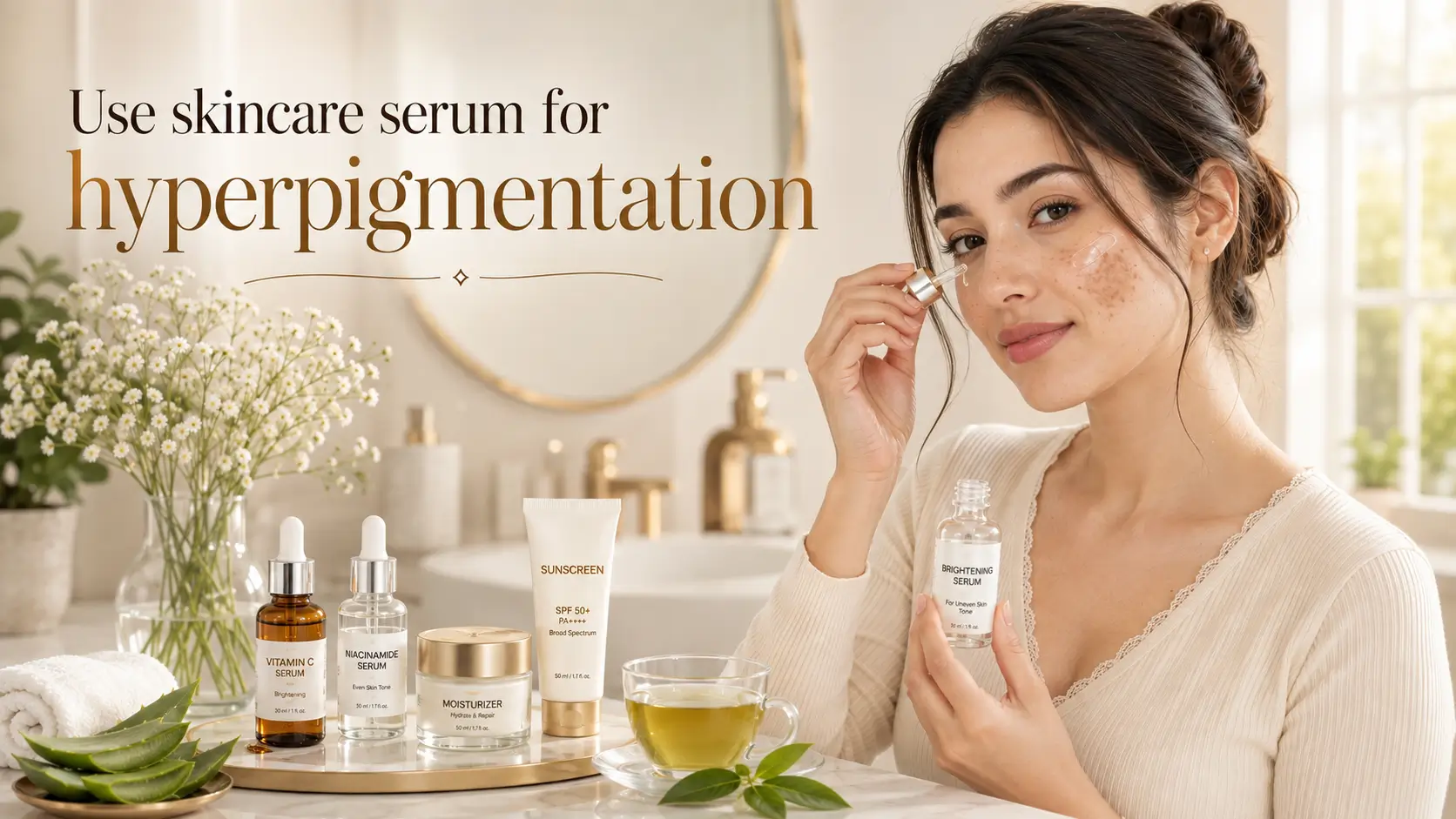
Hyperpigmentation
Hyperpigmentation is one of the most common skin concerns, appearing as darker patches or spots that make the skin tone look uneven. It can develop on the face, hands, neck, or other areas of the body and may become more noticeable after sun exposure, acne, hormonal changes, or skin irritation.
Although hyperpigmentation is usually harmless, dark spots can take time to fade because the skin needs time to naturally renew itself. A consistent skincare routine, daily sun protection, and suitable brightening ingredients can help improve the appearance of uneven skin tone over time.
In this guide, you’ll learn what hyperpigmentation is, the different types, what causes it, and which skincare approaches can help your complexion look more even and radiant.
What Is Hyperpigmentation?
Hyperpigmentation occurs when certain areas of the skin produce or retain more melanin than surrounding skin. Melanin is the natural pigment responsible for your skin, hair, and eye color.
When excess pigment accumulates in particular areas, those spots may appear brown, dark brown, grayish, or sometimes almost black depending on your natural skin tone and the underlying cause.
Hyperpigmentation can affect small areas, such as individual acne marks, or cover larger sections of the face. It may appear gradually or develop after a specific trigger such as a breakout, injury, or prolonged sun exposure.
The good news is that many forms of hyperpigmentation can become less noticeable with appropriate skincare and consistent protection from ultraviolet (UV) exposure.
Common Types of Hyperpigmentation
Not every dark spot has the same cause. Identifying the type of pigmentation can help you understand which skincare approach may be most appropriate.
Sunspots
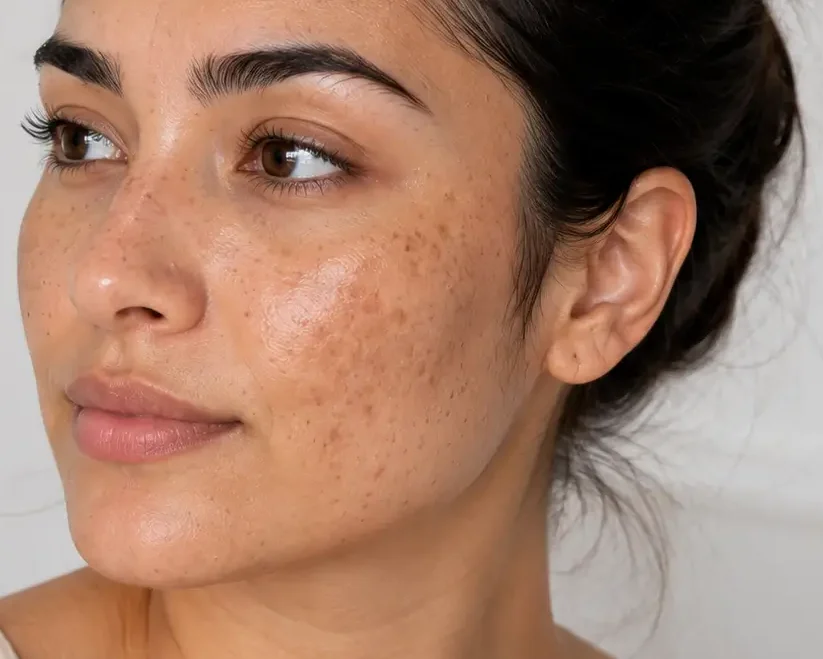
Sunspots, also called solar lentigines, commonly develop after repeated exposure to sunlight. They are often found on areas that receive frequent sun exposure, including the face, forehead, hands, shoulders, and chest.
These flat patches can range from light brown to darker brown and tend to become more noticeable with continued UV exposure.
Daily sunscreen is one of the most important steps for preventing existing pigmentation from becoming darker and reducing the development of new sun-related spots.
Melasma
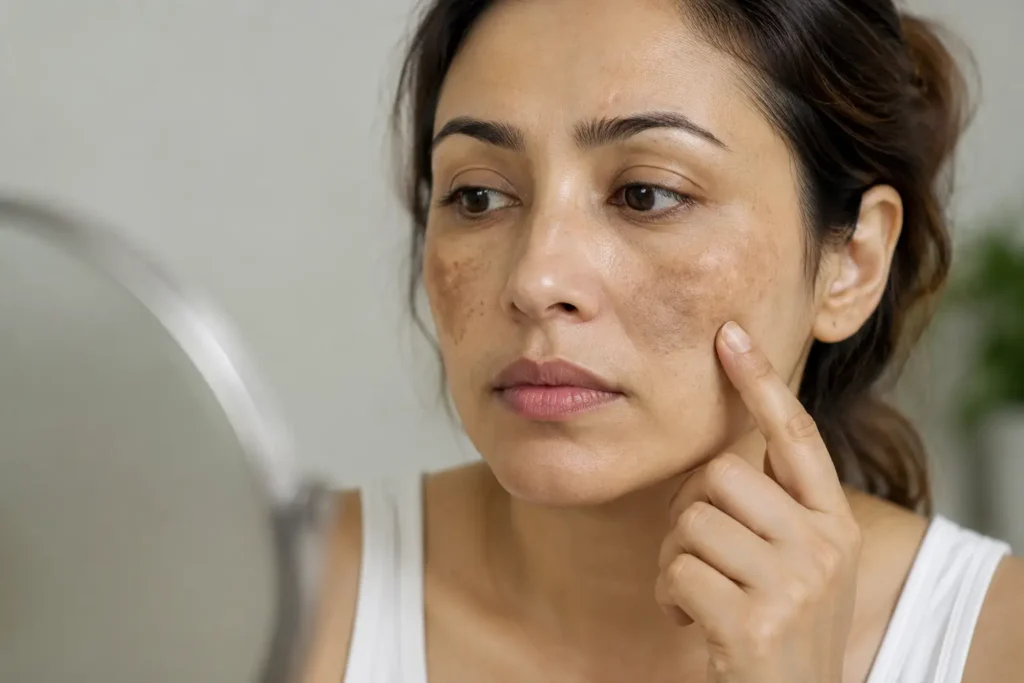
Melasma is a form of pigmentation that often appears as larger, irregular brown or gray-brown patches, particularly on the cheeks, forehead, upper lip, and nose.
Hormonal changes can contribute to melasma, which is why it may appear during pregnancy or alongside certain hormonal changes. Sun exposure can also make it more noticeable.
Because melasma can be persistent and sometimes difficult to manage, consistent sun protection is especially important.
Post-Inflammatory Hyperpigmentation
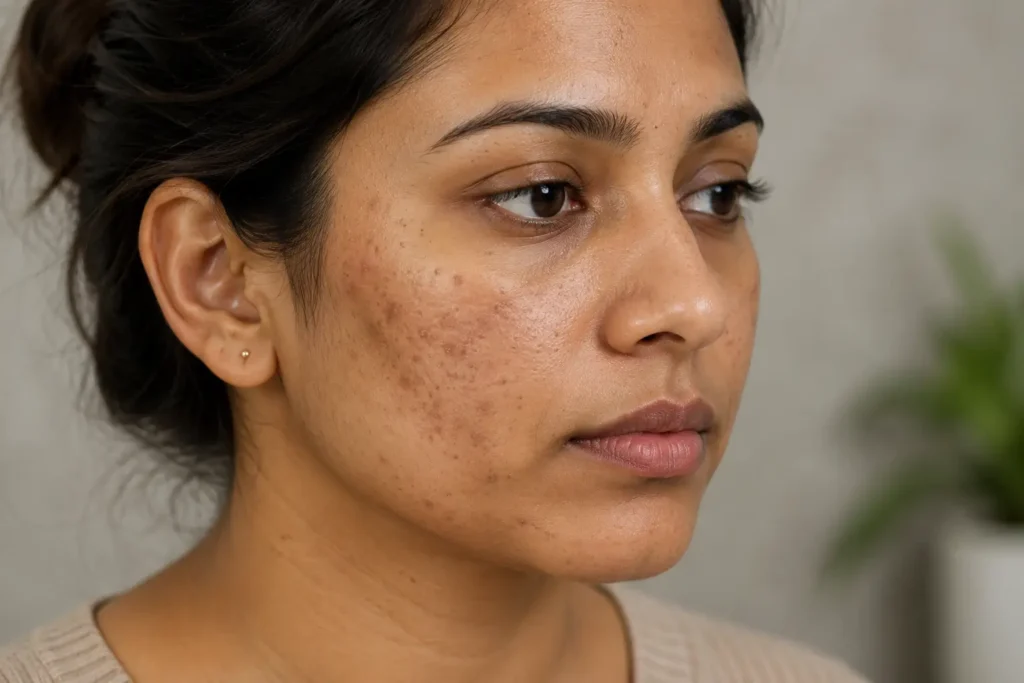
Post-inflammatory hyperpigmentation, often called PIH, can develop after inflammation or injury to the skin.
Common triggers include:
- Acne breakouts
- Pimples and blemishes
- Cuts or minor injuries
- Insect bites
- Burns
- Irritating skincare products
- Picking or squeezing blemishes
Instead of disappearing immediately when the original problem heals, the affected area can leave behind a darker mark. These spots may gradually fade as the skin recovers.
What Causes Hyperpigmentation?
Hyperpigmentation can develop for several different reasons. Sometimes multiple factors contribute at the same time, making it important to consider both your skincare habits and environmental triggers.
Sun Exposure
UV radiation is one of the biggest contributors to uneven pigmentation. When your skin is exposed to sunlight, it produces more melanin as part of its natural protective response.
Repeated exposure can stimulate excess pigment production and make existing dark spots appear more pronounced.
This is why hyperpigmentation can be difficult to improve if sunscreen is not part of your daily routine.
Hormonal Changes
Hormonal fluctuations can influence melanin production and contribute to pigmentation, particularly melasma.
Changes associated with pregnancy and certain hormonal conditions or medications may trigger or worsen dark patches in some people.
Acne and Skin Inflammation
Inflammation from acne can stimulate pigment production, leaving darker marks after a blemish has healed.
This is particularly common when pimples are picked, squeezed, or repeatedly irritated. Treating acne gently and avoiding unnecessary trauma can help reduce the chance of lingering dark marks.
Skin Injuries and Irritation
Any form of inflammation or injury may potentially leave pigmentation behind.
Aggressive scrubbing, unsuitable skincare products, waxing, burns, and repeated friction can irritate the skin and contribute to discoloration, especially in individuals who are prone to post-inflammatory pigmentation.
Certain Medications and Health Conditions
Some medications and underlying health conditions can contribute to changes in skin pigmentation.
If pigmentation develops suddenly, changes rapidly, affects unusual areas, or appears alongside other concerning symptoms, it is better to seek professional medical advice rather than relying only on home skincare.
Dermatology Reference: According to the American Academy of Dermatology (AAD), dark spots and patches can develop when the skin produces excess melanin. Acne, skin irritation, injuries, hormonal changes, and certain skin conditions can contribute to hyperpigmentation.
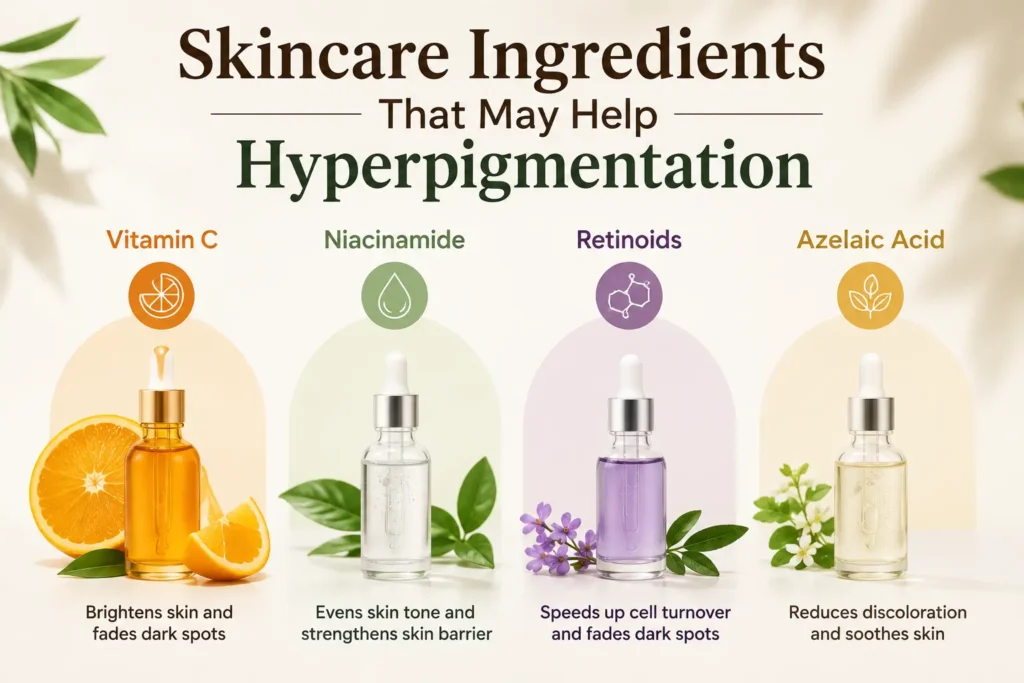
Skincare Ingredients That May Help Hyperpigmentation
Once the trigger has been identified and controlled, certain skincare ingredients can help improve the appearance of uneven skin tone. Results usually take time, so consistency is more important than using multiple strong products at once.
Vitamin C
Vitamin C is a popular antioxidant used in brightening skincare routines. It can help protect the skin from environmental oxidative stress while supporting a more even-looking complexion.
A vitamin C serum can be used in the morning before moisturizer and sunscreen, depending on your skin’s tolerance.
Niacinamide
Niacinamide, a form of vitamin B3, is another commonly used ingredient for uneven skin tone.
It can support the skin barrier while helping improve the appearance of discoloration. Because it is generally considered a gentler skincare ingredient, it can be a useful option for people who don’t tolerate stronger active ingredients well.
Retinoids
Retinoids encourage skin cell turnover and can help improve several signs of sun damage and uneven skin tone over time.
Because retinoids can initially cause dryness or irritation, beginners should introduce them gradually and use a suitable moisturizer. Sun protection is especially important when using retinoid products.
Azelaic Acid
Azelaic acid is often used in skincare routines targeting acne and uneven pigmentation. It can help improve the appearance of post-acne marks while being suitable for many different skin types.
Start with a lower-strength product if you’re new to the ingredient and introduce it gradually to reduce the chance of irritation.
Gentle Exfoliation for Uneven Skin Tone
Exfoliation can help remove dead skin cells from the surface and leave the complexion looking smoother and more refreshed. However, more exfoliation does not mean faster results.
Harsh scrubbing can irritate the skin and may make post-inflammatory pigmentation more noticeable. Choose gentle exfoliating products and avoid using several strong exfoliants together.
If your skin becomes red, painful, excessively dry, or irritated, reduce exfoliation and focus on repairing the skin barrier.
Natural Home Remedies for Hyperpigmentation
Natural ingredients can complement a simple skincare routine, but they should not be treated as guaranteed cures for pigmentation. Some homemade ingredients can also irritate sensitive skin, so patch testing is important.
Aloe Vera
Aloe vera gel is commonly used in soothing skincare routines because it helps provide hydration and a cooling sensation.
Apply a thin layer of plain aloe vera gel to clean skin and allow it to sit comfortably before rinsing or following your usual skincare routine.
Choose a simple product without added fragrance or irritating ingredients if your skin is sensitive.
Green Tea
Green tea contains antioxidant compounds and can be incorporated into a gentle skincare routine.
For a simple approach, allow brewed green tea to cool completely and use it as a light skin-compressing treatment. Avoid applying hot tea to the skin and prepare a fresh batch rather than storing homemade preparations for extended periods.
Licorice-Based Skincare
Licorice root extracts are found in some commercially formulated brightening products. Certain compounds from licorice have been studied for their potential effects on melanin production.
A properly formulated skincare product is generally preferable to applying homemade concentrated extracts directly to your face.
Keep DIY Skincare Simple
When dealing with hyperpigmentation, avoid experimenting with harsh kitchen ingredients such as undiluted lemon juice, baking soda, or abrasive scrubs.
Irritation can worsen discoloration, particularly when the skin is already inflamed. A simple routine with gentle cleansing, moisturizer, appropriate brightening ingredients, and sunscreen is a safer long-term approach.
Daily Skincare Routine for Hyperpigmentation
A consistent routine can help prevent pigmentation from becoming darker while giving targeted products time to work.
Morning Routine
Start your morning routine with a gentle cleanser or simply rinse your face if cleansing is unnecessary for your skin.
Follow with:
- A gentle antioxidant or brightening serum, such as vitamin C.
- A lightweight moisturizer.
- Broad-spectrum sunscreen with SPF 30 or higher.
Sunscreen is especially important because UV exposure can darken existing pigmentation and contribute to new discoloration.
Evening Routine
Your nighttime routine can focus on gentle cleansing and targeted treatment.
A simple order is:
- Remove makeup and cleanse the skin.
- Apply your chosen treatment ingredient.
- Use moisturizer to support the skin barrier.
If you use a retinoid, introduce it gradually and avoid combining it with too many potentially irritating active ingredients at the same time.
Weekly Care
Keep weekly skincare gentle rather than trying to aggressively remove dark spots.
You can use a mild exfoliating product according to its instructions if your skin tolerates it. Avoid physical scrubbing, especially when you have active acne, redness, or irritation.
How to Prevent Hyperpigmentation
Preventing new discoloration is just as important as treating existing dark spots.
Use Sunscreen Every Day
Make sunscreen one of the most consistent parts of your skincare routine. Apply broad-spectrum SPF 30 or higher to exposed skin and reapply when needed, particularly during prolonged outdoor activities.
A hat, sunglasses, and shade can provide additional protection when you’re spending time outside.
Avoid Excessive Sun Exposure
Long periods of direct sunlight can increase melanin production and make existing pigmentation more noticeable.
Try to limit unnecessary midday sun exposure and use physical protection whenever possible.
Keep Your Skin Barrier Healthy
Overusing strong acids, retinoids, scrubs, or multiple active products can cause irritation.
A healthy skincare routine should include a gentle cleanser and moisturizer alongside targeted treatments. If a product consistently causes burning or significant redness, discontinue it rather than trying to push through the irritation.
Avoid Picking and Irritating the Skin
Picking acne, scratching blemishes, or repeatedly touching irritated areas can increase inflammation and raise the risk of post-inflammatory pigmentation.
Treat breakouts gently and give the skin time to heal.
How Long Does Hyperpigmentation Take to Fade?
There is no single timeline for fading pigmentation. The cause, depth of the discoloration, skin type, sun exposure, and treatment approach can all influence how quickly it becomes less noticeable.
Some superficial dark marks may gradually improve over several weeks or months, while conditions such as melasma can be more persistent and may require ongoing management.
The most important habits are consistency, sun protection, and avoiding repeated irritation.
If you’re working on a complete skincare routine, combine your approach to hyperpigmentation with gentle daily self-care habits. Our guide to Self Care Routines for Natural Glowing Skin covers simple skincare and lifestyle practices that can support a healthy-looking, radiant complexion.
When to See a Dermatologist
Consider speaking with a dermatologist if your pigmentation is persistent, worsening, widespread, or not improving despite a consistent skincare routine.
Professional guidance is particularly useful when you are unsure what type of pigmentation you have. A dermatologist can examine the skin and recommend treatments based on the underlying cause.
Seek medical evaluation for a new or changing dark spot, especially if it changes in size, shape, or color, develops irregular borders, bleeds, or becomes painful.
Final Thoughts
Hyperpigmentation can develop for many reasons, from sun exposure and hormonal changes to acne and skin irritation. While dark spots can be frustrating, a consistent and gentle skincare routine can help improve the appearance of uneven skin over time.
Focus on proven skincare basics rather than aggressive DIY treatments. Gentle cleansing, suitable brightening ingredients, moisturizer, and daily sun protection can form the foundation of a routine for healthier-looking, more even skin.
Most importantly, give your skin time. Avoid picking, excessive exfoliation, and products that cause irritation, and consider professional advice when pigmentation is persistent or unusual.
Medical Disclaimer: This article is intended for general educational and informational purposes only. It is not a substitute for professional medical advice, diagnosis, or treatment. If your hyperpigmentation is persistent, worsening, unusual, or does not improve with basic skincare, consult a qualified dermatologist for personalized advice.