

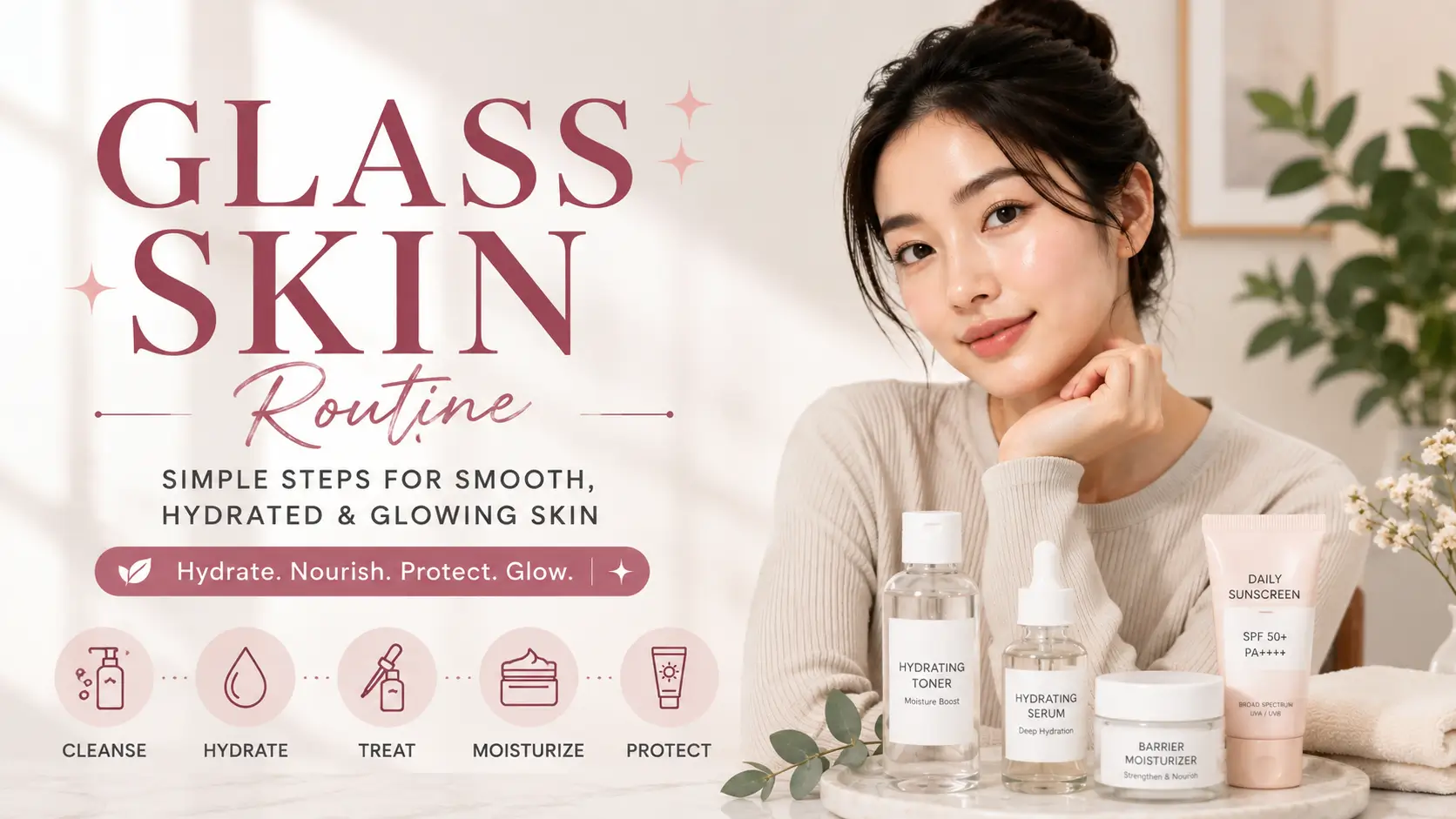
Glass Skin Routine: How to Get a Healthy, Dewy Glow
A glass skin routine is all about creating a smooth, hydrated, fresh-looking complexion. The popular K-beauty trend is known for skin that looks dewy and naturally luminous.
But glass skin does not mean having perfectly poreless skin. Real skin has texture, pores, and natural variations. The goal is to support your skin so it looks healthy, comfortable, hydrated, and radiant.
You also do not need a complicated 10-step routine. A few well-chosen products can be enough when you use them consistently.
What Does Glass Skin Really Mean?
Glass skin describes a complexion that looks smooth, plump, hydrated, and luminous. The glow comes from a well-moisturized surface that reflects light more evenly.
The idea became popular through Korean beauty culture and has since become a global skincare trend.
Think of the look as:
- Fresh-looking skin
- A soft dewy finish
- Smooth-looking texture
- Comfortable hydration
- An even-looking complexion
- A healthy natural glow
The important point is that glass skin is a look and skincare goal, not a medical skin condition or a single treatment.
The Skin Goals Behind a Glass Skin Routine
Instead of chasing shine alone, focus on improving the overall condition of your skin.
Keep Your Skin Hydrated
Dehydrated skin can look dull, tight, or rough. Hydrating products can help your complexion look softer and more plump.
Ingredients such as glycerin and hyaluronic acid are commonly used in hydrating skincare.
Support Your Skin Barrier
Your skin barrier helps protect the skin and reduce moisture loss. A simple routine with a suitable moisturizer can help maintain comfortable skin.
Ceramides are commonly found in products designed to support the skin barrier.
Maintain Smooth-Looking Texture
A gentle skincare routine can help improve the appearance of rough texture.
However, aggressive exfoliation can cause irritation. Dermatologists recommend avoiding harsh scrubbing because it can irritate the skin.
Protect Your Skin From the Sun
Sun protection is essential for maintaining an even-looking complexion.
Regular UV exposure contributes to visible skin aging and pigmentation. The American Academy of Dermatology recommends broad-spectrum sunscreen with SPF 30 or higher.
Build Your Glass Skin Routine Around Your Skin Type
There is no single routine that works for everyone.
Your skin type should influence the texture and number of products you use.
Glass Skin Routine for Dry Skin
Dry skin usually benefits from extra moisture.
Choose:
- Gentle cleanser
- Hydrating serum
- Cream moisturizer
- Barrier-supporting ingredients
- Daily sunscreen
Applying moisturizer while the skin is slightly damp can also help trap moisture.
Glass Skin Routine for Oily Skin
Oily skin still needs hydration.
Skipping moisturizer can leave your routine unbalanced. Instead, choose lightweight products such as gel moisturizers or oil-free lotions.
Look for products labeled non-comedogenic if you are concerned about clogged pores.
Glass Skin Routine for Combination Skin
Combination skin can be oily in some areas and dry in others.
Use lightweight hydration across the face. Add a slightly richer moisturizer only where your skin feels dry.
Avoid using harsh products on the entire face just because your T-zone becomes oily.
Glass Skin Routine for Sensitive Skin
Sensitive skin needs a slower approach.
Choose fragrance-free and gentle products when possible. Introduce one new product at a time.
If a product causes burning, significant redness, or persistent irritation, stop using it.
Morning Glass Skin Routine
Your morning routine does not need to be complicated.
A practical order is:
Gentle Cleanser → Hydrating Serum → Moisturizer → Sunscreen
You can add toner or essence if your skin enjoys them.
Start With Gentle Cleansing
Use a mild, non-abrasive cleanser.
Wash with lukewarm water rather than very hot water. Use your fingertips instead of rough cloths or scrubbing tools. The AAD recommends gentle cleansing and limiting face washing to twice daily, plus after heavy sweating.
Do not try to make your skin feel “squeaky clean.” That feeling can sometimes mean the skin has been over-cleansed.
Add Hydration
After cleansing, apply a hydrating serum if needed.
Good ingredients to consider include:
- Hyaluronic acid
- Glycerin
- Panthenol
- Beta-glucan
You only need one suitable hydrating serum. Several overlapping products are not necessary.
Apply Moisturizer
Moisturizer helps keep your skin comfortable and hydrated.
Choose the texture based on your skin type.
A gel or lotion may suit oily skin. A cream may work better for dry skin.
Finish With Sunscreen
Sunscreen should be the final step of your morning skincare routine.
Choose a broad-spectrum SPF 30 or higher. Reapply when needed based on your outdoor exposure and the product directions.
Nighttime Glass Skin Routine
Nighttime is a good opportunity to focus on cleansing, hydration, and skin comfort.
A simple order is:
Cleanse → Hydrate → Treatment → Moisturize
Remove Makeup and Sunscreen
If you wear makeup or water-resistant sunscreen, remove it thoroughly before bed.
You can use a cleansing balm, cleansing oil, or another suitable first cleanser.
Follow with a gentle facial cleanser if your skin tolerates double cleansing.
Add a Hydrating Layer
After cleansing, use a toner, essence, or serum.
You do not need all three.
Choose the product that gives your skin the hydration it needs without making the routine feel heavy.
Use a Targeted Treatment
This step depends on your skincare goals.
For example, you might use a treatment designed for:
- Uneven texture
- Dark spots
- Acne
- Fine lines
- Dull-looking skin
Avoid adding several strong treatments at once.
Using too many products can irritate the skin, especially when multiple active ingredients are involved.
Lock In Moisture
Finish with a suitable moisturizer.
This is especially useful if your skin feels dry after cleansing or active treatments.
Best Ingredients for a Glass Skin Look
The right ingredients can help you build a simple glass skin routine.
Hyaluronic Acid
Hyaluronic acid is a popular humectant used in hydrating skincare.
It helps attract moisture and can make the skin feel softer and more hydrated.
Glycerin
Glycerin is another common humectant.
It works well in cleansers, toners, serums, and moisturizers.
Ceramides
Ceramides are lipids naturally found in the skin barrier.
They are commonly used in moisturizers designed to support dry or compromised skin.
Niacinamide
Niacinamide is a versatile skincare ingredient.
It can fit into routines focused on uneven-looking skin tone, excess oil, and overall skin conditioning.
Panthenol
Panthenol is commonly used in moisturizing and soothing skincare formulas.
It can be a useful ingredient when your goal is comfortable, hydrated-looking skin.
Squalane
Squalane is an emollient that helps soften the skin.
It can provide a smooth finish without requiring several layers of heavy products.
How to Add Exfoliation Without Damaging Your Skin
Exfoliation can help improve the appearance of dull or rough skin.
However, more exfoliation does not mean more glow.
Choose a gentle exfoliating product and use it according to its directions.
Possible exfoliating ingredients include:
- Lactic acid
- Glycolic acid
- Salicylic acid
- Polyhydroxy acids
Do not combine several exfoliating products simply because you want faster results.
If your skin becomes red, sore, dry, or unusually sensitive, take a break from exfoliation.
How to Layer Skincare Products
Product order can make your routine easier to follow.
A general approach is to apply lighter products before thicker ones.
For example:
Cleanser → Toner → Essence → Serum → Moisturizer → Sunscreen
Sunscreen belongs in the morning routine.
At night, sunscreen is not needed, so moisturizer can be your final skincare step.
The AAD also recommends applying treatments after cleansing, followed by moisturizer and/or sunscreen.
Glass Skin Routine Mistakes to Avoid
Trying to get glass skin too quickly can lead to unnecessary irritation.
Using Too Many Products
A shelf full of skincare does not guarantee better results.
Start with a few products and add new ones only when necessary.
Over-Exfoliating
Exfoliating too frequently can leave your skin irritated.
A damaged or irritated skin barrier will not give you the healthy glow you want.
Skipping Moisturizer
Even oily skin needs appropriate hydration.
Choose a lightweight formula if heavy creams feel uncomfortable.
Forgetting Sunscreen
UV exposure can contribute to pigmentation and visible skin aging.
Make sunscreen a daily habit.
Scrubbing Your Face Too Hard
Physical scrubbing can irritate the skin.
Use gentle movements when cleansing or applying products.
Changing Products Too Often
Give your routine time to work.
Changing several products every few days makes it difficult to know what is helping or irritating your skin.
How Long Does It Take to See a Glass Skin Glow?
There is no exact timeline.
Hydrating products can make skin feel more comfortable and temporarily give it a fresher appearance. Other concerns, such as uneven texture or pigmentation, may take much longer to improve.
Your results also depend on your skin type, existing concerns, product choices, and consistency.
Think of glass skin as a long-term skincare goal rather than an overnight transformation.
Can You Get Glass Skin Without a 10-Step Routine?
Yes.
You can build a simple routine with just a few essential products.
Simple Morning Routine
1. Cleanser
2. Moisturizer
3. Sunscreen
Add a hydrating serum if your skin needs extra moisture.
Simple Night Routine
1. Cleanser
2. Treatment, if needed
3. Moisturizer
This basic approach can be easier to maintain than a complicated routine.
Recent beauty coverage also reflects a shift toward simpler routines for achieving a dewy finish rather than relying on many separate products.
How to Make Your Glass Skin Routine More Effective
Consistency is more important than complexity.
Try these habits:
- Cleanse gently
- Moisturize regularly
- Drink enough fluids
- Avoid unnecessary scrubbing
- Introduce active ingredients slowly
- Wear sunscreen every morning
- Give new products time
- Pay attention to irritation
Most importantly, choose products that suit your own skin.
Glass skin should not mean forcing your complexion to look completely poreless or flawless. Healthy skin naturally has texture.
Final Thoughts
A glass skin routine is best approached as a healthy-skincare routine rather than a race to achieve extreme shine.
Focus on hydration, barrier support, gentle cleansing, appropriate treatments, and daily sun protection.
You do not need dozens of products. A consistent routine that keeps your skin comfortable can be a much better foundation for a naturally dewy complexion.
And remember, glass skin is an aesthetic goal. Healthy, comfortable skin should always come before chasing a perfectly reflective finish.