

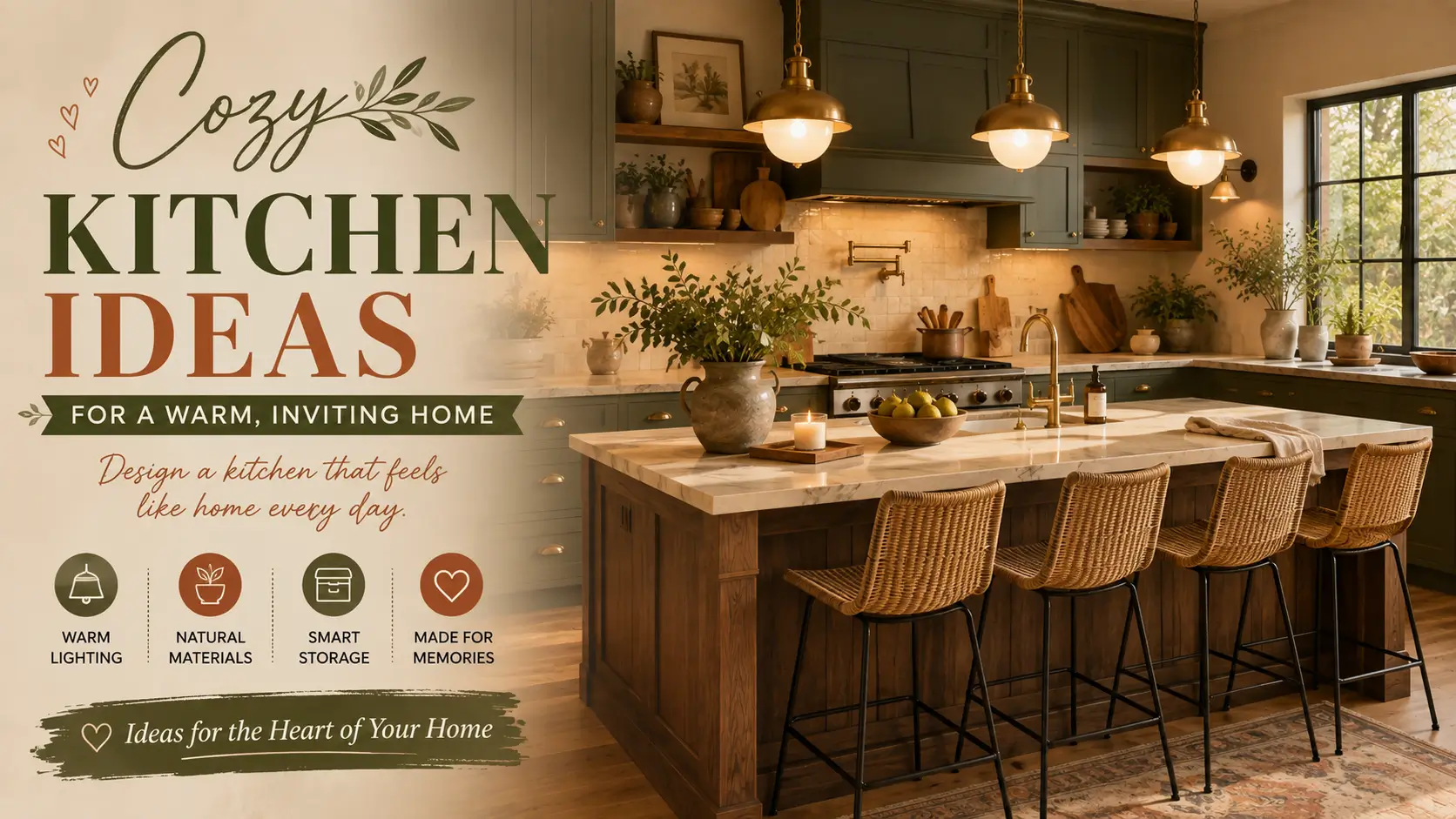
The kitchen is often the heart of the home. It is where the day begins with a cup of coffee, where family members talk while dinner is being prepared, and where guests naturally gather during celebrations. Because the kitchen is used so often, its atmosphere matters just as much as its layout and functionality.
The best cozy kitchen ideas combine warmth, comfort, organization, and personal style. Natural wood, soft colors, warm lighting, comfortable seating, woven textures, greenery, and practical storage can make a kitchen feel welcoming without making it look crowded.
You also do not need a complete renovation to create a cozy kitchen. Small changes such as replacing cool light bulbs, adding a washable runner, styling open shelves, changing cabinet hardware, or introducing natural accessories can make a noticeable difference.
If your kitchen is small, focus on Small Kitchen Ideas that improve both appearance and function. Smart vertical storage, open shelving, compact seating, and uncluttered countertops can help you create a warm kitchen without making the space feel smaller. These simple ideas can maximize space while keeping your kitchen stylish, organized, and inviting.
Whether you prefer modern, farmhouse, organic, Scandinavian, or traditional interiors, the following ideas can help you create a kitchen that feels comfortable and inviting throughout the day.
1. Choose Warm Colors That Make the Kitchen Feel Welcoming
Color is one of the first things people notice when they enter a kitchen. It influences whether the room feels bright and energetic, calm and relaxing, or cold and overly formal.
For a cozy atmosphere, consider warm shades such as creamy white, oatmeal, beige, taupe, muted sage, dusty blue, soft brown, and warm gray. These colors reflect natural light while adding softness to the room.
You do not have to repaint every cabinet or wall. A warm-colored backsplash, neutral runner, wooden accessories, or upholstered seating can introduce the same feeling. If your kitchen already has cool white cabinets, balance them with warm lighting and natural materials.
Try to keep the color palette connected. Choose two or three main shades and repeat them through the cabinets, textiles, lighting, and accessories. This creates a calm and coordinated appearance instead of a visually busy kitchen.
2. Add Natural Wood to Make the Space Feel Warmer
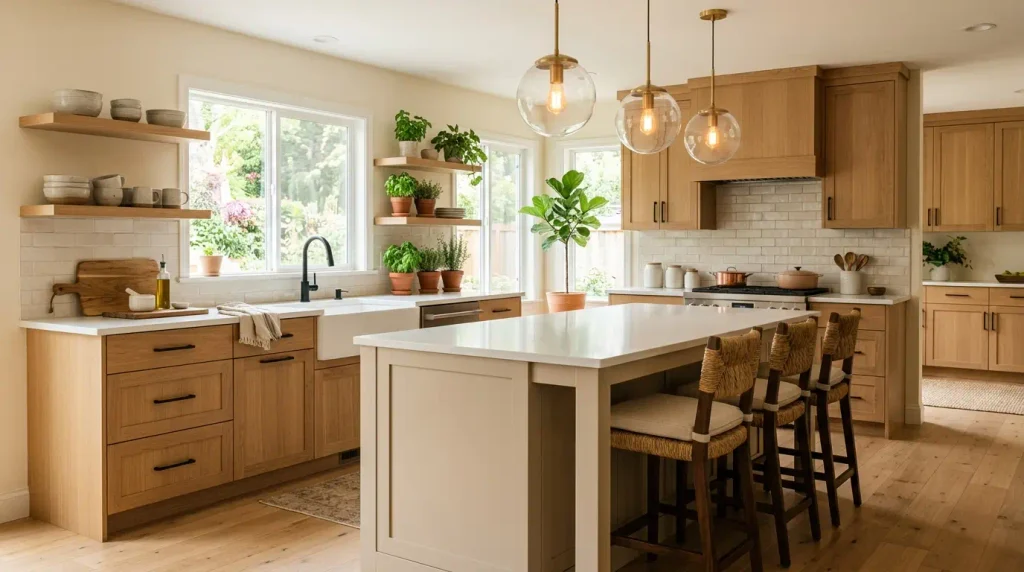
Natural wood is one of the easiest materials to use when you want a kitchen to feel comfortable and less clinical. Its organic grain adds texture and warmth to hard surfaces such as stone, tile, glass, and metal.
You can introduce wood through cabinets, floating shelves, bar stools, cutting boards, serving trays, dining tables, or decorative bowls. Light oak creates a bright Scandinavian look, while walnut and medium-toned wood create a richer and more traditional atmosphere.
If your kitchen already has painted cabinets, consider adding a wood-toned island or a few open shelves. This creates contrast without requiring a complete cabinet replacement.
For a balanced look, combine wood with soft neutral colors. Using too many different wood finishes can make the kitchen feel disconnected, so try to repeat one or two similar tones throughout the room.

3. Use Layered Lighting for a Soft and Comfortable Glow
Kitchen lighting should support cooking, cleaning, dining, and relaxing. A single bright ceiling light may provide enough visibility, but it usually does not create a warm atmosphere.
Layered lighting is a better approach. Combine different types of lighting for different purposes:
- Pendant lights above the island for focused illumination
- Under-cabinet lights for countertops
- Ceiling fixtures for general brightness
- Wall sconces for decorative warmth
- Small lamps or accent lights for dining corners
Warm-toned bulbs are especially useful in the evening. They create a softer glow and make the kitchen feel more inviting after sunset.
Use brighter task lighting where you prepare food and softer ambient lighting where people sit and gather. This allows the kitchen to change mood throughout the day without changing its design.

4. Use Sage Green Cabinets for a Calm, Natural Look
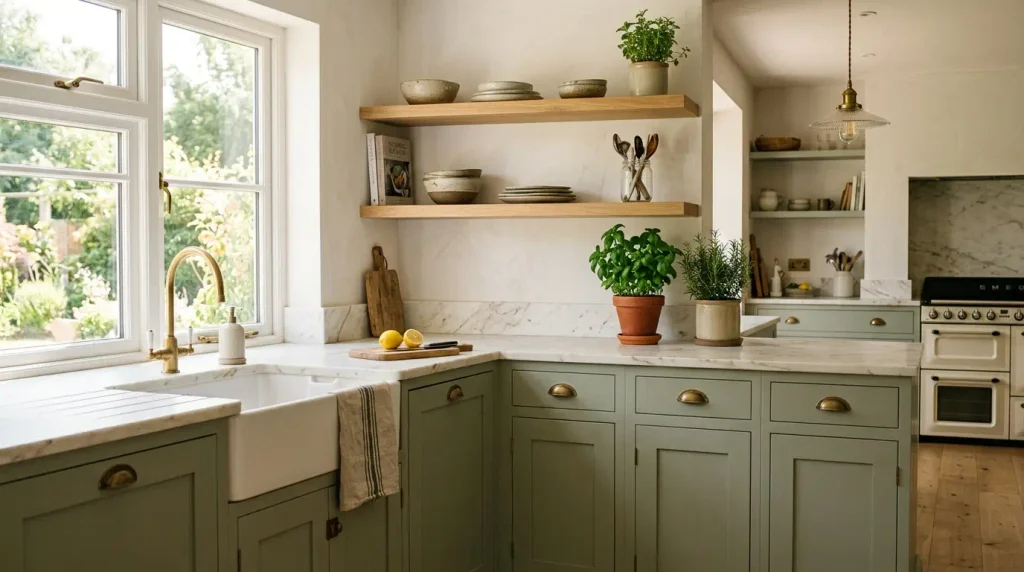
Sage green and other muted green shades can bring a peaceful, nature-inspired feeling into the kitchen. Unlike bright green, soft sage feels subtle and sophisticated.
This color works beautifully with warm white countertops, natural wood, brushed brass, stone, cream tile, and indoor plants. It can be used on all cabinets or limited to the lower cabinets and island.
If replacing the cabinets is not practical, painting the island or adding green accessories can create a similar effect. Green bar stools, ceramic containers, artwork, or a runner can introduce the color without a major investment.
Keep the rest of the palette simple so the green remains calming rather than overwhelming.
5. Design the Kitchen Island for Everyday Gathering
A kitchen island can become the social center of the home when it is designed for more than food preparation. It can provide seating, storage, serving space, and a comfortable place for family members to spend time together.
Choose counter stools that are comfortable enough for longer conversations. Upholstered, woven, or wooden seats can add both comfort and texture.
Keep the island surface useful and uncluttered. A wooden tray, bowl of fruit, small vase, or ceramic container can add decoration without taking away valuable workspace.
If your kitchen is small, consider a narrow island, movable cart, peninsula, or fold-down counter instead of a large fixed island. The goal is to create a practical gathering point without blocking movement.

6. Make a White Kitchen Feel Warm Instead of Cold
White kitchens are bright and timeless, but they can sometimes feel too sterile when every surface is glossy and cool-toned.
To soften a white kitchen, add natural wood stools, woven baskets, linen textiles, greenery, warm brass hardware, and warm lighting. A neutral runner can also add comfort underfoot while introducing subtle pattern.
Matte or textured finishes can make white cabinetry feel more relaxed than high-gloss surfaces. Handmade ceramics and wooden cutting boards can add personality without disturbing the clean appearance.
The key is balance. You do not need to fill the kitchen with accessories. A few natural elements are enough to make an all-white kitchen feel lived-in and welcoming.

7. Style Open Shelves Without Making Them Look Messy
Open shelves can make a kitchen feel personal and visually open, but they need to be styled carefully. Too many objects can create clutter and make everyday cleaning more difficult.
Display items that are both attractive and useful, such as ceramic bowls, mugs, wooden boards, glass jars, cookbooks, and small plants.
Group objects in small collections instead of spreading them evenly across the entire shelf. Vary the height and shape of the pieces, but keep their colors within the same palette.
Leave some empty space between groups. This negative space allows the shelves to breathe and makes the arrangement look intentional.
For a small kitchen, open shelves can also provide useful storage without taking up floor space. Just keep frequently used items accessible and store less attractive appliances inside cabinets.

8. Add Woven Materials to Soften Hard Surfaces
Most kitchens contain many hard materials, including stone countertops, tile backsplashes, metal appliances, and painted cabinetry. Woven textures help balance these surfaces and make the room feel more comfortable.
Try adding rattan stools, woven pendant shades, jute runners, cane cabinet doors, baskets, textured placemats, or seagrass storage containers.
These materials work especially well in neutral kitchens because they add warmth without introducing strong colors.
Even one woven pendant light or basket can make a noticeable difference. Combine woven pieces with wood and linen for a relaxed organic look.

9. Balance Marble With Warm and Relaxed Materials
Marble countertops and islands can make a kitchen look elegant, but large areas of polished stone may feel formal or cold.
Balance marble with natural wood, linen, woven seating, handmade ceramics, and warm lighting. For example, a marble island can feel much more relaxed when paired with oak stools and a wooden serving board.
Choose accessories with soft, irregular shapes to contrast with the smooth surface of the stone. A ceramic vase, linen runner, or bowl of fresh fruit can make the countertop feel more welcoming.
The goal is to combine refined materials with casual details so the kitchen feels elegant but still comfortable for everyday use.
10. Use a Vintage Runner to Add Color and Character
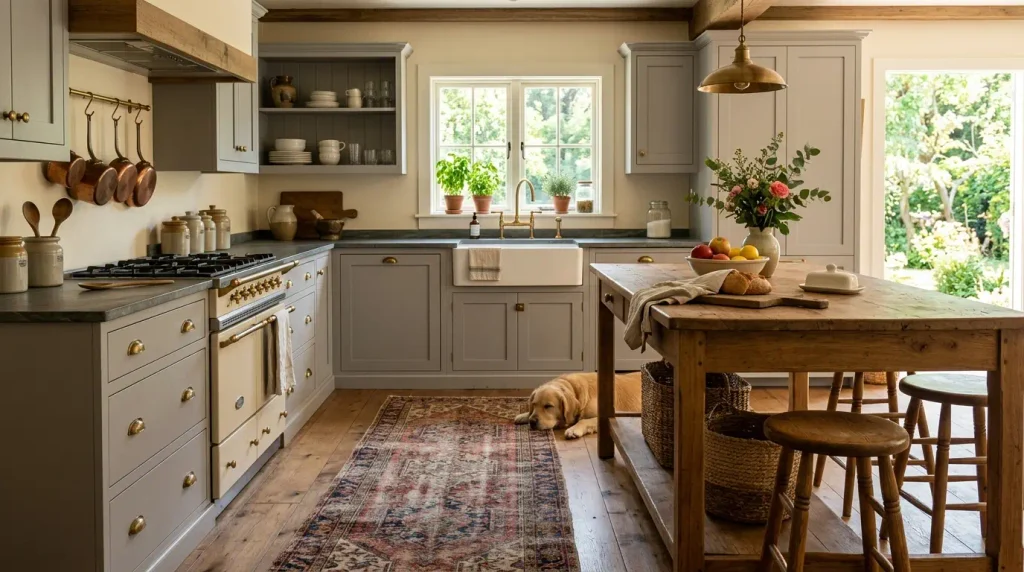
A kitchen runner can instantly make the room feel warmer and more finished. It adds softness underfoot while introducing color, pattern, and personality.
Faded vintage-inspired designs work well in cozy kitchens because they look relaxed and collected. Choose muted shades such as terracotta, beige, olive, dusty blue, brown, or cream.
Place the runner in front of the sink, along the main cooking area, or between the island and cabinets. Select a washable or stain-resistant material so it remains practical.
A runner is also an easy seasonal update. You can change the pattern or color without replacing permanent kitchen features.

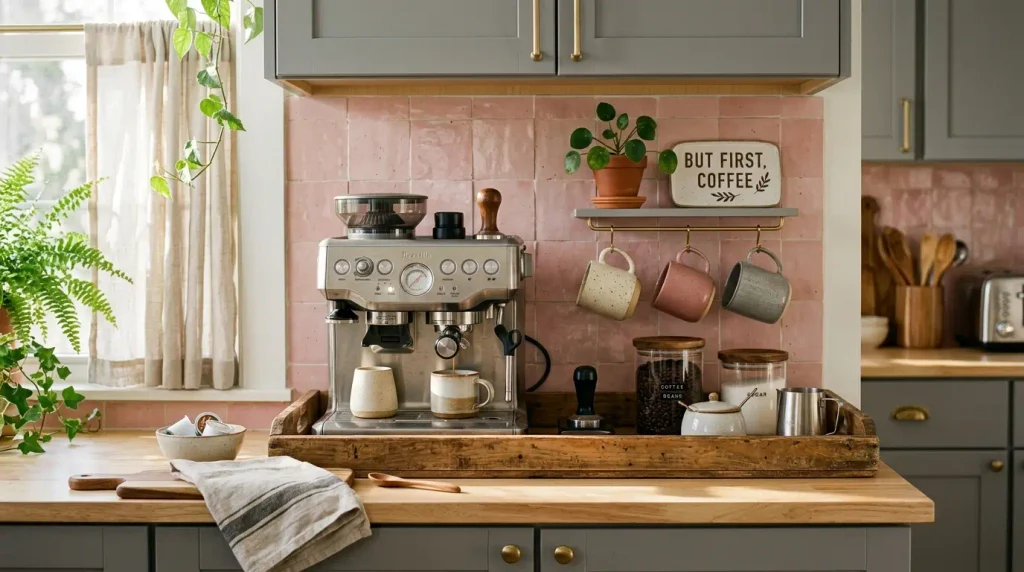
11. Create a Small Coffee Station
A coffee corner can turn an unused section of countertop into one of the most charming areas of the kitchen. It also makes the morning routine more organized.
Place the coffee machine on a wooden or stone tray. Add your favorite mugs, coffee jars, sugar containers, and a small plant or vase.
Use matching containers or a consistent color palette so the station looks styled rather than cluttered. Keep only the items you use regularly on display.
This idea is especially useful for renters because it does not require permanent changes. A small coffee station can also work on a bar cart, open shelf, or compact side table.
12. Choose Pendant Lights That Add Style and Warmth
Pendant lights provide focused illumination, but they can also become a major decorative feature in the kitchen.
Choose woven shades for an organic look, aged brass for a traditional kitchen, clear glass for a light modern style, or ceramic fixtures for a handmade appearance.
When placing multiple pendants above an island, keep the spacing balanced. The fixtures should be large enough to make an impact but not so large that they overwhelm the room.
Consider the shape of the island and the height of the ceiling before choosing the fixtures. Proper scale makes the lighting look intentional and polished.

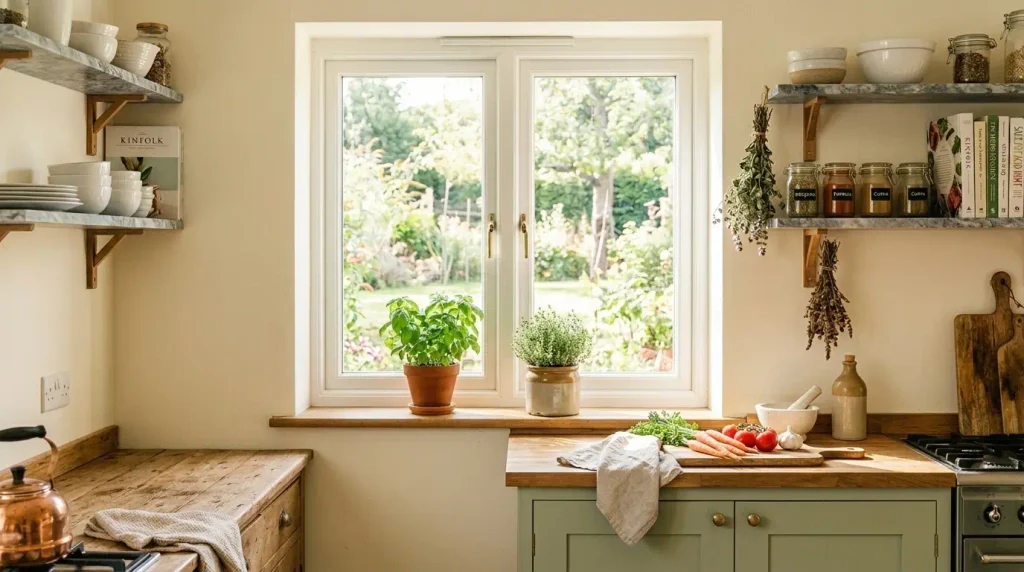
13. Bring Greenery Into the Kitchen
Plants make a kitchen feel more alive and connected to nature. They can soften empty corners, open shelves, windowsills, and countertops.
A small herb garden near a sunny window is both decorative and practical. Basil, rosemary, mint, thyme, and parsley can provide fresh ingredients while adding greenery.
Use larger leafy plants to fill empty corners and smaller plants to decorate shelves. If your kitchen receives limited natural light, choose low-light varieties or realistic faux plants.
Planters also contribute to the overall style. Terracotta works well in farmhouse kitchens, ceramic planters suit traditional spaces, and woven planters complement organic interiors.
14. Turn a Dining Nook Into a Comfortable Retreat
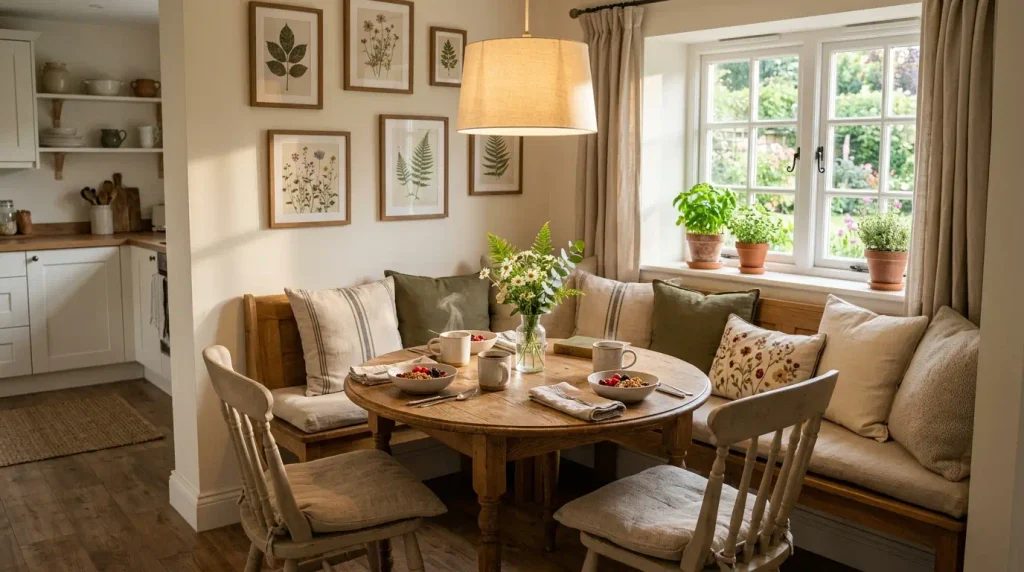
If your kitchen has space for a small dining area, make it feel like an intentional part of the room rather than an afterthought.
A round wooden table, comfortable chairs, soft cushions, and a pendant light can create a welcoming breakfast nook. Add a small artwork, mirror, or plant to give the area personality.
Round tables are useful in compact kitchens because they take up less visual space and make conversation easier. A built-in bench can provide additional seating while using the wall efficiently.
For a small kitchen, choose furniture with slim legs or a compact footprint so the dining area does not interrupt the main walkway.
15. Refresh the Kitchen With Warm Brass Hardware
Changing cabinet hardware is one of the simplest and most affordable ways to update a kitchen.
Warm brass, aged brass, antique gold, and champagne bronze can add softness and character to white, cream, green, blue, and natural wood cabinetry.
For a cohesive look, repeat the finish in one or two other areas, such as the faucet, pendant lights, or cabinet accessories.
You do not have to match every metal perfectly, but avoid using too many competing finishes. If you want a mixed-metal look, choose one dominant finish and use the others sparingly.
16. Choose a Backsplash With Handmade Character
The backsplash covers a large visual area, so it has a strong influence on the kitchen’s overall atmosphere.
For a cozy look, consider handmade-looking ceramic tile, softly textured tile, warm stone, creamy subway tile, or subtle patterned designs.
Slight variations in color and shape can make the backsplash feel more personal and relaxed than perfectly uniform materials.
If you are not ready for a renovation, removable backsplash panels can provide a temporary update. You can also create a similar effect by styling the countertop with handmade ceramics, wooden boards, and warm accessories.

17. Use a Wood-Toned Island as a Focal Point
A wood island can add depth and warmth to a kitchen with painted cabinets. It creates a natural focal point without requiring bold colors.
Oak, walnut, and medium-toned wood all work well. Light oak keeps the room airy, while walnut creates a richer and more dramatic appearance.
Pair the island with simple countertops and neutral stools so the wood remains the main feature. Avoid adding too many competing finishes around it.
This idea works particularly well in modern farmhouse, Scandinavian, organic modern, and transitional kitchens.

18. Make Storage Part of the Kitchen Decor
Storage should improve the way the kitchen functions while also supporting its appearance.
Use glass jars to display pantry staples, woven baskets to hide less attractive items, and wooden boxes to organize small accessories. Matching containers can make open storage look more coordinated.
Keep frequently used items within easy reach, but store bulky appliances and rarely used tools inside cabinets whenever possible.
A well-organized kitchen feels calmer because there is less visual clutter. This is especially important in small kitchens, where crowded countertops can make the entire room feel smaller.

19. Add Handmade Ceramics for a Personal Touch
Handmade ceramics can make a kitchen feel collected, artistic, and personal. Their natural textures and small imperfections add character without overwhelming the room.
Display a handmade vase, irregular serving bowl, artisan mug, or textured utensil holder on the countertop or open shelves.
Choose pieces in earthy, neutral, or muted colors so they complement the rest of the kitchen.
You do not need a large collection. One or two carefully selected handmade pieces can make the space feel more individual.

20. Use Soft Textiles to Make the Kitchen Feel Lived In
Textiles soften the hard surfaces found in most kitchens and make the room feel more comfortable.
Consider linen curtains, cotton tea towels, upholstered stools, fabric seat cushions, table runners, and washable rugs.
Choose natural-looking fabrics in cream, beige, muted blue, sage, terracotta, or soft brown. These colors add warmth without creating visual noise.
Textiles are also easy to change with the seasons. Lightweight linen works well in spring and summer, while thicker woven fabrics can make the kitchen feel warmer during colder months.
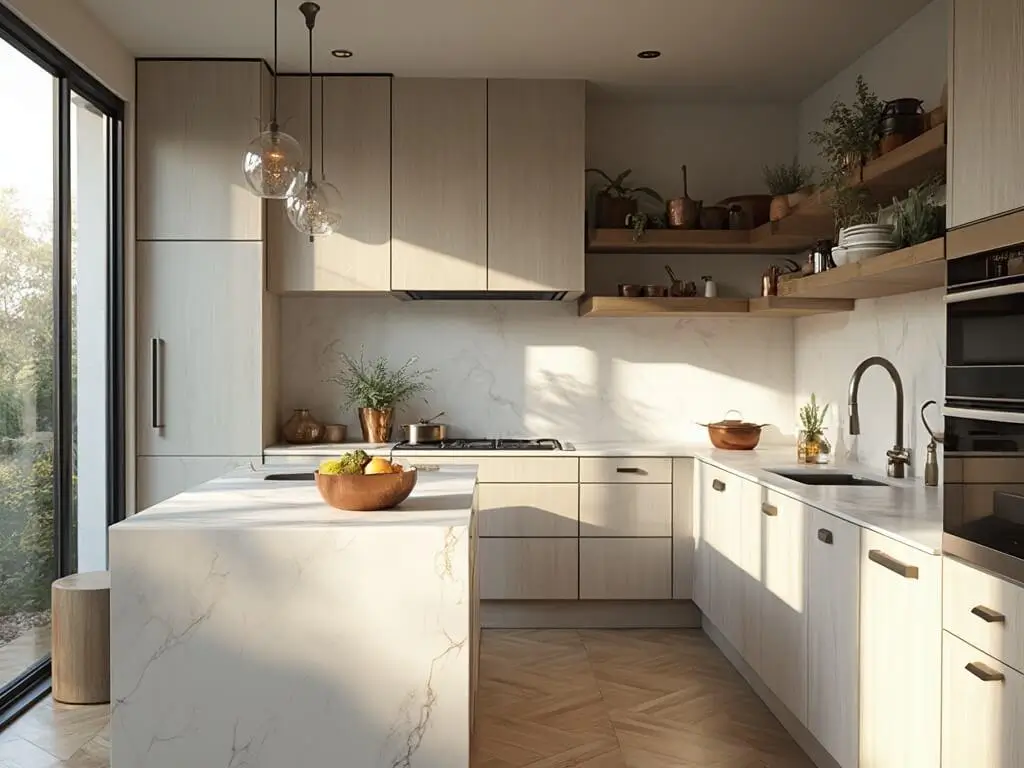
21. Give a Small Kitchen a Cozy and Organized Personality
Small kitchens can feel especially cozy because they naturally create a sense of intimacy. However, they can also become crowded quickly if every surface is filled.
Focus on a few high-impact details instead of trying to decorate every corner. Use light colors to maintain openness, warm lighting to create atmosphere, and one or two wooden elements to add texture.
Use wall-mounted shelves, peg rails, magnetic knife strips, hooks, and vertical cabinets to make better use of the walls.
Keep countertops as clear as possible. A small kitchen feels more comfortable when every visible item has a purpose.
For additional ideas on improving storage, layout, and visual space in a compact kitchen, read this helpful guide to small kitchen ideas to maximize space and style.
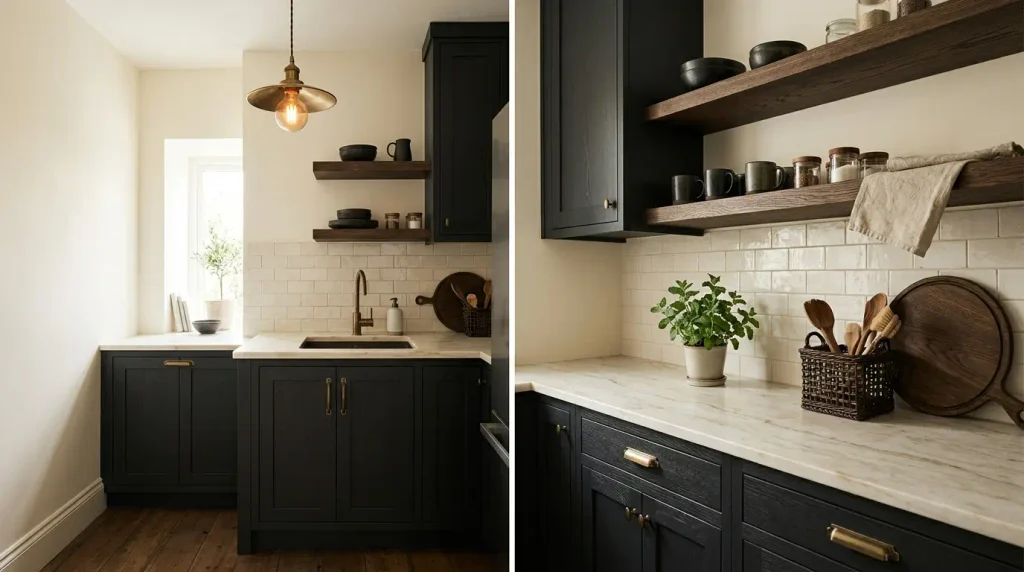
22. Create a Relaxed Modern Farmhouse Kitchen
Modern farmhouse kitchens combine practical materials with comfortable decorative details. The style feels warm because it uses familiar textures and simple, functional pieces.
Consider warm white shaker cabinets, a natural wood island, simple hardware, vintage-inspired runners, woven lighting, ceramic accessories, and comfortable seating.
Avoid making every element overly rustic. Modern appliances, clean lines, and simple countertops can keep the kitchen fresh and current.
The best modern farmhouse kitchens feel welcoming rather than themed. Use a few traditional details and balance them with contemporary finishes.
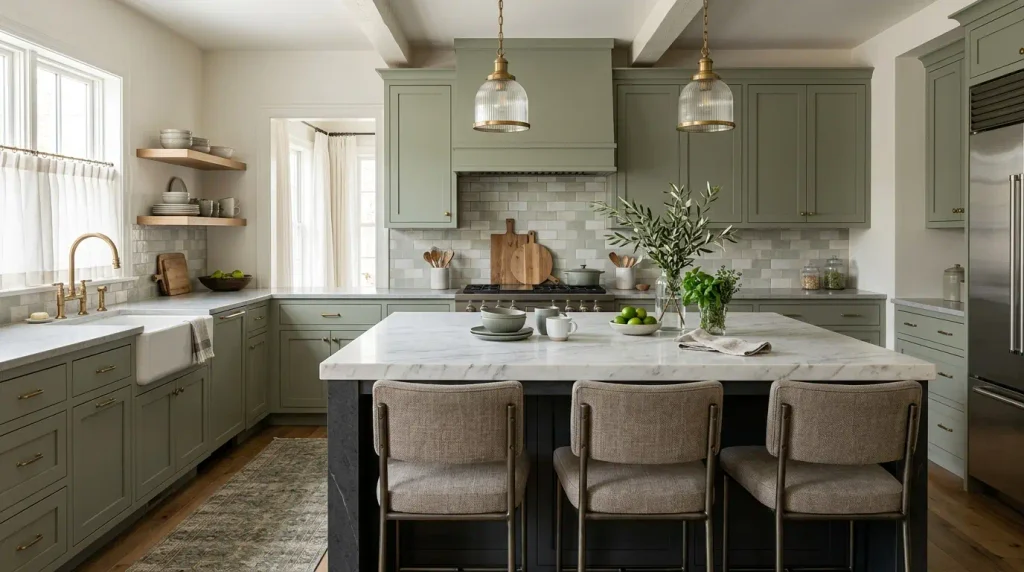
23. Combine Modern Lines With Organic Materials
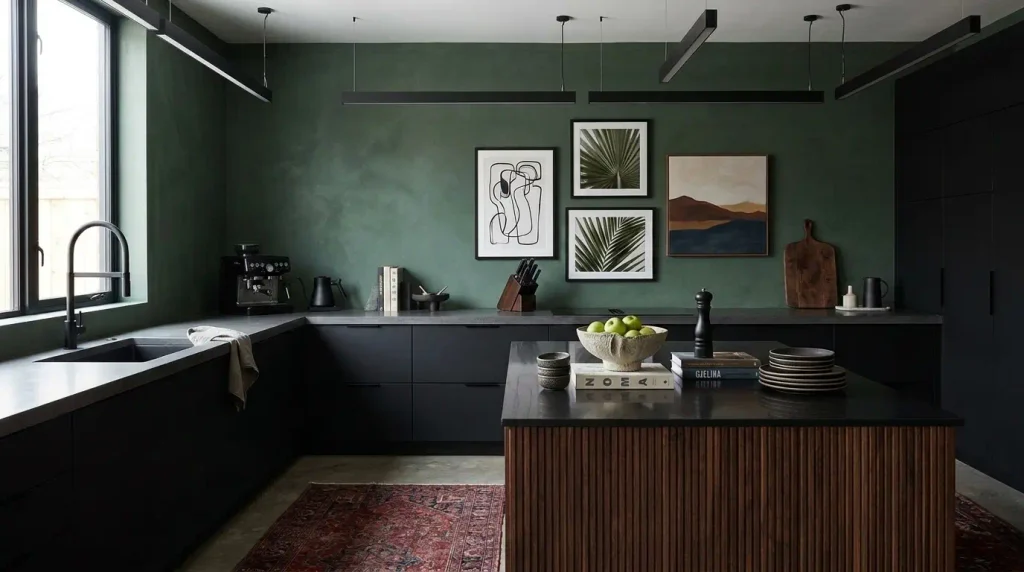
A modern kitchen can still feel warm and inviting. Clean cabinetry and simple architecture provide a strong foundation, while natural materials add comfort.
Pair sleek cabinets with an oak island, natural stone backsplash, linen stools, woven accessories, and a large leafy plant.
This contrast between refined shapes and organic textures creates a sophisticated but relaxed atmosphere.
Keep the color palette simple so the materials remain the focus. Cream, beige, warm gray, soft green, and natural wood work particularly well together.

24. Design the Kitchen to Feel Cozy in the Evening
A kitchen should look inviting during the day and after sunset. Evening lighting can completely change the mood of the room.
Turn on under-cabinet lights, pendant lights, sconces, or small accent lamps while keeping unnecessary overhead lights dimmer.
This creates soft pools of light around the island, dining nook, coffee station, or open shelves. The kitchen feels more intimate and comfortable when the lighting is focused rather than uniformly bright.
You can also add safe flameless candles, warm-toned decorative lights, or a small lamp in a dining corner for extra atmosphere.

25. Make the Kitchen Feel Like the Heart of the Home
The most successful cozy kitchen ideas are not only about decoration. They create a space where people naturally want to spend time.
Comfortable seating encourages conversation. Warm lighting makes evenings feel relaxed. Natural wood softens modern finishes. Organized storage reduces stress. Personal objects give the room character.
Think about how your kitchen is actually used and design around those habits. If your family gathers around the island, make the island comfortable. If mornings revolve around coffee, create a dedicated coffee corner. If you enjoy cooking, keep frequently used tools easy to reach.
A kitchen becomes truly cozy when its design supports the way you live.

Easy Cozy Kitchen Updates Without a Full Renovation
You do not need to replace cabinets, countertops, flooring, or appliances to make your kitchen feel warmer. Small improvements can create a noticeable change when they are chosen carefully.
Try these simple updates:
- Replace cool bulbs with warm-toned lighting.
- Add a washable runner near the sink or cooking area.
- Introduce natural wood through cutting boards, trays, or stools.
- Replace cabinet knobs and pulls with warm brass hardware.
- Add a woven basket for towels or pantry items.
- Style one open shelf with ceramics and greenery.
- Place fresh herbs near a sunny window.
- Display one handmade ceramic piece.
- Add cushions to hard dining chairs.
- Create a small coffee station.
- Remove unnecessary items from the countertops.
- Add warm-toned artwork or a framed print.
- Use matching jars for pantry staples.
- Add a small plant to an empty corner.
- Replace harsh overhead lighting with layered fixtures.
The most important step is to avoid adding more items without removing unnecessary clutter. A cozy kitchen should feel comfortable, not crowded.
How to Choose the Right Cozy Kitchen Style
Before buying new decor, decide what kind of cozy atmosphere you want. A clear style direction will help you choose colors, materials, lighting, and accessories that work together.
Warm Minimalist Kitchen
Use cream, beige, light wood, simple lighting, and a limited number of decorative objects. Keep countertops mostly clear and focus on quality rather than quantity.
Organic Modern Kitchen
Combine natural stone, wood, greenery, muted colors, woven textures, and clean modern cabinetry. This style feels calm, refined, and connected to nature.
Modern Farmhouse Kitchen
Use warm white cabinets, natural wood, vintage-inspired textiles, simple hardware, ceramic accessories, and comfortable furniture. Balance rustic details with modern appliances and clean lines.
Scandinavian Cozy Kitchen
Focus on light wood, soft white, pale neutrals, functional storage, simple shapes, and natural textures. Keep the room bright and uncluttered.
Traditional Cozy Kitchen
Use richer wood tones, classic cabinetry, warm brass, patterned textiles, decorative ceramics, and timeless lighting. This style works well when you want the kitchen to feel established and elegant.
Choosing one main direction prevents the kitchen from becoming a mixture of unrelated styles.
How to Make a Cozy Kitchen Feel More Expensive
A cozy kitchen does not have to be expensive, but a few design choices can make it look more refined.
First, create consistency. Repeat similar colors and materials throughout the room instead of using too many unrelated finishes.
Second, improve the lighting. Good lighting often has a greater impact than expensive decor. Use warm bulbs, attractive fixtures, and under-cabinet lighting to create depth.
Third, keep surfaces edited. A clean countertop with a few carefully selected objects looks more luxurious than a crowded surface filled with decorative pieces.
Finally, invest in a few high-quality visible items, such as comfortable stools, a beautiful faucet, handmade ceramics, a natural wood cutting board, or a well-made runner.
The goal is not to make the kitchen look expensive. It is to make every visible element feel intentional and useful.
Frequently Asked Questions About Cozy Kitchen Ideas
What colors make a kitchen feel cozy?
Warm white, cream, beige, taupe, muted sage, dusty blue, soft brown, and natural wood tones are excellent choices. These colors create warmth without making the kitchen feel visually heavy.
How can I make my kitchen cozy without remodeling?
Start with lighting, textiles, wood accessories, greenery, storage baskets, and decorative objects. Changing cabinet hardware, adding a runner, and styling one open shelf are also affordable ways to create a noticeable transformation.
What lighting is best for a cozy kitchen?
Layered warm lighting works best. Combine pendant lights, under-cabinet lighting, ceiling fixtures, and accent lights so the room can have different levels of brightness throughout the day.
Can a small kitchen look cozy and stylish?
Absolutely. Small kitchens benefit from light colors, organized storage, natural textures, warm lighting, and carefully selected accessories. Avoid filling every surface because visual clutter can make a compact kitchen feel smaller.
Wall-mounted shelves, vertical storage, compact seating, and multifunctional furniture can help you create a cozy kitchen while preserving valuable floor space. For more layout and storage inspiration, visit this guide to small kitchen ideas to maximize space and style.
What materials work best for a cozy kitchen?
Natural wood, stone, cotton, linen, ceramic, rattan, cane, and woven fibers all work beautifully. Combining hard surfaces with softer natural textures creates balance and visual comfort.
Are green kitchen cabinets still a good choice?
Muted greens such as sage, olive, and soft moss can create a timeless, nature-inspired atmosphere. They work especially well with warm white, natural wood, brass, and stone.
How do I make a modern kitchen feel less cold?
Add warm wood, textured textiles, greenery, natural stone, warm lighting, and personal decorative objects. These elements soften clean modern lines without removing the contemporary character.
How do I make my kitchen cozy for evenings?
Use warm pendant lighting, under-cabinet illumination, candles or safe flameless alternatives, comfortable seating, and uncluttered surfaces. Evening lighting should create a softer atmosphere than bright daytime task lighting.
Final Thoughts
The most beautiful kitchens are not necessarily the biggest or most expensive. They are the spaces that feel comfortable, useful, personal, and welcoming.
The best cozy kitchen ideas combine practical design with details that make everyday life more enjoyable. Warm lighting can change the mood of the room, natural wood can soften modern finishes, greenery can bring life to empty corners, and thoughtful storage can keep visual clutter under control.
You can create a cozy atmosphere without committing to a major renovation. Start with one area that feels cold, empty, or unfinished and make a small change. Add a warmer light, style an open shelf, introduce a wooden accessory, or create a comfortable place to sit.
If your kitchen is compact, combine cozy styling with space-saving solutions. Vertical storage, open shelves, compact furniture, and organized countertops can help you maintain both comfort and functionality. For more ideas, read this guide on small kitchen ideas to maximize space and style.
Over time, these small choices can transform the kitchen into the true heart of the home a space where morning coffee feels calmer, meals feel more enjoyable, and people naturally want to stay a little longer.