

Finding the best natural oil for face care can be confusing because every facial oil has a different texture, fatty-acid profile, and skin feel. Some are lightweight and comfortable for combination skin, while others are richer and better suited to dry skin.
Facial oils can help soften the skin and reduce moisture loss, but they should not automatically replace every other skincare step. Natural oils work mainly as emollients and occlusive layers, helping support the skin’s surface and improve how dry skin feels. Research also shows that different plant oils can have different effects on the skin barrier depending on their fatty-acid composition.
The right choice therefore depends on your skin type, sensitivity, concerns, and how you plan to use the oil.
What Is the Best Natural Oil for Face?
Jojoba oil is one of the most versatile natural oils for facial skincare, particularly for people who want a lightweight oil that can soften the skin without feeling excessively heavy.
Jojoba is technically a liquid wax rather than a conventional triglyceride-rich vegetable oil. Its composition gives it properties that make it useful in cosmetic formulations such as moisturizers and other topical skincare products.
However, there is no single facial oil that is best for everyone.
Depending on your skin, other options such as argan oil, sunflower seed oil, rosehip oil, or sweet almond oil may also be worth considering.
Quick Guide to Natural Face Oils
| Facial Oil | Best For | Texture |
|---|---|---|
| Jojoba oil | Most skin types | Lightweight |
| Argan oil | Dry and mature-looking skin | Medium |
| Sunflower seed oil | Dry or sensitive skin | Lightweight |
| Rosehip oil | Dull or uneven-looking skin | Lightweight to medium |
| Sweet almond oil | Dry skin | Medium |
| Squalane | Dry, sensitive, or dehydrated skin | Very lightweight |
| Coconut oil | Very dry body areas | Rich |
The important point is that natural does not automatically mean suitable for every face. Skin can react to botanical ingredients, and some oils may feel too heavy or irritating for certain people.
Jojoba Oil for Face
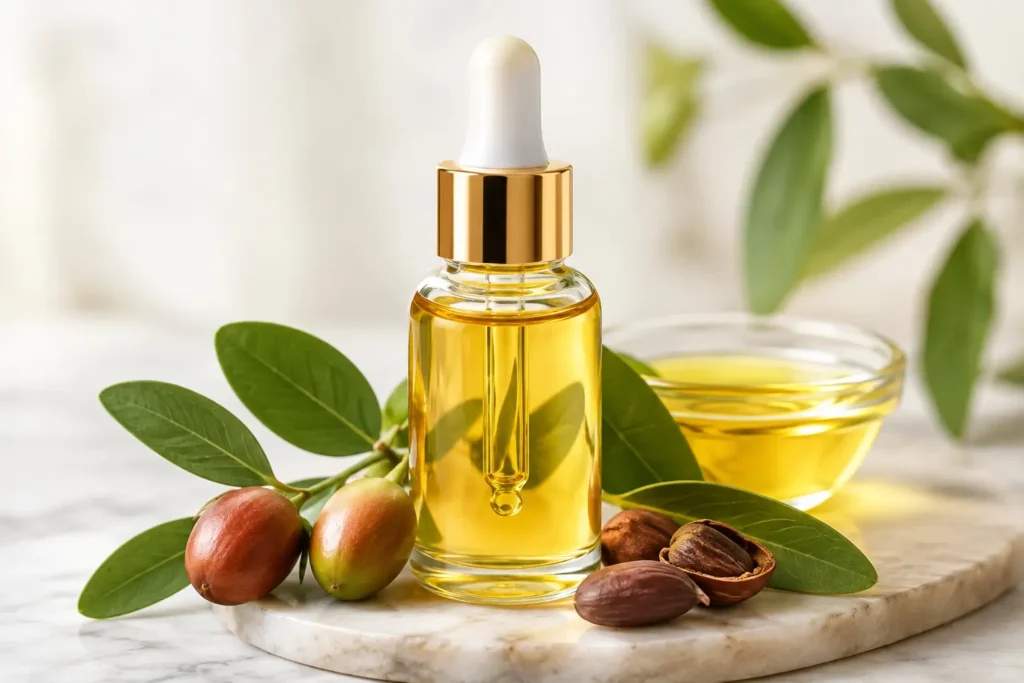
Jojoba oil is a popular choice when looking for the best natural oil for face because it has a lightweight, smooth texture and works well in many skincare formulations.
Unlike many plant oils, jojoba consists primarily of wax esters. Reviews of jojoba research describe potential moisturizing, anti-inflammatory, antioxidant, and cosmetic applications, although evidence for specific skin conditions varies.
Benefits of Jojoba Oil
Jojoba oil may help:
- Soften rough-feeling skin
- Reduce the feeling of dryness
- Support a comfortable skin barrier
- Add a smooth finish to the skin
- Reduce moisture loss when layered over hydrating products
The American Academy of Dermatology also lists jojoba oil among ingredients commonly found in products recommended for dry skin.
Who Should Try Jojoba Oil?
Jojoba may be a good option if you have:
- Normal skin
- Dry skin
- Combination skin
- Mildly dehydrated skin
- Skin that feels tight after cleansing
If your skin is acne-prone, introduce any facial oil gradually rather than assuming it will work for you.
Argan Oil for Dry Skin
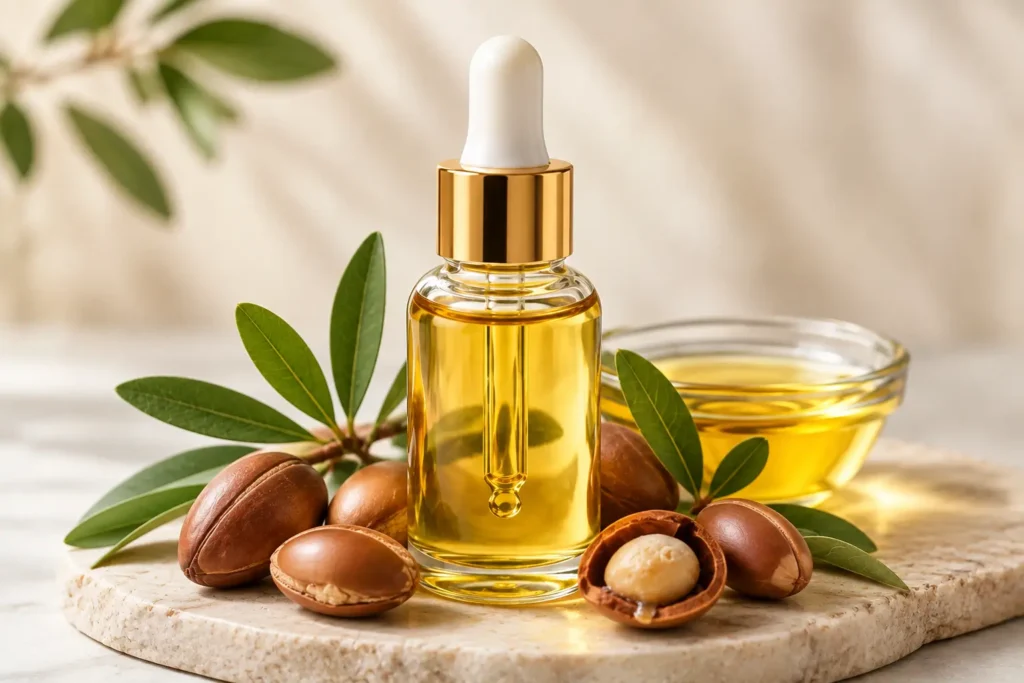
Argan oil is rich in fatty acids and antioxidant compounds and is commonly used in cosmetic products.
Its emollient properties can make it useful for dry skin that feels rough or lacks softness.
A review of plant-based cosmetic oils notes that argan oil contains essential fatty acids and vitamin E-related antioxidant compounds and is widely used in skincare formulations.
How to Use Argan Oil
Apply a small amount after your moisturizer or mix a drop into your moisturizer.
You generally do not need a large amount. Too much oil can leave the face feeling greasy without providing additional benefits.
Sunflower Seed Oil for Sensitive and Dry Skin
Sunflower seed oil is another natural option worth considering, particularly for dry skin.
Research on natural oils suggests that the fatty-acid composition of an oil can influence its interaction with the skin barrier. Oils with a higher linoleic-acid-to-oleic-acid ratio may have better barrier-supporting potential than oils that are especially high in oleic acid.
Sunflower seed oil is therefore an interesting option for people looking for a lighter plant oil for dry or sensitive-feeling skin.
Choose a well-formulated cosmetic product rather than applying an unknown-quality kitchen oil directly to your face.

Rosehip Oil for a Healthy-Looking Glow
Rosehip oil is popular in facial oils and serums designed for dull or uneven-looking skin.
It contains various fatty acids and naturally occurring compounds that make it attractive as a cosmetic ingredient.
However, rosehip oil should not be treated as a miracle treatment for dark spots, scars, or wrinkles.
It can complement a skincare routine, but concerns such as persistent hyperpigmentation or acne require a more targeted approach.

Sweet Almond Oil for Dry Skin
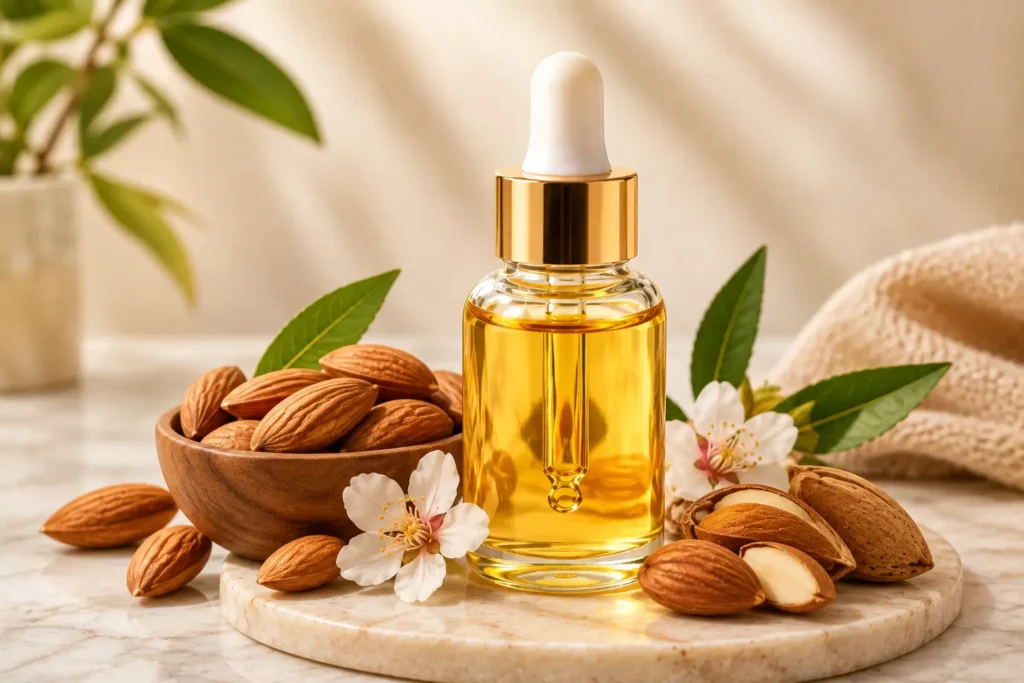
Sweet almond oil has a soft, nourishing texture that can work well for dry skin.
Research reviewing sweet almond, evening primrose, and jojoba oils found documented skincare applications, including use in products intended for dry skin, although the strength of evidence varies between applications.
Because sweet almond oil is relatively rich, people with oily or acne-prone skin may prefer a lighter option.
Anyone with a known nut allergy should discuss ingredient safety with a healthcare professional before using almond-derived products.
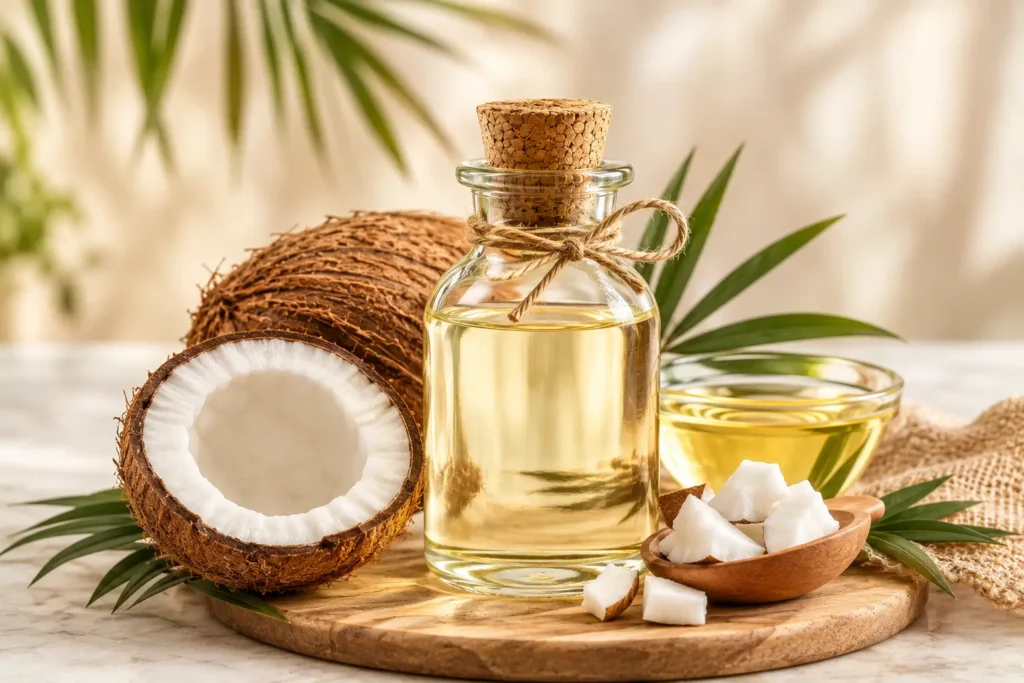
Is Coconut Oil Good for Your Face?
Coconut oil can be moisturizing, but it is not necessarily the best natural oil for face care for everyone.
It has a rich texture and may feel comfortable on very dry areas of the body. On facial skin, however, some people may find it too heavy.
If you want to try coconut oil on your face, start with a small amount and discontinue it if you notice clogged pores, bumps, redness, or irritation.
A lightweight facial moisturizer or formulated facial oil may be a better everyday choice.
Natural Oils vs. Squalane
Squalane is not technically a plant oil in the same way as jojoba, argan, or sunflower oil, but it is often included in natural-inspired skincare routines.
It has a lightweight, silky texture and can help soften the skin without the heavier feeling associated with some traditional oils.
For people who dislike greasy skincare, squalane can be an appealing alternative.
It is especially useful in routines focused on:
- Dryness
- Dehydration
- Skin softness
- Barrier support
- Lightweight moisturization
How Facial Oils Help Dry Skin
Facial oils do not work exactly like water-based hydrating ingredients.
For example, ingredients such as glycerin and hyaluronic acid help attract and hold water, while oils primarily provide emollient and occlusive benefits that can help soften the skin and reduce moisture loss.
This is why applying oil over a hydrating product can make more sense than using oil alone.
A simple routine might look like:
Cleanser → Hydrating serum → Moisturizer → Facial oil
This layering method gives your skin hydration first and then uses the oil as an additional softening layer.
How to Apply Natural Oil to Your Face
Using a facial oil correctly is more important than applying a large amount.
Step 1: Cleanse Gently
Wash your face with a gentle cleanser.
Avoid very hot water because it can make dry skin feel more uncomfortable. Dermatologists recommend short washes with warm water and gentle cleansing for dry skin.
Step 2: Apply Hydrating Skincare
If you use a hydrating serum or essence, apply it before your moisturizer.
Ingredients such as glycerin and hyaluronic acid can complement an oil-based step.
Step 3: Apply Moisturizer
Use your normal moisturizer to provide a more complete moisturizing step.
Creams and ointments generally provide more moisture than lotions, particularly for very dry skin.
Step 4: Finish With a Few Drops of Oil
Place a small amount of oil into your palms and gently press it onto the skin.
There is no need to soak your face in oil.

Should You Apply Facial Oil Before or After Moisturizer?
For most routines, applying facial oil after moisturizer is a simple approach.
The moisturizer provides water-based hydration and moisturizing ingredients, while the oil can help soften the skin and reduce moisture loss.
However, the ideal order can depend on the formulation.
If a product specifically instructs you to apply it differently, follow the manufacturer’s directions.
Best Natural Oil for Different Skin Types
Best Natural Oil for Dry Skin
For dry skin, consider richer options such as:
- Argan oil
- Sweet almond oil
- Jojoba oil
- Sunflower seed oil
A good moisturizer should still be the foundation of your routine.
Best Natural Oil for Sensitive Skin
Sensitive skin benefits from simplicity.
Jojoba or sunflower seed oil may be options to consider, but even natural oils can cause irritation.
Choose products with minimal ingredients and avoid heavily fragranced blends.
Best Natural Oil for Combination Skin
Combination skin may do better with lightweight oils.
Jojoba oil or squalane can be easier to incorporate without making the oilier areas feel excessively greasy.
Best Natural Oil for Oily Skin
Oily skin does not necessarily need additional facial oil.
If you want to use one, choose a lightweight product and apply only a small amount.
You may also prefer a lightweight moisturizer instead of an oil.
Best Natural Oil for Mature-Looking Skin
Argan and rosehip oils are popular choices in skincare formulated for mature-looking skin.
However, facial oils should complement rather than replace proven skincare ingredients such as sunscreen and appropriate anti-aging treatments.
What to Look for in a Natural Face Oil
Not all facial oils are made the same way.
Before buying one, check:
Ingredient List
Look for a short and clearly labeled ingredient list.
Avoid products with unnecessary fragrance if your skin is sensitive.
Processing and Quality
The extraction and processing method can influence the properties of plant oils. Research reviewing natural oils notes that processing and refinement are important considerations when selecting oils for topical use.
Packaging
Oils can oxidize over time.
Choose packaging that protects the product from excessive light and air, and follow the storage instructions.
Skin Compatibility
A luxurious oil is not useful if it causes irritation or makes your skin uncomfortable.
Your skin’s response matters more than how popular an ingredient is online.
Natural Oils You Should Be Careful With
Some natural oils are better suited to cosmetic formulations than direct DIY use.
Essential Oils
Essential oils are highly concentrated and should not be treated like ordinary carrier oils.
Research into essential oils for inflammatory skin conditions notes potential benefits in some contexts but also highlights limitations in evidence and concerns about product quality and safety.
Do not apply undiluted essential oils directly to your face.
Fragranced Oil Blends
Fragrance can be irritating for some people with sensitive skin.
If your skin frequently reacts to skincare products, a fragrance-free facial oil may be a safer starting point.
Kitchen Oils
An oil being safe to eat does not mean it is automatically ideal for facial skincare.
Cosmetic formulations are designed, tested, packaged, and preserved differently.
Can Facial Oil Replace Moisturizer?
Usually, it is better to think of facial oil as a supporting skincare step rather than a complete replacement for moisturizer.
A moisturizer can contain a combination of humectants, emollients, and occlusive ingredients.
Oil mainly contributes emollient and occlusive properties.
For dry skin, combining a moisturizer with a small amount of facial oil may provide a more comfortable routine.
Can You Use Facial Oil Every Day?
Many people can use a suitable facial oil daily, but frequency should depend on how your skin responds.
If you are new to facial oils, begin with a few nights per week.
If your skin remains comfortable, you can increase use if needed.
Stop using the product if you develop persistent redness, itching, burning, swelling, or other concerning reactions.
Common Mistakes When Using Facial Oils
Using Too Much Oil
More is not necessarily better.
A few drops are usually enough for the entire face.
Applying Oil to Irritated Skin
If your skin is already burning or inflamed, introducing a new oil may make it harder to determine what is causing the reaction.
Keep your routine simple until your skin settles.
Skipping Sunscreen
Facial oil cannot replace sunscreen.
During the day, use a broad-spectrum sunscreen as the final step of your morning skincare routine.
Mixing Too Many New Products
Introduce one new product at a time.
This makes it easier to identify whether your skin tolerates it.
How to Patch Test a Natural Face Oil
Before applying a new facial oil all over your face, test a small amount on a limited area.
Observe your skin over the following period according to the product’s directions.
If you develop significant irritation, swelling, or persistent discomfort, stop using the product.
If you frequently experience reactions to skincare products, consider discussing them with a dermatologist.
Final Thoughts
The best natural oil for face care is not necessarily the most expensive or most popular option. Jojoba oil is a versatile starting point, while argan, sunflower seed, rosehip, and sweet almond oils may offer different textures and benefits.
The most effective approach is to choose an oil that matches your skin type, use only a small amount, and combine it with a gentle cleanser, moisturizer, and daily sunscreen.
For dry or sensitive skin, simplicity is often more useful than adding a long list of natural ingredients. Natural oils can be a helpful addition to a thoughtful skincare routine, but they should complement—not replace—basic skin-barrier care.