

A good facial can leave your skin feeling cleaner, softer, and more refreshed. But with so many facial treatments available, choosing the right one can be confusing. Some facials mainly focus on hydration, while others are designed for clogged pores, dullness, uneven texture, acne, or visible signs of aging.
The best facial for face depends on your skin type, current concerns, and how sensitive your skin is. A treatment that works well for oily skin may not be the right choice for dry or sensitive skin.
Understanding the different types of facials can help you choose a treatment that matches what your skin actually needs.
What Is a Facial?
A facial is a professional skincare treatment that may include cleansing, exfoliation, steaming or softening the skin, extractions, masks, massage, and moisturizing products.
The exact steps depend on the type of facial and the provider performing it.
A facial can temporarily improve the appearance and feel of the skin, but it should not be considered a replacement for a consistent home skincare routine.
What Is the Best Facial for Face?
There is no single facial that is best for everyone.
The right option depends on your main concern:
| Skin Concern | Facial Type to Consider |
|---|---|
| Dry or dehydrated skin | Hydrating facial |
| Oily or congested skin | Deep-cleansing facial |
| Blackheads and clogged pores | Facial with appropriate extractions |
| Dull-looking skin | Gentle exfoliating facial |
| Uneven texture | Exfoliating or resurfacing treatment |
| Fine lines | Antioxidant or anti-aging facial |
| Sensitive skin | Gentle, soothing facial |
| Acne-prone skin | Acne-focused professional facial |
Before booking a treatment, tell the professional about your skin type, allergies, sensitivity, medications, and current skincare products.
Hydrating Facial for Dry Skin
If your face frequently feels tight, rough, or uncomfortable, a hydrating facial may be a better option than an aggressive exfoliating treatment.
A hydrating facial typically focuses on:
- Gentle cleansing
- Mild exfoliation
- Hydrating ingredients
- Moisturizing masks
- Skin-soothing products
- Barrier-supportive moisturizers
Ingredients such as glycerin, hyaluronic acid, ceramides, and other humectants or moisturizing ingredients may be incorporated depending on the treatment.
If your skin is very dry or sensitive, avoid assuming that stronger exfoliation will automatically give better results.
For a complete home routine, you can also explore a gentle skincare routine for dry sensitive skin alongside occasional professional treatments.
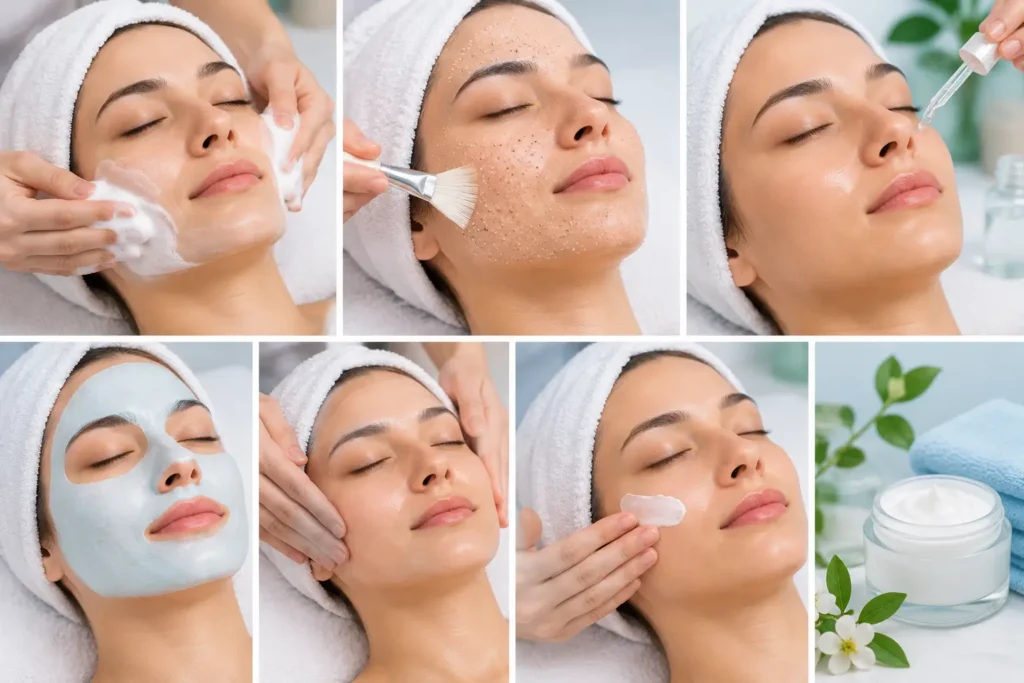
Deep-Cleansing Facial for Oily Skin
Oily skin can accumulate excess sebum, dead skin cells, and product residue, which may contribute to clogged pores.
A deep-cleansing facial may include cleansing, gentle exfoliation, and carefully performed extractions.
This type of treatment can make congested skin look cleaner and temporarily smoother.
However, aggressive extractions are not necessarily better. Excessive pressure can irritate the skin and potentially cause redness or inflammation.
If you regularly experience clogged pores, your daily cleanser and treatment products are just as important as occasional facials.

Best Facial to Shrink Pores
The Best Facial to Shrink Pores is usually one that improves the appearance of congestion and uneven texture rather than literally making pores disappear.
Pore size is influenced by factors such as genetics, skin type, oil production, and age. You cannot permanently eliminate pores, because pores are normal structures of the skin.
However, some professional treatments may temporarily make pores look less noticeable by improving surface texture and removing excess buildup.
Depending on your skin, options may include:
- Gentle exfoliating facials
- Professional chemical exfoliation
- Hydrafacial-style cleansing treatments
- Carefully performed extractions
- Treatments recommended by a dermatologist for persistent concerns
The best choice depends on why your pores appear prominent. For example, oily skin with clogged pores may benefit from a different approach than dry skin with rough texture.
Facial for Acne-Prone Skin
People with acne-prone skin should be careful when choosing facials.
A professional acne-focused facial may involve gentle cleansing, mild exfoliation, and appropriate treatment products. Extractions may sometimes be performed for certain types of clogged lesions.
Avoid facials that involve aggressive scrubbing or excessive extraction if your skin is already inflamed.
If you have painful, deep, or cystic acne, a dermatologist can determine whether professional medical treatment is more appropriate than a standard facial.
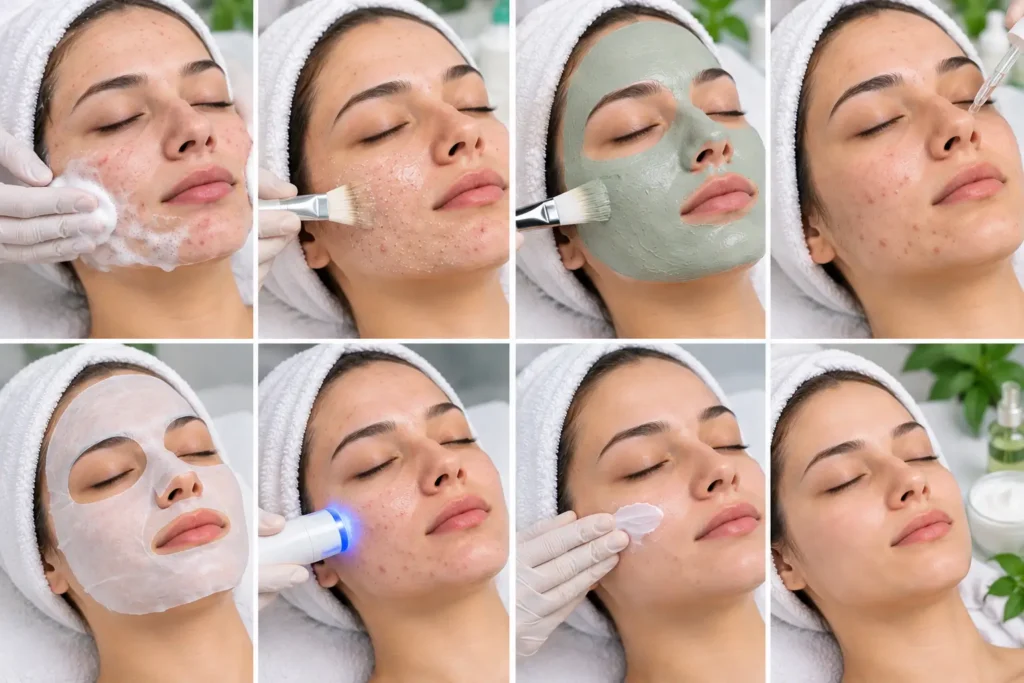
Facial for Blackheads and Clogged Pores
Blackheads form when a pore becomes clogged with oil and dead skin cells and the material at the surface oxidizes.
A facial designed for congestion may help temporarily improve the appearance of blackheads through cleansing, exfoliation, and professional extraction.
However, blackheads can return if the underlying tendency toward clogged pores remains.
For ongoing maintenance, ingredients such as salicylic acid can be useful for some people because it helps exfoliate inside the pore.
Do not try to remove deep blackheads by squeezing aggressively at home.
Exfoliating Facial for Dull Skin
Dead skin buildup can contribute to a dull or uneven-looking complexion.
An exfoliating facial may use ingredients such as alpha hydroxy acids or other exfoliating agents to improve the appearance of the skin surface.
A properly selected exfoliating treatment can leave skin looking smoother and more refreshed.
However, excessive exfoliation can damage the skin barrier and cause irritation. Your provider should know if you already use retinol, acids, benzoyl peroxide, or other active skincare products.
Facial for Sensitive Skin
Sensitive skin requires a gentler approach.
If your skin frequently becomes red, itchy, burning, or irritated, avoid choosing a facial simply because it promises powerful results.
A suitable treatment may focus on:
- Gentle cleansing
- Minimal exfoliation
- Hydration
- Soothing ingredients
- Barrier-supportive products
- Avoiding unnecessary fragrance or harsh actives
Always tell the aesthetician about previous reactions to skincare products.
If your skin is experiencing an active rash, severe irritation, or unexplained inflammation, it may be better to postpone a facial and seek professional medical advice.
Facial for Uneven Skin Tone and Dark Spots
Some facials are marketed for pigmentation, dullness, or uneven skin tone.
Depending on the treatment, ingredients such as vitamin C, gentle acids, or other brightening ingredients may be incorporated.
However, dark spots have different causes, including acne marks, sun exposure, hormonal changes, and certain skin conditions. A facial may improve the overall appearance of the skin, but it may not address the underlying cause.
Daily sunscreen is particularly important when working on uneven pigmentation because UV exposure can contribute to the development and persistence of dark spots.
You can also learn more about using vitamin C for face as part of a consistent home skincare routine.
Anti-Aging Facial for Mature Skin
As skin ages, collagen production changes and signs such as fine lines, uneven texture, and dryness may become more noticeable.
An anti-aging facial may focus on hydration, antioxidants, gentle exfoliation, and ingredients designed to improve the appearance of texture.
Some professional treatments go beyond traditional facials and use technologies such as microneedling, lasers, or energy-based devices. These should be considered separately from a basic facial and performed by appropriately trained professionals.
For everyday maintenance, sunscreen remains one of the most important steps for protecting skin from premature visible aging.
Hydrafacial-Style Treatments
Hydradermabrasion or Hydrafacial-style treatments combine cleansing, exfoliation, and hydration in a multi-step procedure.
They are often promoted for improving the appearance of congestion, dryness, and dullness.
The exact procedure and products vary between providers, so ask what the treatment actually includes before booking.
If you have sensitive skin or an active skin condition, ask whether the treatment can be modified for your skin.

Chemical Peel vs Facial
A chemical peel and a traditional facial are not exactly the same.
A basic facial usually focuses on cleansing, exfoliation, hydration, and relaxation. A chemical peel uses a chemical exfoliating solution at a specific strength to remove layers of damaged surface skin.
Professional peels can range from superficial treatments to deeper procedures.
The stronger the treatment, the more important professional assessment and appropriate aftercare become.
If you are considering a peel specifically for pigmentation, acne scars, or significant texture concerns, consult a qualified professional before choosing the treatment.
How Often Should You Get a Facial?
There is no universal schedule that works for everyone.
Some people may enjoy an occasional facial every few weeks or months, while others may not need professional treatments regularly.
Your ideal frequency depends on:
- Skin type
- Facial type
- Sensitivity
- Acne activity
- Current skincare routine
- Treatment strength
- How quickly your skin recovers
If your skin remains red, tight, peeling, or irritated after a treatment, give it enough time to recover before scheduling another one.
What Should You Do Before a Facial?
A little preparation can help reduce unnecessary irritation.
Before your appointment:
- Tell your provider about your skincare products.
- Mention any allergies or sensitivities.
- Tell them if you use retinoids or prescription treatments.
- Avoid experimenting with new strong products immediately before the appointment.
- Do not aggressively scrub your face.
- Arrive with clean skin when possible.
If you have recently had sunburn, a significant skin reaction, or an active infection, tell the provider before treatment.
What Should You Do After a Facial?
Your skin may be more sensitive immediately after certain treatments.
After a facial:
- Follow the aftercare instructions provided by your skincare professional.
- Keep your routine gentle.
- Use a suitable moisturizer.
- Apply sunscreen during the day.
- Avoid unnecessary exfoliation.
- Avoid picking or rubbing the skin.
- Give your skin time to recover before using strong active ingredients.
If your provider recommends avoiding retinol or exfoliating acids for a specific period, follow those instructions.
Can a Facial Permanently Shrink Pores?
No facial can permanently remove or close your pores.
Pores are normal openings in the skin, and their visible appearance can change depending on oil production, congestion, skin elasticity, and lighting.
Professional cleansing and exfoliation may temporarily make pores look less noticeable by reducing surface buildup and improving skin texture.
For longer-term pore management, consistent home skincare may be more important than occasional treatments.
Can a Facial Help With Acne?
Some facials may temporarily improve mild congestion, but a facial is not a universal acne treatment.
Acne can have several contributing factors, and persistent or severe acne may require evidence-based medical treatment.
If breakouts are painful, deep, widespread, or leaving scars, consider consulting a dermatologist rather than relying solely on facials.
Can You Get a Facial If You Have Sensitive Skin?
Yes, but the treatment should be adapted to your skin.
A gentle facial with minimal exfoliation may be more appropriate than a strong peel or aggressive extraction.
Always communicate your sensitivity level and previous reactions before the treatment begins.
Common Facial Mistakes to Avoid
Choosing a Facial Based Only on Popularity
A popular facial is not automatically suitable for your skin.
Choose according to your skin type and concerns.
Over-Exfoliating
Combining a strong facial with frequent acids, scrubs, or retinoids at home can lead to irritation.
Getting Aggressive Extractions
More pressure does not mean better cleansing. Poorly performed extractions can irritate or injure the skin.
Ignoring Sunscreen After Treatment
Some treatments can temporarily make skin more sensitive. Sun protection is particularly important during recovery.
Expecting Permanent Results From One Treatment
A facial can provide a temporary improvement in how your skin looks and feels, but long-term skin health depends on consistent skincare and lifestyle habits.
How to Choose the Right Facial for Your Skin Type
Before booking, ask yourself three questions:
What is my main concern?
Is it dryness, oiliness, clogged pores, acne, dullness, uneven tone, or aging?
How sensitive is my skin?
If your skin reacts easily, prioritize gentle treatments.
What products am I already using?
Retinoids, exfoliating acids, acne treatments, and other actives can affect which professional treatments are appropriate.
When in doubt, ask a qualified skincare professional or dermatologist to assess your skin before choosing an intensive treatment.
A Simple Facial Maintenance Routine at Home
Professional facials work best when combined with a consistent home routine.
Morning
- Gentle cleanser
- Optional antioxidant or targeted serum
- Moisturizer
- Broad-spectrum sunscreen
Night
- Gentle cleanser
- Targeted treatment if appropriate
- Moisturizer
For oily or congested skin, a suitable exfoliating ingredient can be introduced according to your skin’s tolerance.
If you are dealing with pigmentation or redness, choose treatments based on the actual cause rather than continuously adding stronger products.
When Should You See a Dermatologist Instead of Getting a Facial?
A facial is a cosmetic skincare treatment, while a dermatologist can diagnose and treat medical skin conditions.
Professional medical advice is particularly important if you have:
- Severe or painful acne
- Cystic breakouts
- Persistent redness
- Eczema or psoriasis symptoms
- Sudden skin changes
- Severe irritation
- Unexplained pigmentation
- Suspicious or changing moles or lesions
- Acne scarring
In these situations, treating the underlying condition is more important than simply improving the skin’s surface appearance.
FAQs
What is the best facial for face?
The best facial depends on your skin type and concern. Hydrating facials can suit dry skin, deep-cleansing treatments may help congestion, and gentle exfoliating treatments may improve dull-looking skin.
What is the best facial to shrink pores?
A facial that combines appropriate cleansing and gentle exfoliation may temporarily make pores look less noticeable. Pores cannot be permanently shrunk or removed.
Which facial is best for oily skin?
A gentle deep-cleansing facial may be suitable for oily skin, particularly when congestion is present. Avoid aggressive extraction or excessive exfoliation.
Which facial is best for dry skin?
A hydrating facial focused on gentle cleansing, moisturizing, and skin comfort can be a suitable choice for dry skin.
How often should I get a facial?
The ideal frequency depends on your skin type, the treatment, and how your skin responds. You do not necessarily need frequent professional facials if your daily skincare routine is effective.
Can facials remove blackheads?
Professional cleansing and appropriate extractions can temporarily improve the appearance of blackheads. However, blackheads can return without ongoing pore care.
Can facials help with acne scars?
Some professional treatments may improve the appearance of acne scars, but traditional facials are generally not enough for significant scarring. Dermatological procedures may be more appropriate depending on the type of scar.
Should I exfoliate at home after a facial?
Usually, you should avoid immediately adding extra exfoliation unless your skincare professional specifically recommends it. Give your skin time to recover.
Is a facial good for sensitive skin?
A gentle facial can be suitable for some people with sensitive skin, but strong exfoliation, fragrance, heat, or aggressive extraction may cause irritation.
Final Thoughts
The best facial for face is not necessarily the most expensive or intensive treatment. It is the one that matches your skin type, current concerns, and tolerance.
Hydrating treatments can be useful for dry skin, gentle cleansing and extraction may help congestion, and carefully selected exfoliating treatments can improve the appearance of dull or uneven texture. For persistent acne, pigmentation, or significant skin conditions, professional dermatological care may be more appropriate.
Think of a facial as one part of your skincare routine rather than a quick solution for every skin concern. Consistent cleansing, moisturizing, appropriate treatments, and daily sun protection can help you maintain healthier-looking skin between professional appointments.