


Beige luxury living room ideas can help you create a space that feels warm, peaceful, elegant, and timeless. Beige is one of the most versatile neutral colors because it works beautifully with cream, ivory, taupe, brown, black, olive green, terracotta, and soft blue. With the right combination of furniture, textures, lighting, and decorative details, beige can make a living room look sophisticated without feeling cold or overly formal.
A beige living room does not need to be completely plain. The secret is to use different shades and materials to create depth. Warm beige walls, a cream sofa, a taupe rug, wooden furniture, and soft curtains can work together to create a balanced and inviting interior. Each element should complement the others while adding its own visual interest.
Furniture also plays an important role in creating a luxurious atmosphere. A curved sofa, a large sectional, a sculptural coffee table, or an elegant accent chair can give the room a strong focal point. Choose pieces with comfortable shapes, clean lines, and high-quality-looking upholstery to achieve a refined appearance.
A luxury sectional sofa can also become an important part of a beige living room design. Its large, comfortable shape naturally creates a focal point, while neutral upholstery in beige, cream, or taupe keeps the space feeling bright and sophisticated. Pair the sectional with a textured rug, a sculptural coffee table, soft cushions, and warm lighting to create a balanced seating area. For more inspiration on choosing the right style, color, and layout, explore our guide to luxury sectional sofas for a stylish living room.
The most successful beige living rooms combine beauty with comfort. The room should look polished but still feel practical for everyday life. Soft seating, durable fabrics, useful storage, comfortable walking space, and carefully arranged furniture can make the living room both stylish and functional.
What Makes a Beige Living Room Look Luxurious?
Luxury is not only about expensive furniture or large decorative pieces. It is also about proportion, balance, comfort, and attention to detail. A beige living room looks more refined when it includes a carefully selected color palette, premium-looking fabrics, natural materials, soft lighting, and uncluttered styling.
Instead of using the same beige shade everywhere, combine warm ivory, sand, almond, oatmeal, taupe, and light caramel. These variations prevent the room from looking flat and create a more layered appearance. Dark wood, black accents, stone surfaces, and subtle metallic finishes can also add contrast.
The arrangement of the room matters just as much as the individual pieces. Furniture should be positioned to support conversation, movement, and comfort. Leave enough space around the sofa and coffee table so the room feels open rather than crowded.
1. Create a Layered Beige and Cream Color Palette
One of the easiest ways to create a luxurious beige living room is to combine several soft neutral shades. Using only one beige color can make the room feel dull, but layering cream, ivory, sand, taupe, and warm beige adds dimension.
Begin with warm beige walls and choose a cream, oatmeal, or ivory sofa as the main seating piece. Add a light beige rug, ivory curtains, and cushions in slightly different neutral shades. A taupe armchair, caramel ottoman, or warm brown side table can introduce gentle contrast.
Natural wood furniture works especially well with this palette. A walnut coffee table, oak console, or wooden accent chair can add warmth and make the room feel more connected to nature. Keep the overall arrangement simple so the different tones remain easy to notice.
The key is to create contrast through shade rather than using too many bright colors. A combination of beige, cream, and brown can look rich, elegant, and comfortable when the tones are balanced carefully.

2. Add Texture Through Fabric, Rugs, and Soft Furnishings
Texture is essential in a beige living room because it adds interest without disturbing the calm color scheme. Different materials can make the space feel layered, comfortable, and visually rich.
Combine a linen or boucle sofa with velvet cushions, a wool rug, knitted throws, and soft cotton curtains. These materials create subtle differences that make the room feel more luxurious. A smooth stone coffee table beside a textured sofa can also create an attractive contrast.
Walls can contribute texture as well. Limewash paint, plaster, microcement, and lightly textured wallpaper can make beige walls look more sophisticated. These finishes create soft variations as natural light moves across the surface.
Try not to use the same finish on every item. A room with only smooth surfaces may look plain, while a combination of linen, wool, wood, stone, ceramic, and woven fabric creates a warmer and more inviting environment.

3. Use Natural Wood and Stone for a Warm Luxury Look
Natural materials can make a beige living room feel timeless and grounded. Beige pairs beautifully with oak, walnut, travertine, marble, limestone, and other softly colored stone finishes.
A walnut coffee table can add depth to a pale sofa, while a travertine side table introduces an organic and elegant touch. A stone fireplace, wooden media unit, or oak flooring can also become an important feature of the room.
For a balanced appearance, mix warm and cool materials. For example, combine a soft beige sofa with a smooth stone table, a wooden console, and a textured rug. This prevents the room from looking too uniform and gives it a more thoughtfully designed appearance.
Natural materials are especially useful in modern and organic luxury interiors because they create a connection with nature while keeping the room refined.

4. Introduce Elegant Contrast With Black, Brown, or Metallic Accents
A beige living room can look more polished when it includes small touches of contrast. Black, dark brown, bronze, and brushed brass can give structure to a soft neutral palette.
Black can be introduced through table legs, window frames, lighting fixtures, picture frames, or small decorative objects. Dark brown works well through walnut furniture, leather cushions, wooden flooring, or a chocolate-colored accent chair.
For a more elegant appearance, use brushed brass or antique bronze in lamps, mirrors, side tables, cabinet details, or decorative accessories. These finishes add warmth and sophistication without making the room look overly glamorous.
Use contrast carefully. The main furniture can remain beige while darker shades appear in smaller details. This creates visual balance and keeps the room calm and welcoming.

5. Make the Beige Sofa the Main Focal Point
A luxury living room usually needs one main focal point, and the sofa can perform this role beautifully. Its shape, size, fabric, and placement can define the entire atmosphere of the room.
A curved beige sofa creates a soft and welcoming look, while a low-profile sectional gives the room a modern appearance. A tailored sofa with clean arms and deep cushions can create a more classic atmosphere. Boucle, linen, velvet, and high-quality woven fabrics are all attractive choices for beige seating.
Place the sofa where it can be appreciated as soon as someone enters the room. It may face a fireplace, large windows, a statement coffee table, or a carefully styled media wall.
Add cushions and throws in cream, taupe, brown, muted olive, or soft gray. These details can enhance the sofa without taking attention away from its shape and upholstery.
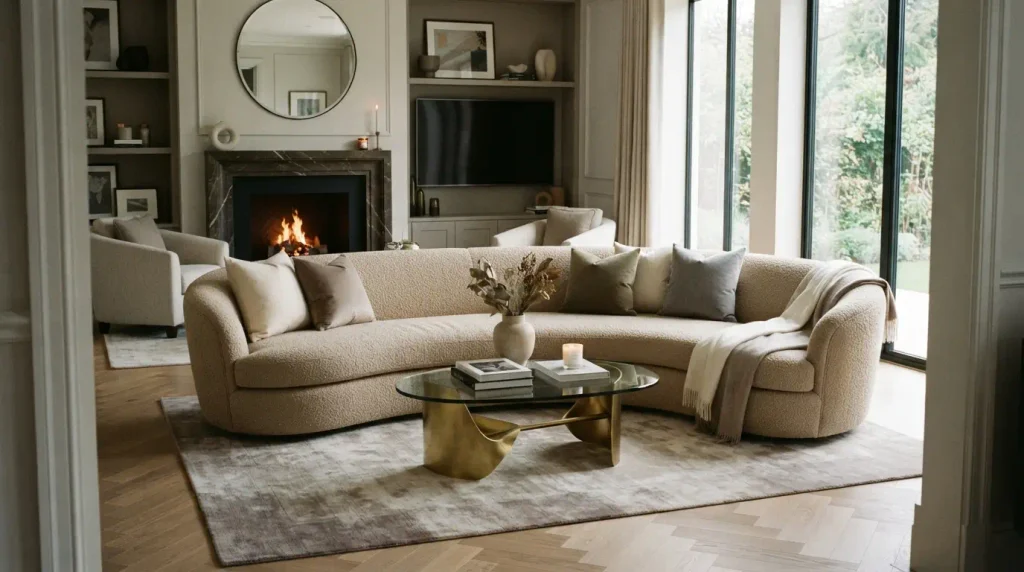
6. Add Soft Color Accents Without Losing the Neutral Mood
Beige creates a beautiful background for small amounts of color. You do not need to use bright shades throughout the room. A few carefully selected accents can make the space feel more personal and expressive.
Olive green and sage create a natural and calming atmosphere. Terracotta and rust add warmth, while dusty blue and muted navy introduce a fresh and elegant contrast. Blush pink can create a softer appearance, and deep burgundy or emerald green can give the room a more dramatic look.
Use accent colors through cushions, artwork, rugs, curtains, ceramics, or one statement chair. Keep the largest furniture pieces neutral so the room remains cohesive.
The best approach is to repeat an accent color in two or three places. For example, olive cushions can be paired with a small olive-toned artwork or ceramic vase. This makes the color feel intentional rather than random.
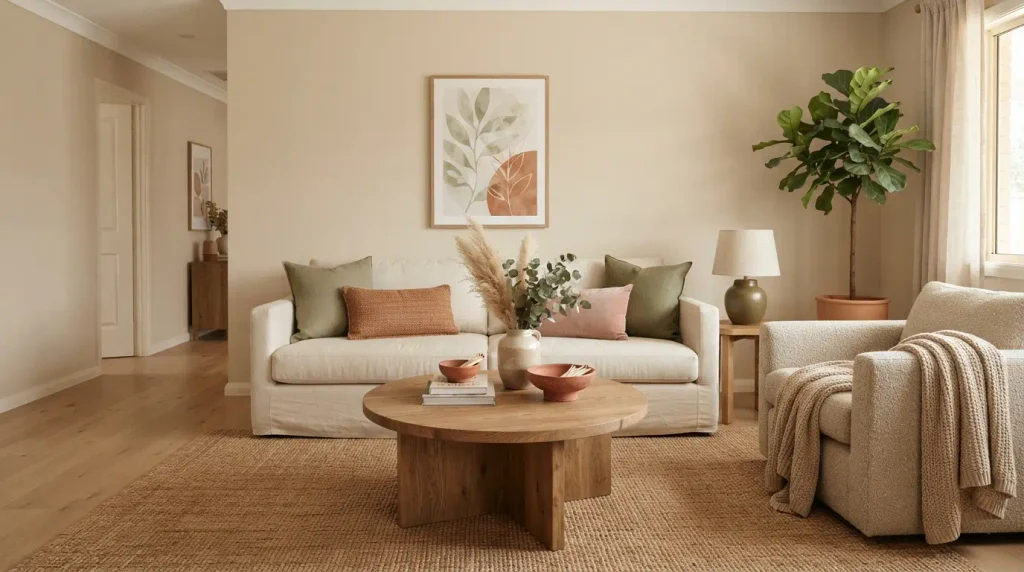
7. Use Lighting and Decorative Details to Complete the Look
Lighting can completely change the appearance of beige. Natural daylight can make beige feel bright and soft, while warm artificial lighting can create a cozy and intimate evening mood.
Instead of depending on one ceiling light, use several lighting sources. Floor lamps, table lamps, pendant lights, wall sconces, and concealed lighting can create a layered effect. Warm white lighting is usually a good choice for a comfortable living room atmosphere.
Decorative details should be simple but carefully selected. A large mirror can reflect light and make the room feel more spacious. Oversized artwork can add personality, while ceramic vases, coffee-table books, sculptural objects, and elegant trays can give the room a finished look.
Avoid decorating every surface. A few beautiful objects with enough empty space around them often look more luxurious than a crowded arrangement.

How to Make a Beige Living Room Look More Expensive
To create a luxurious appearance, focus on the following design choices:
- Use several shades of beige instead of one flat color.
- Choose furniture with balanced proportions.
- Mix linen, boucle, wool, wood, stone, and ceramic finishes.
- Add one or two statement pieces instead of many small decorations.
- Use warm, layered lighting.
- Include natural materials such as walnut, oak, travertine, or marble.
- Keep the room uncluttered and leave enough empty space.
- Add contrast through black, brown, bronze, or muted accent colors.
- Choose curtains that fall naturally from ceiling to floor.
- Keep the furniture arrangement comfortable and easy to move around.
Final Thoughts
These beige luxury living room ideas show that a neutral space can be elegant, warm, and full of character. The key is to combine different beige tones with rich textures, natural materials, balanced furniture, thoughtful lighting, and carefully selected accents.
Whether you prefer a modern beige living room, a cozy organic space, or a refined quiet-luxury interior, beige provides a timeless foundation. With the right styling, it can create a living room that feels sophisticated, comfortable, and beautiful for years to come.
If you want to extend this elegant look beyond the living room, explore our quiet luxury home decor ideas for more inspiration. This style focuses on warm neutrals, natural materials, layered textures, comfortable furniture, and thoughtful lighting to create a home that feels refined without looking overly decorated. These principles work beautifully with beige interiors and can help you create a cohesive, sophisticated look throughout your home.
Frequently Asked Questions
Is beige a good color for a luxury living room?
Yes. Beige creates a soft and timeless foundation that works well with premium-looking fabrics, natural wood, stone, metallic accents, and elegant lighting.
What colors look best with beige furniture?
Cream, ivory, taupe, walnut brown, black, olive green, terracotta, soft blue, and muted gray all work beautifully with beige furniture.
How can I stop a beige living room from looking boring?
Use different textures, layer several neutral shades, add natural materials, introduce subtle contrast, and include one or two statement decorative pieces.
Does beige make a living room look bigger?
Light beige shades can help a room feel brighter and more open, especially when paired with natural light, pale curtains, and a simple furniture arrangement.
What materials work best in a beige luxury living room?
Linen, boucle, velvet, wool, oak, walnut, travertine, marble, ceramic, plaster, and brushed metal are excellent choices for creating depth and a refined appearance.