


Retinal Skincare: Benefits, How to Use, and Beginner Tips
Retinal skincare has become popular in modern beauty routines. It is often chosen by people who want smoother-looking skin and a more even complexion.
Retinal is also known as retinaldehyde. It belongs to the vitamin A family of skincare ingredients. Like other retinoids, it supports skin cell turnover and may improve the appearance of fine lines, uneven texture, and blemishes over time.
However, retinal can also cause dryness and irritation. For this reason, it is best to introduce it slowly and use a simple skincare routine.
What Is Retinal in Skincare?
Retinal is a vitamin A derivative used in skincare products. You can find it in serums and creams designed for nighttime use.
It belongs to the retinoid family. This family also includes retinol and prescription retinoids.
Although these ingredients are related, they are not identical. Each one has a different strength and is used in different ways.
Retinal is often discussed with retinol. Still, they are different ingredients and should not be treated as interchangeable.
What Does Retinal Do for Your Skin?
Retinal is mainly used to improve the appearance of several common skin concerns.
Retinal for Fine Lines and Wrinkles
Vitamin A ingredients are well known in anti-aging skincare. They can support skin renewal and improve the look of fine lines over time.
Retinal may also help skin appear smoother. However, results usually develop gradually.
Consistency matters more than using a large amount of product.
Retinal for Uneven Skin Tone
Uneven skin tone can happen for many reasons. Sun exposure and previous skin inflammation are common causes.
Retinal supports skin cell turnover. Because of this, it is often included in routines for uneven-looking skin.
However, irritation can make pigmentation look worse for some people. Therefore, it is important to start slowly.
Retinal for Dark Spots
Retinal skincare may help improve the appearance of dark spots over time.
Still, sunscreen remains an important part of the routine. Sun exposure can make pigmentation more noticeable.
For this reason, retinal and daily SPF work best together.
Retinal for Skin Texture
Rough skin texture can make the complexion look dull.
Retinal may help the skin look smoother by supporting normal skin renewal.
Do not use more product to speed up results. Too much retinal can lead to peeling and redness.
Retinal for Acne-Prone Skin
Vitamin A ingredients are commonly used in acne skincare.
They can help keep pores from becoming clogged. This may improve the appearance of blemishes and uneven texture.
However, severe acne often needs medical treatment.
Retinal vs Retinol
Retinal and retinol are both vitamin A derivatives.
However, they are not the same ingredient.
Retinol is found in many over-the-counter skincare products. Retinaldehyde is another form used in topical skincare.
When choosing between them, consider your skin type and tolerance. Product formulation also matters.
Instead of looking for the strongest product, choose one your skin can tolerate consistently.
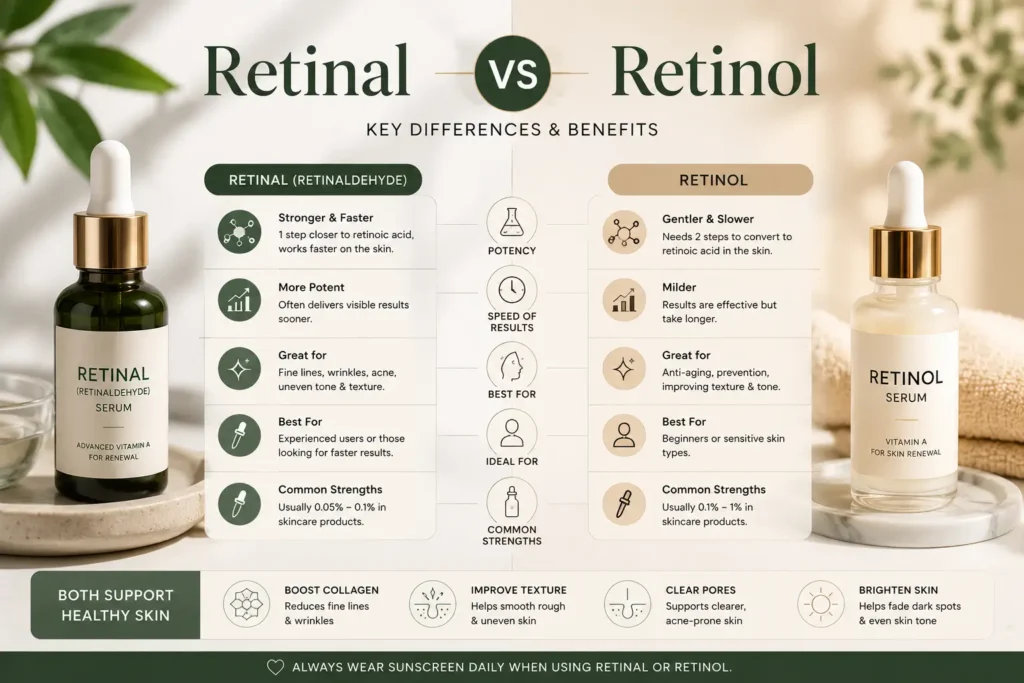
Retinal vs Prescription Retinoids
Prescription retinoids are different from cosmetic retinal products.
Examples include tretinoin and tazarotene. These products are used to treat specific skin concerns under medical guidance.
A retinal serum should not be viewed as the same as a prescription treatment.
If you have persistent acne or significant skin concerns, a dermatologist can help you choose the right option.
How to Use Retinal in Your Skincare Routine
Retinal is usually used at night.
A simple routine works well for most beginners.
- Cleanse your skin gently.
- Let your skin dry.
- Apply a small amount of retinal.
- Follow with moisturizer.
The next morning, apply sunscreen.
This simple routine can reduce the chance of irritation.
How Often Should You Use Retinal?
If you are new to retinal, do not start every night.
Begin with two or three nights each week.
If your skin feels comfortable, increase the frequency gradually.
If you notice persistent burning, redness, or peeling, reduce how often you use it.
How Much Retinal Should You Apply?
More product does not mean better results.
Use only the amount recommended on the packaging.
Avoid applying retinal directly around the eyes, lips, or irritated areas.
Where Does Retinal Fit in a Nighttime Routine?
A basic nighttime routine looks like this:
Cleanser → Retinal → Moisturizer
If your skin is sensitive, you can apply moisturizer before retinal. This may help reduce irritation.
Best Ingredients to Pair With Retinal
Retinal works well with simple hydrating ingredients.
Retinal and Hyaluronic Acid
Hyaluronic acid helps attract moisture to the skin.
Using it with retinal may help reduce the feeling of dryness.
Retinal and Niacinamide
Niacinamide is often used to support the skin barrier.
A gentle niacinamide product can fit into a retinal routine.
However, introduce new products one at a time.
Retinal and Ceramides
Ceramides are natural components of the skin barrier.
A ceramide moisturizer can help support skin comfort while using retinal.
Retinal and Moisturizer
Moisturizer is one of the most useful products to pair with retinal.
It can help reduce dryness and peeling during the adjustment period.
What Not to Mix With Retinal
Avoid introducing several strong products at once.
Be cautious with:
- Strong exfoliating acids
- Physical scrubs
- Other retinoids
- Strong acne treatments
- Multiple active serums
A simple routine is usually easier for the skin to tolerate.
Retinal and Sunscreen
Sunscreen is essential when using retinal skincare.
Retinoids can make the skin more sensitive to sunlight.
Use a broad-spectrum sunscreen every morning.
Daily SPF also helps protect the improvements you are trying to achieve.
Retinal Side Effects and Irritation
Some people experience mild irritation when starting retinal.
Common side effects include:
- Dryness
- Redness
- Peeling
- Flaking
- Tightness
- Mild stinging
These effects often happen when retinal is introduced too quickly.
If irritation becomes severe, stop using the product and seek professional advice.
How to Reduce Retinal Irritation
If your skin feels uncomfortable, simplify your routine.
Use:
- A gentle cleanser
- A basic moisturizer
- Daily sunscreen
Avoid exfoliating scrubs until your skin feels comfortable again.
Is Retinal Purging Possible?
Some people notice temporary breakouts after starting a vitamin A product.
However, not every breakout is purging.
Persistent redness, itching, or burning may mean the product is irritating your skin.
If you are unsure, speak with a dermatologist.
Retinal Skincare for Beginners
A simple routine is best for beginners.
Start Slowly
Begin with a few applications each week.
Increase the frequency only if your skin tolerates it.
Use a Small Amount
Follow the directions on the product.
Using extra retinal will not make results appear faster.
Moisturize
A moisturizer can help reduce dryness.
Look for ingredients such as ceramides or glycerin if your skin feels dry.
Wear Sunscreen
Always use sunscreen during the day.
This is one of the most important steps in a retinal skincare routine.
Retinal Skincare for Different Skin Types
Dry Skin
Use a gentle cleanser and a rich moisturizer.
Start retinal slowly.
Oily Skin
Oily skin can still become irritated.
Choose a lightweight moisturizer and avoid harsh cleansing.
Combination Skin
Apply moisturizer across the face.
Pay extra attention to areas that become dry.
Sensitive Skin
Sensitive skin needs extra care.
Start with a low frequency and avoid adding several new products at once.
How Long Does Retinal Take to Work?
Retinal does not produce instant results.
Changes usually happen gradually.
The timeline depends on your skin and the concern you are treating.
Stay consistent with a routine your skin can tolerate.
Common Retinal Skincare Mistakes
Avoid these common mistakes:
- Starting every night
- Applying too much product
- Skipping moisturizer
- Forgetting sunscreen
- Mixing too many active ingredients
- Applying retinal to irritated skin
Keeping your routine simple can help prevent these problems.
Is Retinal Safe During Pregnancy?
Retinoids are generally avoided during pregnancy.
Retinal is also a vitamin A derivative.
If you are pregnant, planning pregnancy, or breastfeeding, speak with your healthcare provider before using retinal skincare.
When to See a Dermatologist
Consider professional advice if you experience:
- Severe irritation
- Persistent redness
- Painful skin reactions
- A lasting rash
- Significant peeling
- Acne that does not improve
A dermatologist can help determine whether retinal is right for your skin.
Simple Retinal Skincare Routine
Morning
- Gentle cleanser
- Hydrating serum
- Moisturizer
- Broad-spectrum sunscreen
Night
- Gentle cleanser
- Retinal
- Moisturizer
On rest nights, skip retinal and focus on hydration.
Final Thoughts
Retinal skincare can be a useful addition to a well-planned routine.
It may improve the appearance of fine lines, uneven skin tone, dark spots, acne, and skin texture over time.
The best results usually come from consistency. Start slowly, moisturize regularly, and wear sunscreen every day.
If your skin remains irritated or you are unsure how retinal fits into your routine, a dermatologist can help you choose a safer plan.