

Complete Skincare Routine for Acne-Prone Skin: A Step-by-Step Guide to Clearer, Healthier Skin
Acne-prone skin can be frustrating to manage, especially when new breakouts appear just as old ones begin to heal. Many people try multiple skincare products hoping for quick results, but using too many active ingredients or following inconsistent routines often makes acne worse instead of better.
The good news is that you don’t need a complicated 10-step regimen to achieve healthier skin. A complete skincare routine for acne-prone skin focuses on gentle cleansing, targeted acne treatments, proper hydration, and consistent sun protection. When you choose products designed for your skin type and follow the correct order every day, you can reduce breakouts while protecting your skin barrier.
In this guide, you’ll learn a dermatologist-inspired skincare routine, discover the best ingredients for acne-prone skin, understand which products to avoid, and build healthy habits that support clearer skin over time.
Why Acne-Prone Skin Needs a Consistent Skincare Routine
Acne develops when excess oil, dead skin cells, and bacteria clog pores. Hormonal changes, stress, genetics, and certain skincare products can also contribute to frequent breakouts.
Following a consistent skincare routine helps keep pores clean, reduces excess oil, and supports your skin’s natural healing process. More importantly, it helps prevent new blemishes while improving the appearance of existing acne marks.
With the right routine, you can:
- Reduce clogged pores
- Control excess oil production
- Calm redness and inflammation
- Prevent future breakouts
- Improve overall skin texture
- Strengthen the skin barrier
- Fade post-acne marks gradually
Remember that skincare takes time. Visible improvements usually appear after several weeks of consistent care.
Know Your Skin Before Starting an Acne Routine
Not all acne-prone skin behaves the same way. Understanding your skin type helps you choose products that work effectively without causing irritation.
Oily Acne-Prone Skin
This skin type produces excess sebum throughout the day, making it more likely to develop blackheads, whiteheads, and inflamed pimples. Lightweight, oil-free products are usually the best choice.
Combination Acne-Prone Skin
Combination skin is often oily around the forehead, nose, and chin while remaining normal or dry on the cheeks. A balanced routine helps control oil without over-drying the skin.
Sensitive Acne-Prone Skin
Sensitive skin can react quickly to strong active ingredients. Gentle cleansers, fragrance-free moisturizers, and slow introduction of acne treatments help minimize irritation.
Complete Skincare Routine for Acne-Prone Skin: Step-by-Step
The order of your skincare products is just as important as the products themselves. Following the correct sequence allows each product to work more effectively.
Step 1: Cleanse Your Face Gently
Cleansing removes excess oil, dirt, sunscreen, and impurities that accumulate throughout the day.
Choose a gentle cleanser containing ingredients like:
- Salicylic Acid
- Zinc PCA
- Green Tea Extract
- Niacinamide
Avoid harsh soaps that leave your skin feeling tight or squeaky clean because they can strip away natural oils and trigger even more oil production.
Pro Tip: Wash your face twice daily using lukewarm water instead of hot water.
Step 2: Apply an Acne Treatment
After cleansing, apply a treatment product designed to target acne-causing bacteria and clogged pores.
Common acne-fighting ingredients include:
Salicylic Acid
Helps unclog pores by exfoliating inside the follicle and reducing blackheads and whiteheads.
Benzoyl Peroxide
Targets acne-causing bacteria and reduces inflamed breakouts.
Azelaic Acid
Helps reduce redness, acne marks, and mild breakouts while being suitable for many sensitive skin types.
Introduce only one active treatment at a time so your skin can adjust gradually.
Step 3: Use a Lightweight Hydrating Serum
Many people skip hydration because they believe oily skin doesn’t need it. In reality, dehydrated skin can produce even more oil.
A lightweight serum helps maintain moisture while supporting a healthier skin barrier.
Look for ingredients such as:
- Hyaluronic Acid
- Niacinamide
- Panthenol
- Centella Asiatica
These ingredients provide hydration without making the skin feel greasy.
Step 4: Moisturize Every Day
Moisturizing is an essential part of every complete skincare routine for acne-prone skin. Acne treatments can dry out your skin, so using the right moisturizer helps reduce irritation and strengthens your skin barrier.
Choose a moisturizer that is:
- Oil-free
- Non-comedogenic
- Lightweight
- Fragrance-free
Ingredients like ceramides, glycerin, and squalane help lock in moisture without clogging pores.
Common Mistakes That Make Acne Worse
Even a good skincare routine may not work if these habits continue.
Avoid these common mistakes:
- Over-washing your face
- Picking or squeezing pimples
- Using too many acne products together
- Skipping moisturizer
- Sleeping with makeup on
- Frequently changing skincare products
- Touching your face throughout the day
- Ignoring sunscreen during the daytime
Small daily habits often make a bigger difference than expensive skincare products.

Morning vs. Evening Skincare Routine for Acne-Prone Skin
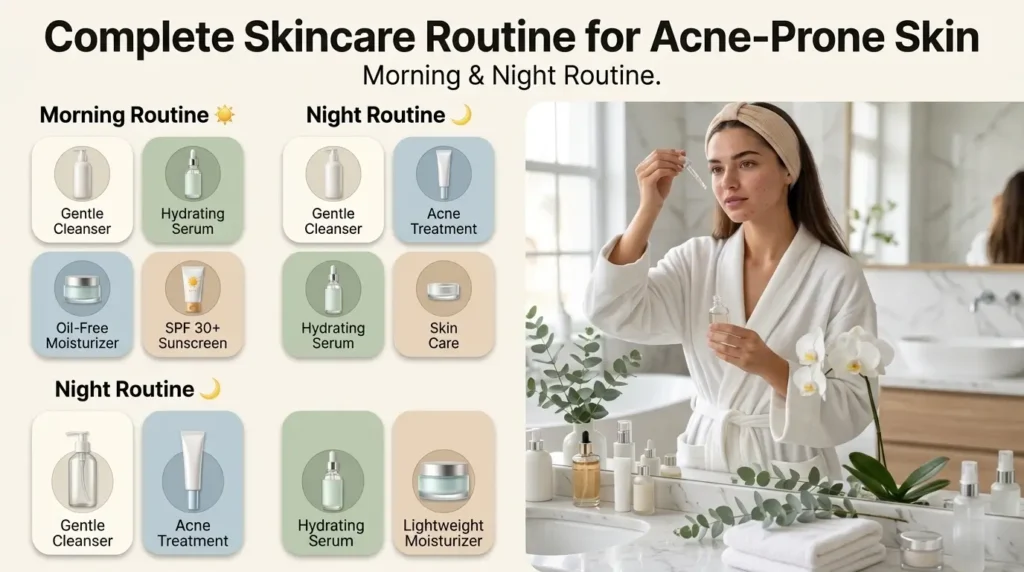
A successful complete skincare routine for acne-prone skin isn’t just about using the right products—it’s also about knowing when to use them. Your morning routine focuses on protecting your skin from environmental damage, while your evening routine helps repair and treat acne overnight.
Morning Routine
Start your day with a simple routine that keeps your skin fresh and protected.
- Gentle Cleanser
- Lightweight Hydrating Serum
- Oil-Free Moisturizer
- Broad-Spectrum SPF 30+ Sunscreen
Daily sunscreen is essential because acne treatments can make your skin more sensitive to the sun. It also helps prevent post-acne marks from becoming darker.
Evening Routine
Your nighttime routine is the best time to apply acne treatments.
- Gentle Cleanser
- Acne Treatment (Salicylic Acid, Benzoyl Peroxide, or Azelaic Acid)
- Hydrating Serum
- Lightweight Moisturizer
If you use retinol, apply it only at night and introduce it gradually to minimize irritation.
Best Ingredients for Acne-Prone Skin
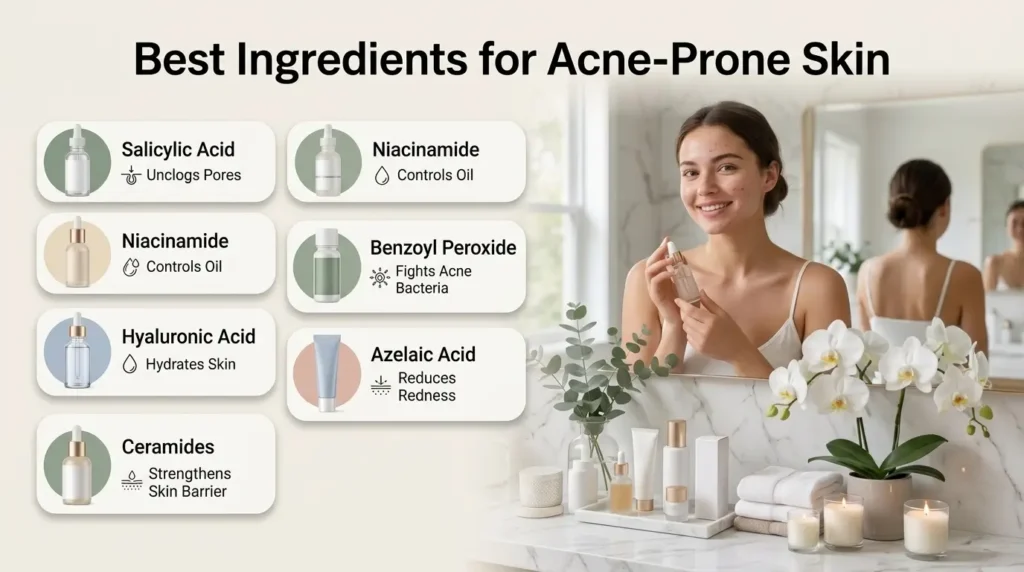
Choosing the right ingredients is one of the most important parts of a complete skincare routine for acne-prone skin. These ingredients are widely recommended because they help treat breakouts while supporting the skin barrier.
Salicylic Acid
Salicylic Acid penetrates deep into pores to remove excess oil and dead skin cells. It helps reduce blackheads, whiteheads, and future breakouts.
Niacinamide
Niacinamide helps regulate oil production, reduce redness, improve skin texture, and strengthen the skin barrier.
Benzoyl Peroxide
This ingredient targets acne-causing bacteria and helps reduce inflamed pimples.
Azelaic Acid
Azelaic Acid helps calm inflammation, reduce acne marks, and improve uneven skin tone.
Hyaluronic Acid
Hydration is important even for oily skin. Hyaluronic Acid attracts moisture without making skin greasy.
Ceramides
Ceramides strengthen the protective skin barrier and reduce dryness caused by acne treatments.
Centella Asiatica
This soothing botanical ingredient helps calm irritated skin and supports faster skin recovery.
Ingredients to Avoid if You Have Acne-Prone Skin
Not every skincare product is suitable for acne-prone skin.
Try to avoid products containing:imag
- Heavy mineral oils
- Alcohol-based toners
- Strong fragrances
- Harsh physical scrubs
- Coconut oil (for facial skincare)
- Thick pore-clogging creams
Always choose products labeled:
- Non-comedogenic
- Oil-free
- Fragrance-free
- Dermatologist-tested
Weekly Treatments for Clearer Skin
Daily skincare forms the foundation of healthy skin, but adding one or two weekly treatments can help improve your results.
Clay Mask (1–2 Times Weekly)
Clay masks absorb excess oil and remove impurities from pores without over-drying the skin.
Gentle Chemical Exfoliation
Use a mild exfoliant containing AHAs or BHAs once a week to remove dead skin cells and improve skin texture.
Avoid over-exfoliating, as this can damage the skin barrier and trigger more irritation.
Lifestyle Habits That Help Reduce Acne
Healthy skin starts from within. Along with a complete skincare routine for acne-prone skin, healthy daily habits can help minimize breakouts and support long-term skin health.
Simple habits include:
- Drink plenty of water every day.
- Eat more fruits, vegetables, and antioxidant-rich foods.
- Reduce sugary drinks and processed snacks.
- Get 7–9 hours of quality sleep each night.
- Manage stress through exercise or meditation.
- Wash pillowcases every week.
- Clean your phone screen regularly.
- Avoid touching or picking your pimples.
- Exercise regularly and cleanse your skin after sweating.
These habits won’t eliminate acne overnight, but they can support healthier-looking skin over time.
How Long Does It Take to See Results?
One of the biggest mistakes people make is giving up too early.
Most skincare routines require consistency before noticeable improvements appear.
You may notice:
- Less oily skin within 1–2 weeks
- Fewer new breakouts after 4–6 weeks
- Improved skin texture after 6–8 weeks
- Reduced acne marks after 8–12 weeks
Everyone’s skin responds differently, so patience is essential.
Final Thoughts
Managing acne doesn’t require dozens of expensive products. A complete skincare routine for acne-prone skin built around gentle cleansing, targeted treatments, proper hydration, and daily sun protection can make a significant difference over time.
Remember that consistency matters more than perfection. Stick to products that suit your skin type, avoid overusing active ingredients, and give your skin time to heal. Combined with healthy lifestyle habits, the right skincare routine can help you achieve clearer, calmer, and healthier-looking skin.