

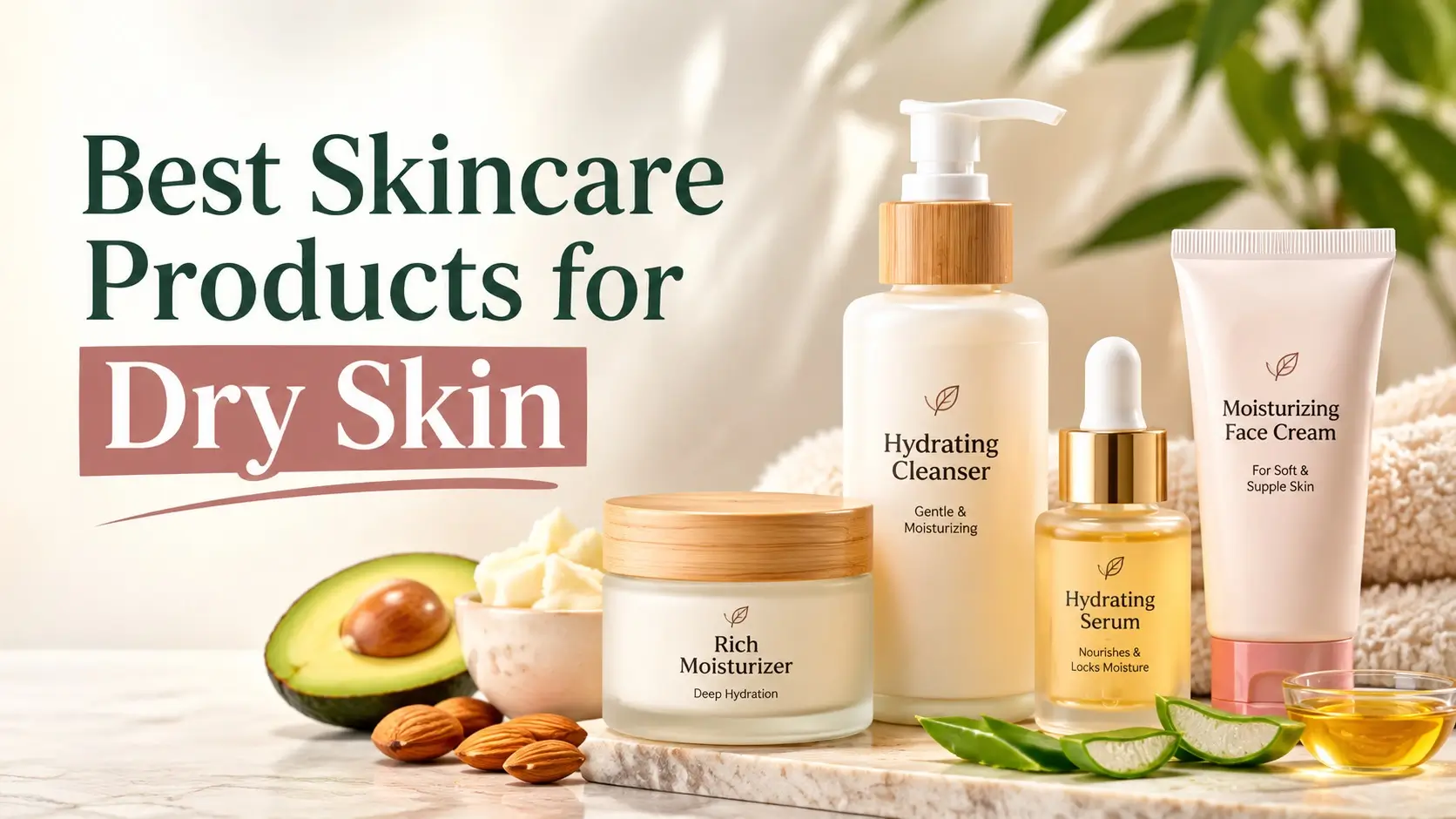
Finding the best skincare products for dry skin can be challenging when your face constantly feels tight, rough, flaky, or uncomfortable. With so many cleansers, serums, moisturizers, oils, and creams available, it can be difficult to know which products are actually worth adding to your routine.
Dry skin usually needs a simple approach. Instead of using several products at once, focus on gentle cleansing, consistent hydration, moisture retention, and daily sun protection.
The right skincare products can help dry skin feel softer, smoother, and more comfortable. The key is choosing formulas that support moisture rather than leaving the skin feeling stripped after every use.
What Are the Best Skincare Products for Dry Skin?
The best skincare products for dry skin are generally those that help cleanse gently, add hydration, reduce moisture loss, and support the skin barrier.
A simple routine can include:
Gentle cleanser → Hydrating serum → Moisturizer → Sunscreen
You can add a facial oil or richer night cream if your skin needs extra moisture.
When shopping for skincare, look for ingredients such as:
- Ceramides
- Glycerin
- Hyaluronic acid
- Squalane
- Shea butter
- Petrolatum
- Dimethicone
- Panthenol
- Urea
You do not need every ingredient in one product. A well-formulated moisturizer with a few useful ingredients can be more practical than using several different products.
Best Cleanser for Dry Skin
A cleanser should remove dirt, sunscreen, makeup, and daily buildup without leaving your skin feeling excessively tight.
For dry skin, look for a cleanser that is:
- Gentle
- Fragrance-free if your skin is sensitive
- Non-stripping
- Creamy or lotion-like
- Suitable for your skin type
Very strong foaming cleansers may not feel comfortable if your skin is already dry.
How to Know If Your Cleanser Is Too Drying
Pay attention to how your skin feels immediately after washing.
If your face feels:
- Tight
- Stiff
- Rough
- Uncomfortably dry
- More flaky than before
your cleanser may be too harsh for your skin.
Try switching to a gentler formula and avoid washing your face with very hot water.

How Often Should You Cleanse Dry Skin?
You do not necessarily need to wash your face several times a day.
A gentle cleanse at night can remove sunscreen, makeup, sweat, and daily buildup. In the morning, some people with very dry skin may prefer a water rinse instead of another full cleanse.
Choose the approach that keeps your skin comfortable without leaving it stripped.
Best Moisturizer for Dry Skin
A moisturizer is one of the most important products in a dry skin routine.
Unlike a lightweight serum, a moisturizer is designed to provide a combination of hydration and skin-softening ingredients while helping reduce moisture loss.
For dry skin, creams are often more comfortable than very lightweight gels.
Look for Ceramides
Ceramides are naturally occurring lipids found in the skin.
They are commonly used in moisturizers designed to support the skin barrier.
A moisturizer containing ceramides can be a useful option if your skin feels dry, rough, or easily irritated.
Look for Glycerin
Glycerin is a humectant that helps attract moisture.
It is found in many moisturizers and hydrating products and can work well alongside other moisturizing ingredients.
Consider Shea Butter
Shea butter provides an emollient feel and can make a moisturizer feel richer.
It may be particularly comfortable for people whose skin becomes very dry during colder or drier weather.
Petrolatum for Very Dry Areas
Petrolatum is a highly occlusive ingredient that helps reduce moisture loss.
It can be useful for particularly dry areas such as around the nose, cheeks, or lips.
You do not necessarily need to apply a heavy occlusive product across your entire face. A small amount can be used where additional protection is needed.
Best Hydrating Serum for Dry Skin
A serum is optional, but it can be useful when your moisturizer alone does not provide enough hydration.
Choose a simple hydrating serum instead of immediately reaching for a formula containing multiple strong active ingredients.
Hyaluronic Acid
Hyaluronic acid is widely used in hydrating skincare.
It can help the skin feel more hydrated and plump when used as part of a moisturizing routine.
Panthenol
Panthenol is commonly included in formulas designed to support skin hydration and comfort.
It can be a useful ingredient when you want a straightforward hydrating product.
Glycerin-Based Serums
Glycerin is another good ingredient to look for in a hydrating serum.
If your skin is very sensitive, choose a simple formula with fewer unnecessary ingredients.
Best Facial Oil for Dry Skin
Facial oil is not essential, but it can be a useful addition when your skin needs extra softness.
Popular options include:
- Jojoba oil
- Squalane
- Argan oil
- Sunflower seed oil
- Rosehip oil
Oils are generally better thought of as a supporting step rather than a replacement for moisturizer.
How to Use Facial Oil
After cleansing, apply your hydrating product and moisturizer first.
Then use a few drops of facial oil if your skin still feels dry.
Cleanser → Serum → Moisturizer → Facial oil
You only need a small amount. Applying too much can leave the skin feeling greasy without necessarily providing additional benefits.
Best Sunscreen for Dry Skin
Sunscreen is an important part of every morning skincare routine, including routines for dry skin.
Look for a broad-spectrum sunscreen with SPF 30 or higher.
If your skin is dry, you may prefer a moisturizing sunscreen with a cream or lotion texture.
How to Make Sunscreen More Comfortable
If sunscreen makes your face feel dry:
- Apply moisturizer first.
- Allow it to settle briefly.
- Apply your sunscreen generously.
- Reapply as directed when spending time outdoors.
Do not replace sunscreen with facial oil. Oils do not provide reliable sun protection.
Best Skincare Ingredients for Dry Skin
Understanding ingredients can make it easier to choose products that fit your routine.
Ceramides
Ceramides help support the skin barrier and are commonly found in moisturizers for dry skin.
Glycerin
Glycerin attracts moisture and is frequently used in hydrating skincare.
Hyaluronic Acid
Hyaluronic acid is a popular hydrating ingredient that can help improve the feel of dry skin.
Squalane
Squalane is an emollient with a lightweight texture. It can help make the skin feel softer without the heavier feel of some facial oils.
Petrolatum
Petrolatum creates an occlusive layer that helps reduce moisture loss.
Shea Butter
Shea butter provides rich emollient properties and can be useful in products formulated for dry skin.
Urea
Urea is used in skincare products formulated for dry and rough skin. The concentration and formulation matter, so choose a product intended for facial use.
Best Skincare Products for Very Dry Skin
Very dry skin may need a richer routine than mildly dry skin.
If your skin frequently feels rough, tight, or flaky, consider changing the texture of your products rather than simply adding more products.
Choose a Cream Over a Lightweight Lotion
A rich cream may provide longer-lasting comfort than a lightweight lotion.
Look for a moisturizer containing a combination of humectants, emollients, and occlusive ingredients.
Use an Ointment on Extra-Dry Areas
An ointment can provide an additional protective layer over very dry areas.
It can be particularly useful at night when you do not mind a richer texture.
Moisturize Immediately After Cleansing
Apply moisturizer while your skin is still slightly damp.
This can help your routine retain more moisture and prevent your skin from feeling tight after washing.
Best Skincare Products for Dry Sensitive Skin
Dry skin can sometimes become more sensitive, particularly when the skin barrier is compromised.
If your skin is both dry and sensitive, simplicity is especially important.
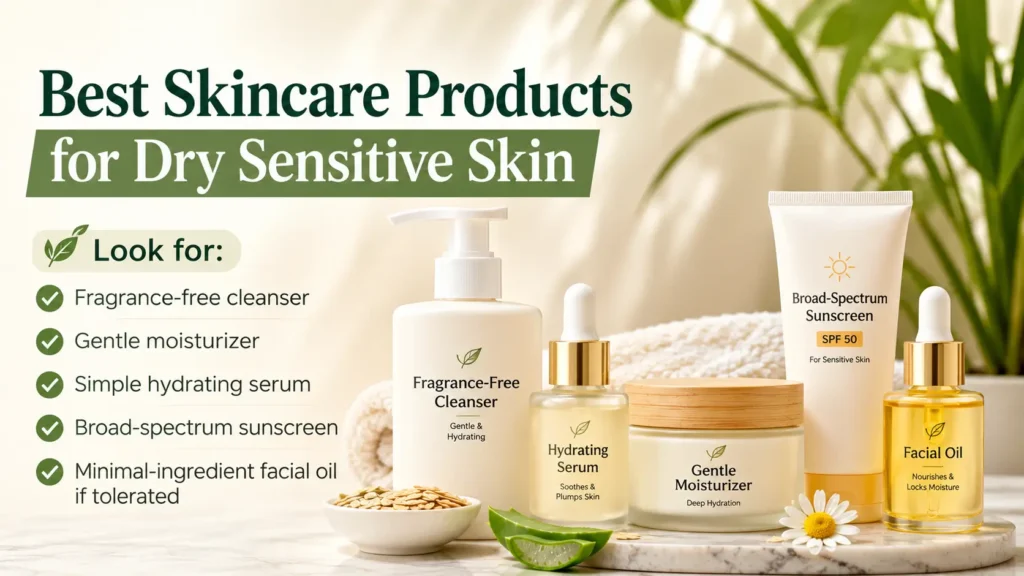
Look for:
- Fragrance-free cleanser
- Gentle moisturizer
- Simple hydrating serum
- Broad-spectrum sunscreen
- Minimal-ingredient facial oil if tolerated
Avoid Introducing Multiple Products Together
If you start five new products at the same time and your skin becomes irritated, you may not know which product caused the problem.
Introduce new skincare one product at a time.
This makes your routine easier to understand and manage.
Best Night Skincare Routine for Dry Skin
Nighttime is a good opportunity to focus on moisture and skin comfort.
A simple routine can be:
Cleanser → Hydrating serum → Moisturizer → Facial oil or occlusive product
Step 1: Remove Makeup and Sunscreen
Use a gentle first cleanse or makeup remover if necessary.
Step 2: Cleanse
Wash your face with a gentle cleanser and lukewarm water.
Step 3: Add Hydration
Apply a hydrating serum if your skin needs it.
Step 4: Moisturize
Use a cream that matches your level of dryness.
Step 5: Add an Optional Moisture Layer
If your skin is particularly dry, apply a small amount of facial oil or another suitable occlusive product.
Morning Skincare Routine for Dry Skin
Your morning routine does not need to be complicated.
Step 1: Gentle Cleanse or Rinse
Use a mild cleanser or simply rinse with water if your skin does not need another cleanse.
Step 2: Hydrating Serum
Apply a simple hydrating serum if desired.
Step 3: Moisturizer
Choose a cream or lotion that keeps your skin comfortable throughout the day.
Step 4: Sunscreen
Finish with broad-spectrum SPF 30 or higher.
This four-step routine is enough for many people with dry skin.
Skincare Products to Avoid for Dry Skin
Not every popular skincare product is suitable for dry skin.
Some formulas can increase dryness or irritation when used too frequently.
Harsh Physical Scrubs
Rough particles can irritate dry skin.
If your skin is already flaky, scrubbing aggressively may make the problem worse rather than solving it.
Strongly Fragranced Products
Fragrance is not automatically bad for everyone, but it can be irritating for some sensitive skin types.
If your skin frequently reacts to products, fragrance-free formulas may be a better starting point.
Excessive Exfoliation
Dry skin does not need daily exfoliation.
Using several exfoliating products at the same time can leave your skin feeling uncomfortable.
Very Strong Active Ingredients
Retinoids and exfoliating acids can be useful for certain skincare goals, but they may also cause dryness or irritation.
If your skin is already irritated, focus on gentle cleansing and moisturizing before adding strong actives.
How to Choose the Right Skincare Products for Your Skin
Your skin’s level of dryness should influence the products you choose.
For Mildly Dry Skin
A lightweight cleanser, hydrating serum, moisturizer, and sunscreen may be enough.
For Moderately Dry Skin
Choose a cream-based moisturizer and consider adding a hydrating serum or facial oil.
For Very Dry Skin
Look for richer creams and occlusive ingredients. An ointment may also be useful on particularly dry areas.
For Dry and Sensitive Skin
Choose simple, fragrance-free formulas and introduce products gradually.
For Dry and Acne-Prone Skin
Look for products labeled non-comedogenic when appropriate and avoid automatically choosing the richest possible formula.
Common Mistakes When Choosing Skincare for Dry Skin
Buying Too Many Products
A complicated routine is not necessarily a better routine.
Start with the basics and add products only when there is a clear reason.
Choosing Products Based Only on Marketing
Words such as “natural,” “glowing,” or “deep hydration” do not tell you everything about how a product will perform.
Read the ingredient list and consider the texture and purpose of the product.
Changing Products Too Frequently
Give your routine time to become consistent.
Constantly switching products makes it difficult to understand what works for your skin.
Using Oil Instead of Moisturizer
Facial oil can soften the skin, but it does not necessarily provide everything your skin needs from a moisturizer.
Use oil as an optional additional step rather than automatically replacing your moisturizer.
Applying Too Much Product
More skincare does not always mean more hydration.
Use the amount recommended on the product and adjust based on your skin’s needs.
How to Build a Simple Dry Skin Routine on a Budget
You do not need an expensive skincare collection.
Start with three essential products:
1. Gentle cleanser
2. Moisturizer
3. Sunscreen
If your skin still feels dehydrated, add a simple hydrating serum.
If it needs additional softness, consider a facial oil.
This approach allows you to build your routine gradually instead of buying everything at once.
How to Tell If Your Skincare Routine Is Working
A good routine should make your skin feel more comfortable.
Positive signs can include:
- Less tightness
- Softer skin
- Reduced roughness
- Less visible flaking
- More comfortable skin after cleansing
- Better-feeling skin throughout the day
If your skin repeatedly burns, becomes very red, develops a persistent rash, or feels increasingly irritated, stop using products that may be contributing to the reaction.
When to See a Dermatologist
Sometimes dry skin needs more than a change in skincare products.
Consider speaking with a dermatologist if you experience persistent:
- Severe dryness
- Itching
- Burning
- Redness
- Cracking
- Bleeding
- Rash
- Pain
- Swelling
Ongoing dryness can sometimes be associated with an underlying skin condition, so persistent or severe symptoms should not simply be treated by adding more skincare products.
Final Thoughts
The best skincare products for dry skin are the ones that help your skin stay comfortable without creating unnecessary irritation.
A simple routine built around a gentle cleanser, hydrating product, moisturizer, and sunscreen is a good starting point. Ingredients such as ceramides, glycerin, hyaluronic acid, squalane, petrolatum, and shea butter can also be useful depending on the product and your individual skin needs.
If your skin is very dry, choose richer creams or ointments rather than relying only on lightweight products. If your skin is sensitive, keep the ingredient list simple and introduce new products gradually.
You do not need a shelf full of skincare to care for dry skin. A consistent routine with products that suit your skin type is often a much better approach than constantly trying something new.