


Skincare Diet: The Complete Guide to Eating for Healthy, Clear, and Glowing Skin
Beautiful skin isn’t just about the skincare products you apply every day. While cleansers, serums, and moisturizers play an important role, your diet has an equally powerful impact on your skin’s health. The nutrients you consume help repair skin cells, support collagen production, fight inflammation, and protect your skin from environmental damage.
A balanced skincare diet provides your body with essential vitamins, minerals, healthy fats, antioxidants, and hydration that work together to improve your complexion from within. On the other hand, regularly eating processed foods, sugary snacks, and unhealthy fats may contribute to dull skin, breakouts, and premature signs of aging.
In this guide, you’ll discover the best foods for healthy skin, foods that may negatively affect your complexion, healthy eating habits, and practical nutrition tips to help you achieve naturally radiant skin.
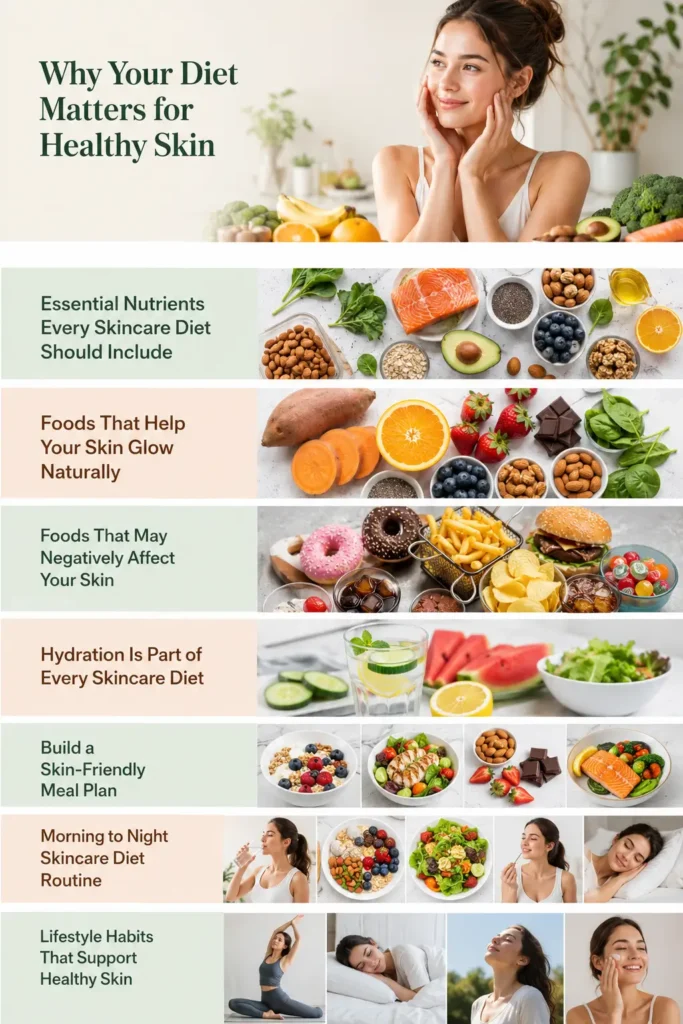
Why Your Diet Matters for Healthy Skin
Your skin is the body’s largest organ, and like every other organ, it depends on proper nutrition to function at its best.
A nutrient-rich skincare diet helps your skin:
- Support collagen production
- Improve skin hydration
- Reduce inflammation
- Protect against free radical damage
- Strengthen the skin barrier
- Promote faster skin repair
- Maintain a healthy natural glow
When your body receives the nutrients it needs, your skin often appears smoother, healthier, and more vibrant.
Essential Nutrients Every Skincare Diet Should Include
Healthy skin starts with balanced nutrition. Certain nutrients are especially beneficial because they support skin repair, hydration, and protection.
Vitamin C
Vitamin C helps your body produce collagen while protecting the skin from oxidative stress.
Good food sources include:
- Oranges
- Lemons
- Kiwi
- Strawberries
- Bell peppers
Vitamin E
Vitamin E protects skin cells from environmental damage while helping maintain healthy skin.
You can find it in:
- Almonds
- Sunflower seeds
- Avocados
- Spinach
Omega-3 Fatty Acids
Healthy fats help reduce inflammation and improve the skin’s moisture barrier.
Excellent sources include:
- Salmon
- Sardines
- Walnuts
- Chia seeds
- Flaxseeds
Zinc
Zinc supports wound healing and may help regulate oil production.
Rich sources include:
- Pumpkin seeds
- Chickpeas
- Lentils
- Lean meat
Protein
Protein supplies amino acids needed for collagen and skin repair.
Healthy protein sources include:
- Eggs
- Greek yogurt
- Chicken
- Fish
- Beans
- Tofu

Foods That Help Your Skin Glow Naturally
A healthy skincare diet should include colorful fruits, vegetables, healthy fats, and antioxidant-rich foods.
Citrus Fruits
Oranges, lemons, and grapefruits are packed with Vitamin C, which supports collagen production and brighter-looking skin.
Sweet Potatoes
Sweet potatoes contain beta-carotene, which the body converts into Vitamin A. This nutrient supports healthy skin renewal and may help protect the skin from environmental damage.
Chia Seeds
These tiny seeds are rich in omega-3 fatty acids, fiber, and antioxidants that support hydrated, healthy-looking skin.
Dark Chocolate
Dark chocolate with a high cocoa content contains antioxidants called flavonoids that may improve skin hydration and help protect against oxidative stress when enjoyed in moderation.
Walnuts and Almonds
Nuts provide healthy fats, Vitamin E, and minerals that help nourish the skin and strengthen its protective barrier.
Spinach
Spinach is rich in Vitamins A, C, and E, along with iron and antioxidants that help support skin repair and maintain a healthy complexion.
Green Peas
Green peas provide plant-based protein, fiber, Vitamin C, and several B vitamins that contribute to healthy skin function.
Healthy Skin Tip: The foods listed above are excellent additions to a balanced skincare diet because they provide antioxidants, healthy fats, vitamins, and minerals that help your skin look healthier from the inside out.
Foods That May Negatively Affect Your Skin
No single food directly “ruins” your skin, but regularly eating large amounts of highly processed foods may contribute to inflammation, excess oil production, and breakouts in some people.
Try to limit foods such as:
- White sugar
- Sugary desserts and doughnuts
- Potato chips
- Instant noodles
- Sugary soft drinks
- Deep-fried fast food
These foods are often high in refined carbohydrates, unhealthy fats, sodium, or added sugars while providing very little nutritional value.
Instead of completely eliminating your favorite treats, focus on eating nutrient-rich foods most of the time and enjoying processed foods in moderation.

Hydration Is Part of Every Skincare Diet
Water plays a vital role in maintaining healthy skin.
Proper hydration helps:
- Support skin elasticity
- Improve overall skin appearance
- Assist natural skin functions
- Reduce dryness
- Support healthy circulation
Aim to drink water consistently throughout the day while also eating water-rich foods like cucumbers, watermelon, oranges, and lettuce.
Build a Skin-Friendly Meal Plan
Following a healthy skincare diet doesn’t mean giving up all your favorite foods. The goal is to eat balanced meals that provide vitamins, antioxidants, healthy fats, protein, and plenty of hydration throughout the day.
Here’s an easy daily meal plan you can follow.
Breakfast
Start your morning with foods that support collagen production and skin hydration.
Healthy breakfast ideas include:
- Greek yogurt with berries and chia seeds
- Oatmeal topped with almonds and fresh fruit
- Avocado toast with boiled eggs
- Green smoothie with spinach, banana, and chia seeds
Mid-Morning Snack
Choose nutrient-rich snacks instead of sugary treats.
Good options include:
- Mixed nuts
- Orange slices
- Apple with peanut butter
- Fresh berries
Lunch
Fill half your plate with colorful vegetables.
Healthy lunch ideas:
- Grilled chicken with quinoa and spinach salad
- Salmon with brown rice and steamed vegetables
- Chickpea salad with cucumber, tomatoes, and olive oil
- Lentil soup with whole-grain bread
Evening Snack
Instead of chips or sugary snacks, choose healthier alternatives.
Examples include:
- Dark chocolate (70% cocoa or higher)
- Walnuts
- Almonds
- Carrot sticks with hummus
Dinner
Dinner should include lean protein, healthy fats, and vegetables.
Healthy choices include:
- Baked salmon with sweet potatoes
- Grilled chicken with roasted vegetables
- Tofu stir-fry with broccoli
- Brown rice with grilled fish and spinach
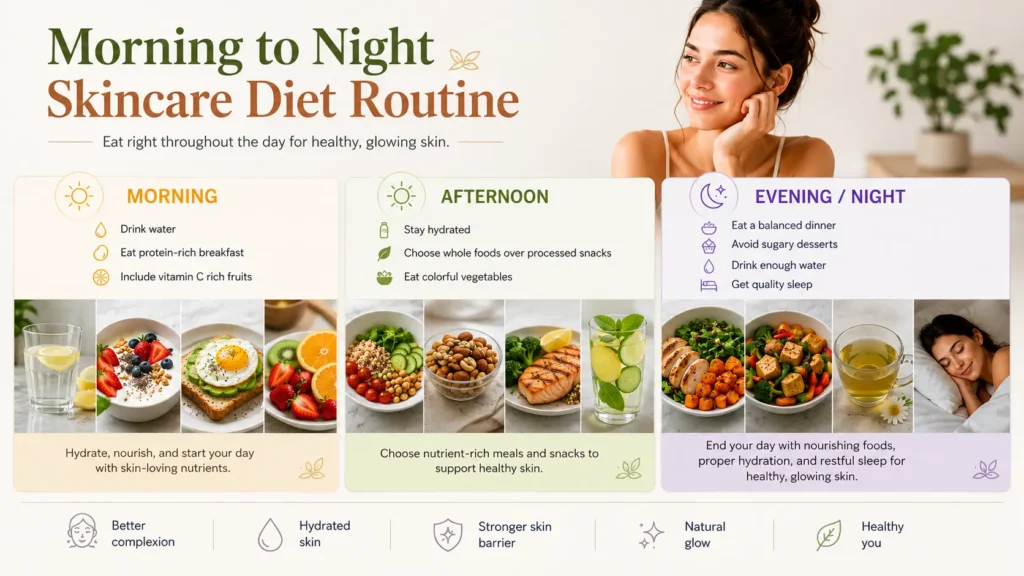
Morning to Night Skincare Diet Routine
A healthy skincare diet works best when combined with consistent eating habits throughout the day.
Morning
- Drink one glass of water after waking up.
- Eat a protein-rich breakfast.
- Include Vitamin C-rich fruits.
Afternoon
- Stay hydrated.
- Choose whole foods instead of processed snacks.
- Eat colorful vegetables with lunch.
Evening
- Eat a balanced dinner.
- Avoid excessive sugary desserts late at night.
- Drink enough water before bedtime.
Small daily habits can make a noticeable difference over time.
Lifestyle Habits That Support Healthy Skin
Healthy skin depends on more than nutrition alone.
Support your skincare diet by:
- Drinking enough water every day
- Sleeping 7–9 hours each night
- Exercising regularly
- Managing daily stress
- Wearing sunscreen every morning
- Following a consistent skincare routine
- Avoiding smoking
- Limiting alcohol consumption
- Washing pillowcases regularly
These simple habits work together with healthy eating to improve your skin’s overall appearance.
Skincare Diet Tips for Acne-Prone Skin
If you have acne-prone skin, your diet may help support healthier skin when combined with a proper skincare routine.
Focus on eating:
- Leafy green vegetables
- Fatty fish rich in omega-3
- Whole grains
- Fresh fruits
- Nuts and seeds
- Beans and legumes
Try to reduce:
- Sugary drinks
- Excess sweets
- Highly processed snacks
- Deep-fried foods
- Fast food
Every person’s skin responds differently to food, so consider keeping a food journal if you notice certain foods consistently seem to worsen your breakouts.
Common Skincare Diet Mistakes
Many people unknowingly make small nutrition mistakes that may affect their skin.
Avoid these common habits:
- Drinking too little water
- Eating too much processed food
- Skipping fruits and vegetables
- Following crash diets
- Consuming excessive sugary drinks
- Not eating enough healthy fats
- Ignoring protein intake
- Expecting overnight results
Healthy skin develops through consistent daily nutrition rather than quick fixes.
Can a Skincare Diet Replace Skincare Products?
The answer is no.
A healthy skincare diet supports your skin from the inside, while skincare products protect and treat your skin from the outside.
The best results come from combining:
- A balanced skincare diet
- Daily cleansing
- Moisturizing
- Sunscreen
- Healthy lifestyle habits
- Consistent skincare routine
Together, these habits help maintain healthier, stronger, and more radiant skin.
Final Thoughts
A healthy skincare diet is one of the most effective long-term investments you can make for your skin. While no single food can instantly transform your complexion, consistently choosing nutrient-rich meals over highly processed foods can help support clearer, healthier, and naturally glowing skin.
Fill your plate with colorful fruits, vegetables, healthy fats, lean proteins, whole grains, and plenty of water. At the same time, enjoy sugary or processed foods in moderation rather than making them everyday staples.
Combined with a simple skincare routine, regular exercise, quality sleep, and daily sun protection, a balanced skincare diet can help you build healthy habits that benefit your skin for years to come.